
Promoting Indigenous Research Leadership (PIRL)
April 5-7, 2027
Tempe, Arizona
Applications due December 1.


Arizona State University campus, Tempe, AZ
Presented by CAIRHE, HOPE & CAIRHE 2gether (a center based at the Huntsman Cancer Institute at the University of Utah), Montana State University, and Arizona State University, with partners at the National Institutes of Health, Promoting Indigenous Research Leadership (PIRL) is a three-day workshop designed to promote the public health research careers of Indigenous and other early-career faculty working with Indigenous communities across the country. PIRL was most recently held in November 2024 and 2023 in Tempe, Arizona, and previously in October 2022 in Grand Forks, North Dakota, and in Bozeman, Montana, in 2021 and 2019. The next PIRL workshop will be held April 5-7, 2027, in Tempe, AZ.
The application for PIRL 2027 is now open and accessible with the link below. Completed applications are due by 11:59 p.m. on December 1, 2026. Please email James Burroughs at jburroughs@montana.edu if you have any questions.
PIRL helps faculty investigators foster a sense of community, improve leadership and grant application skills, and receive the mentoring and career support they need. For many participants this includes specific preparation to apply for the "Intervention Research to Improve Native American Health" (IRINAH) funding opportunity (R01/R34) at the National Institutes of Health, as well as other major funding opportunities. Chairing the workshop are Angela Gonzales (Hopi), Ph.D., Ed.M., Director and Professor of American Indian Studies at Arizona State University, and Donald Warne (Oglala Lakota), M.D., MPH, co-director of the Johns Hopkins Center for Indigenous Health.
Promoting Indigenous Research Leadership (PIRL) includes: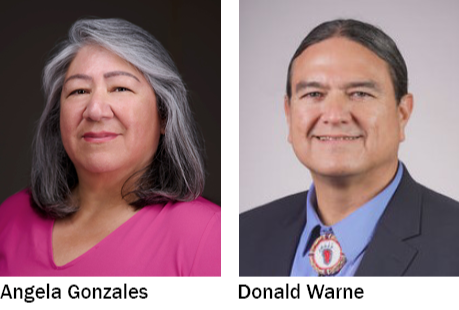
- Focused mentoring with senior NIH-funded faculty from across the country, and with peers who share similar backgrounds and research interests.
- Presentations from leading experts in Indigenous health.
- One-on-one consultation with program officers from the National Cancer Institute, the National Institute on Drug Abuse, and other NIH programs.
Up to 15 investigators from across the United States participate. For those selected, there is minimal cost to participate, and the workshop pays for most travel and lodging expenses.
Here's what some past participants have said about PIRL:
- "I am tremendously grateful for this event, which may have been one of the most informative and practical workshops I have ever attended."
- "This workshop was unique in that it was appropriately designed for Indigenous health researchers coming from unique experiences and unique communities."
- "I walked away from the workshop feeling like my understanding of this line of work and my role in it had grown substantively."
- "I am so grateful to have connected with mentors and already have some collaborative projects happening!"
- "Time with my mentor and peers, especially seeing fellow Alaskans and other Indigenous people, was fantastic. I loved hearing about and discussing opportunities and funding."
- "I felt heard and honored. I appreciated the number of Indigenous scholars. I appreciate the non-Native members as well, but it was so refreshing to be in a space that’s about Indigenous issues alongside Indigenous people!"
Eligibility:
- Applicants must be able to attend the workshop in person for all three days: April 5-7, 2027. (Travel funding is provided in most cases.)
- Applicants must hold a doctoral degree and have a faculty appointment or comparable research appointment at a U.S. 2- or 4-year college or university, or at another NIH grant-eligible research organization. Postdoctoral fellows are not eligible.
- At the time of application, applicants must meet the NIH definition for New Investigator. Priority is given to applicants who are also Early-Stage Investigators. **
- Applicants must already be working with an American Indian/Alaska Native/Native Hawaiian community in one or more areas of public health research, or have a stated career goal to do so.
- Special consideration is given to faculty who are actively amending a previously submitted NIH research grant application that was not funded.
- At this time, past participants of PIRL are not eligible to apply, but if this changes, they will be notified directly with special application instructions.
(** A New Investigator is one who has not yet competed successfully as Principal Investigator for a substantial, independent NIH research award, such as an R01 or R01-equivalent. An Early Stage Investigator is one who has completed their terminal research degree or end of post-graduate clinical training—whichever date is later—within the past 10 years and who has not previously competed successfully as a Principal Investigator for a substantial NIH independent research award. See the list of NIH grants that an investigator can hold and still be considered an ESI.)
If you have questions about eligibility or need more information about PIRL, please email James Burroughs, PIRL staff, at jburroughs@montana.edu.
Selection Criteria:
In addition to completing a brief online application, applicants must submit the following as attachments to the application:
- An NIH Biosketch (preferred) or Curriculum Vitae.
- A description (300 words or less) of the Indigenous community-based health research currently underway or planned within the next three years.
- A letter from the chair or dean of the applicant's department/school/college outlining the applicant's readiness for the workshop. The letter should indicate how participation in the workshop will advance the investigator's research plans, as well as offer a vision for her or his research progress over the next three years.
Past Participants:
You can read about alumnae/-i of the PIRL program on our PIRL Participants page.
New Applicants:
The application for PIRL 2027 is now open! If you have any questions or special needs related to the application or the workshop, please email James Burroughs at jburroughs@montana.edu. Completed applications are due by 11:59 p.m. (Mountain time) on December 1, 2026.