

Melissa Widas
MSU HONORS GRADUATE IN ENVIRONMENTAL SCIENCES
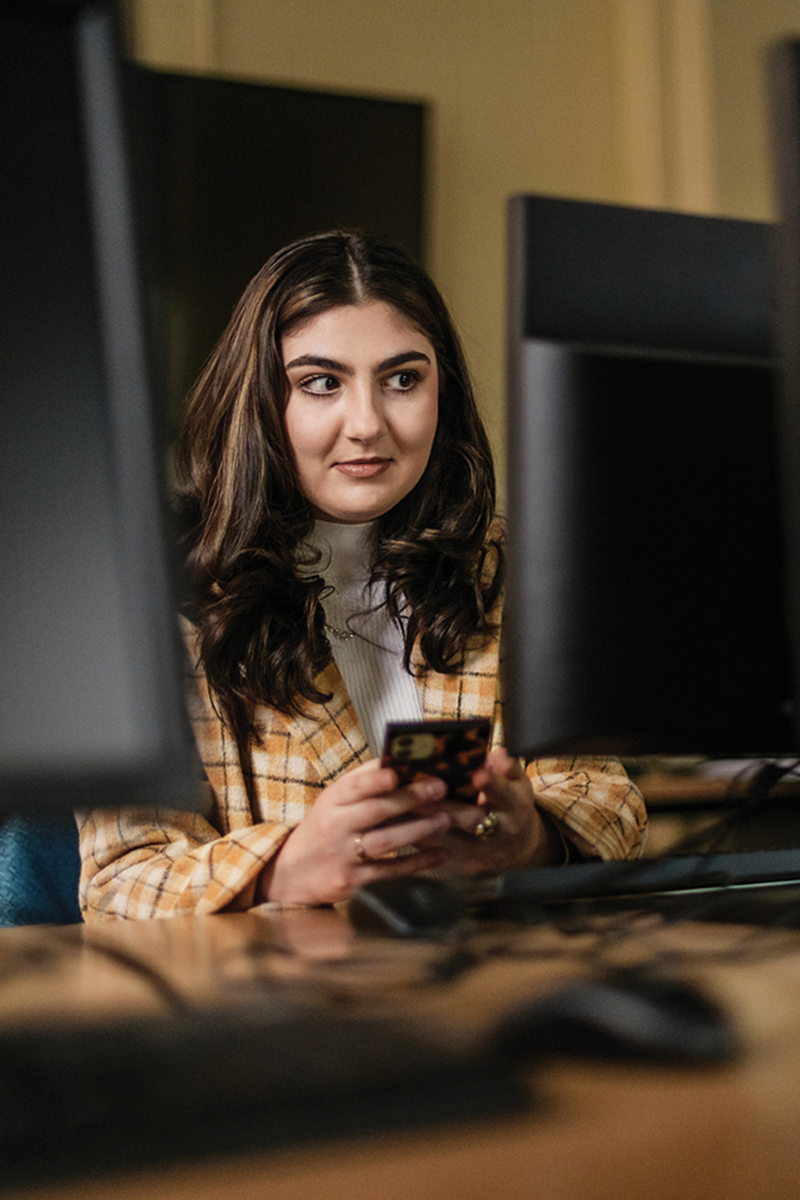
Melissa Widas is a recent graduate of Montana State University with a degree in Land Rehabilitation and a minor in Statistics. She served as the Burton K. Wheeler Center Undergraduate Fellow and is now pursuing a master’s at University of California in Santa Barbara in environmental data science. Here are some of her candid thoughts.
I have an older sister, her name’s Brittany, we’re best friends. We hated each other until high school, and then things started to get better between us. Once I was diagnosed with dyslexia, my mom started noticing similarities between what Brit and I would do. Brit was diagnosed with dyslexia as well when she was in middle school. Hers wasn’t nearly as severe as mine, which meant that she learned to cope with it on her own.
She’s now a high school history teacher in the Bay Area in California and loves it. And I think the dyslexia portion is an excellent way for her to relate to her students. A lot of them have learning disabilities or other challenges in their way. It’s a good way for her to connect to them.So hers doesn’t pop up as much as mine did, or mine still does. Especially when I get tired or frustrated, things will start moving around from me quite a bit more, and things don’t always make sense.
Essentially, dyslexia is like my brain knows the order things should be in, but there’s a disconnect between my brain and my mouth. When I say it out loud, I won’t notice anything wrong with the sentence because it makes perfect sense in my head. I’m saying the seashell is at the seashore, yet when I say it out loud, it’s like the shore at the shell is in the sea.
And I won’t pick up on it until somebody says, oh, Mel can you repeat that? Or my friends at this point know. They’re like, hey, say it one more time. And the second round, I go to say it’ll filter itself out, but me being tired or stressed is definitely one of my more significant triggers. Regardless, I think it’s fun. It adds a little bit of spice to a conversation. You never know what it’s going to sound like when it comes out.
So, I think one of my main strengths is empathy. Having a learning disability teaches you that a lot of things can be invisible, and it’s important to take everybody where they’re at. Also, I approach situations quite differently than some of my peers. Due to the way my brain functions and looks at problems. I’ll often take a different course of action but usually end up in the same place. So that’s a good sign. Yeah, I would say those are probably my two biggest strengths: creative thinking and empathy.