

Big Horn County
2025 MSU Extension Highlights
2025 MSU Extension Highlights
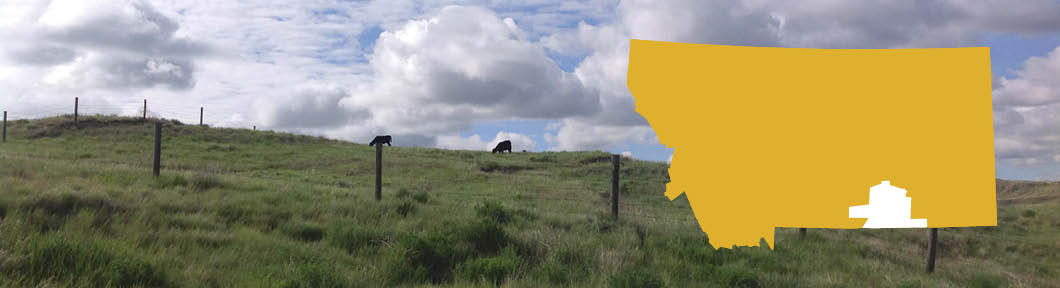
Big Horn County is located in south central Montana and is the sixth largest county in the state. It encompasses 5,023 square miles and includes the Crow Reservation and part of the Northern Cheyenne Reservation. Nearly 13,000 residents call Big Horn County home. There are over three million acres in production as farm or ranch lands. The primary livestock production is cattle. Big Horn County produces hay, wheat, barley, corn, sugar beets and other crops. Big Horn County MSU Extension serves communities in the county by offering programs in agriculture, horticulture, and natural resources, providing 4-H youth development and partnering with individuals and organizations in community vitality projects and programs.
Contact
P.O. Box 908
Hardin, MT 59034
406-665-9770
https://www.montana.edu/extension/bighorn/
Agriculture & Natural Resources
Biocontrol Project
MSU Extension educational programming occurs with groups and individuals. There have been nearly 100 one-to-one educational interactions with clients this year that included education about nitrates in forage, tree health concerns, livestock, gardening and insects. Multiple clients were interested in using biocontrol agents to deal with invasive plant species.
To address one biocontrol request, a project was launched in the Lodge Grass area to combat invasive poison hemlock, Conium maculatum, which has been spreading vigorously in the area. The producer initially requested information about safe handling and removal of this poisonous plant. In response, Big Horn County MSU Extension did a site visit, provided MSU Extension resources and had a one-to-one consultation with the producer about best management practices. The producer expressed interest in trying biocontrol if an agent was available due to significant grazing areas being inaccessible for physical removal options.
The Biocontrol Project supplied an insect agent which was applied to several sites on the property near Lodge Grass. The producer sent pictures weekly throughout the growing season to record the effect on the plants and the areas of impact. While biocontrol efforts do not provide the immediate visual results that other methods of control can provide, this biocontrol insect appeared to be effective in causing visible damage to the targeted plants, and there was a visible increase in the population of the biocontrol insect, which suggests that expansion of the agent’s impact on controlling the poison hemlock population may be possible next year.
This is an ongoing project with short-term effects that included an increase of information and management options for the producer and visible effects of the biocontrol agent on an invasive plant species in an inaccessible area. There is also the potential for long-term results in the coming seasons with respect to the effectiveness of this agent and the potential to distribute it more widely for the benefit of more producers.
.jpg)
Caption: Poison Hemlock
Credit: Samuel Horn
Agriculture & Natural Resources
Beginning Gardening
In response to requests from clients, Big Horn County MSU Extension offered two beginning gardening classes. All participants reported learning information from the classes which they intended to apply to gardening practices. One attendee stated her intention to make the following specific changes: “I am understanding gardening techniques better after this class. I intend to change my strategies in bed spacing and introduce cool and warm temperature plants to the garden.” A second participant intended to “start my own garden.”
Several participants followed through with intentions and planted a variety of vegetables and flowers, then tended them throughout the growing season. They reported that they applied what they learned and it helped their gardening success. Multiple participants requested additional gardening classes. These are now being planned and will be offered in partnership with the Big Horn County Public Library. All seven attendees in two sessions ranked the educational content at a score of five out of five.
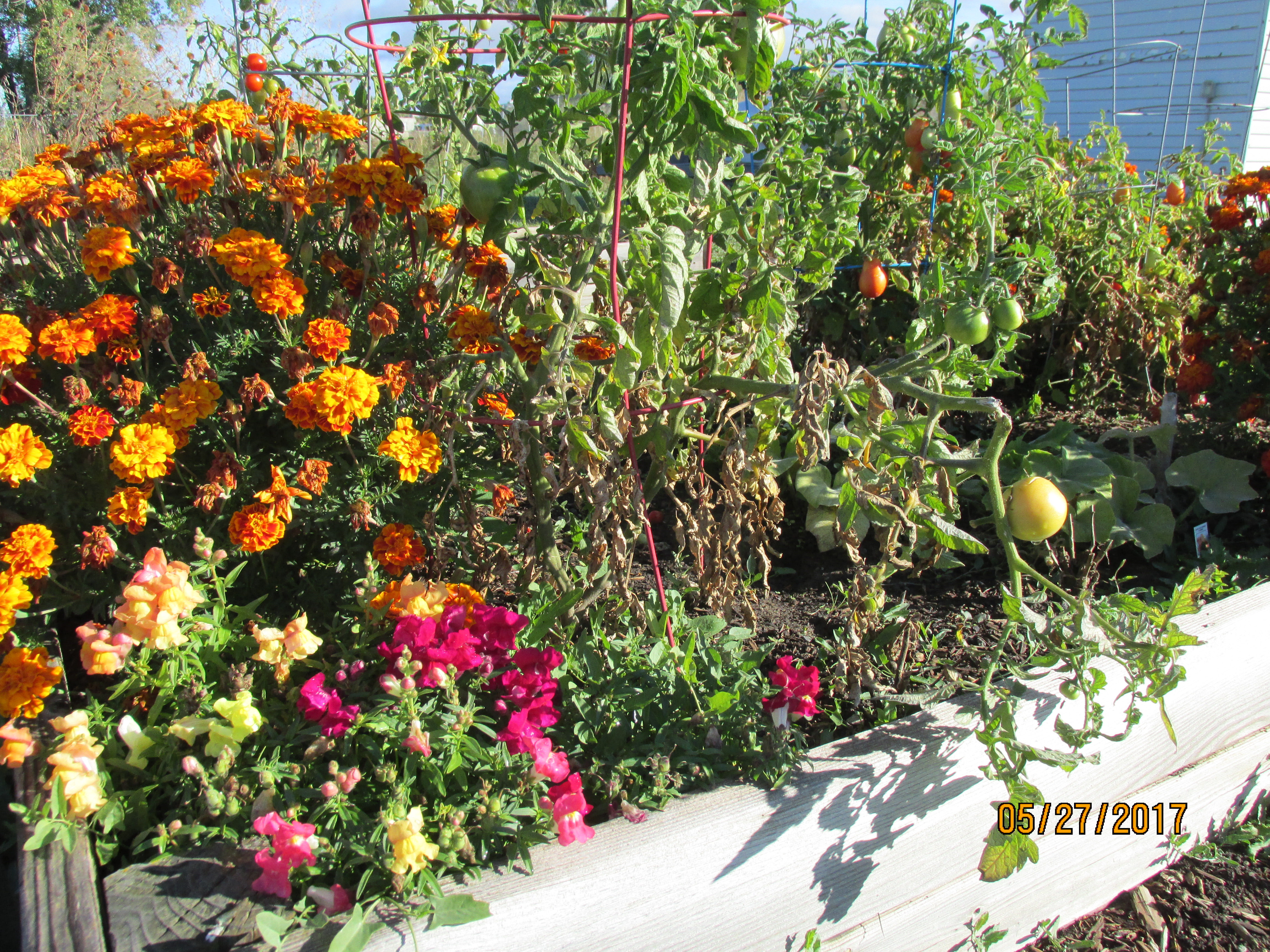
Caption: Raised bed garden plot
Credit: Andrea Berry
4-H & Youth Development
Animal Quality Assurance
Four Quality Assurance classes were offered to 4-H juniors and seniors this year. Class material included safe handling of animals, ethics, biosecurity, good management practices and providing everything animals need to grow well. Participants reported: 91% learned something they didn’t know; and 96% said what they learned was important to them. Many participants expressed intentions to “check water more often,” and “make sure the food, water and bedding are clean,” and “take better care of my animals and try to be cautious of biohazards” as a result of class learning. Most participants went on to successfully raise, care for and show animals at the fair.
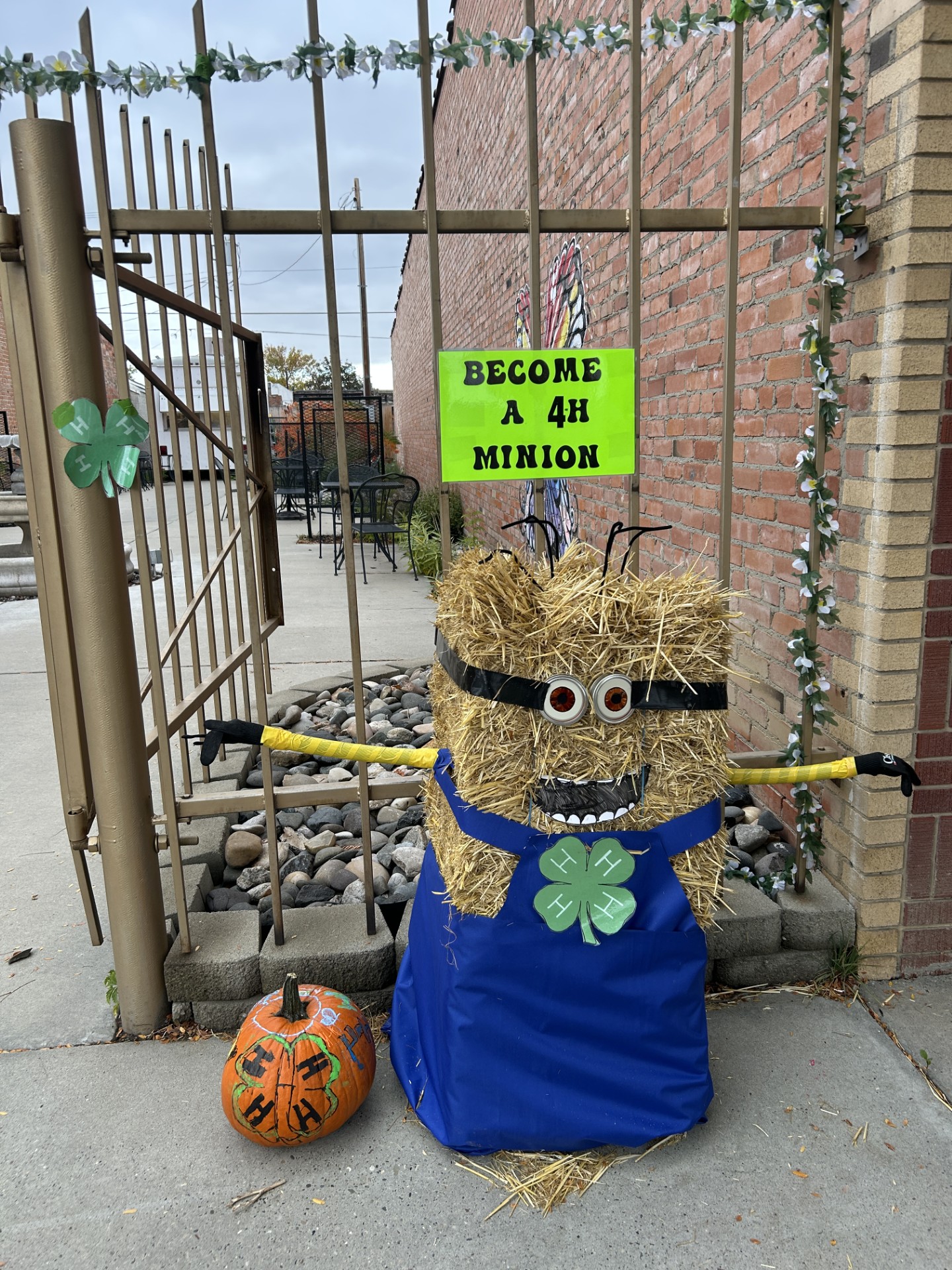
Caption: 4-H Minion
Credit: Katherine Jeno
Family & Consumer Science
Expanding Family & Consumer Science Programming
In the first six months of 2025, the only Family and Consumer Science programming for adults were two weaving classes and a few one-to-one educational interactions with clients. Katie Jeno, the new FCS agent, started her career in Extension in July and has been training for a number of programs that she hopes to offer soon, including Dining with Diabetes. She has already generated 4-H promotional material in various media, facilitated youth radio spots for National 4-H Week and promoted various MSU FCS events throughout the county. Jeno grew up in western Montana but has found a home here in Big Horn County. She earned her undergraduate degree from MSU-Bozeman and is currently working on a Master’s degree at MSU. With a background in education and leadership, she is looking forward to working with the community in the 4-H program as well as in her role as the Family & Consumer Sciences Agent.
.jpg)
Caption: Katie Jeno
Credit: Katie Jeno
Montana State University Extension is an ADA/EO/AA Veteran’s Preference Employer and provider of educational outreach.