

Flathead Reservation
2025 MSU Extension Highlights
2025 MSU Extension Highlights
Welcome to the Flathead Reservation, home to the Salish, Pend d'Oreille and Kootenai People.
For more than 20 years the Flathead Reservation Extension Office (FREO), a part of Montana State University Extension, has served the people of the Confederated Salish, Pend d'Oreille and Kootenai Tribes (CSKT). Covering over 1.317 million acres and reaching into four counties, program staff work to bring research-based information to reservation communities. Flathead Reservation MSU Extension supports the seven CSKT Resolutions of focus by offering educational opportunities in the areas of agriculture, family and consumer sciences, community economic/leadership, and positive youth development. Over the last year, adults and youth have participated in numerous activities that enhance their professional and personal lives. On-site education has been offered by Extension staff to local businesses, tribal departments, and schools, including in-school enrichment and after school programs. FREO recognizes the importance of promoting cultural awareness and diversity. Staff work to incorporate cultural activities that honor and support CSKT traditions. Quality programming is successful due to the collaboration between our local community members, partners, and Tribal support.
Honoring the Past to Ensure the Future…
“The Flathead Indian Reservation is home to three tribes, the Bitterroot Salish, Upper Pend d’Oreille, and the Kootenai. The territories of these three tribes covered all of western Montana and extended into parts of Idaho, British Columbia, and Wyoming. The Hellgate Treaty of 1855 established the Flathead Reservation, but over half a million acres passed out of Tribal ownership during land allotment that began in 1904. The subsistence patterns of our Tribal people developed over generations of observation, experimentation, and spiritual interaction with the natural world, creating a body of knowledge about the environment closely tied to seasons, locations, and biology. This way of life was suffused with rich oral history and a spiritual tradition in which people respected the animals, plants, and other elements of the natural environment. By learning from our elders and teaching our children, those Tribal ways of life continue to this day.” www.cskt.org
Contact
701 First Street E.
Polson, MT
406-210-9843
https://www.montana.edu/extension/flatheadres/
Family & Consumer Science
MSU Extension – 1st in the State to bring in Teen Mental Health First Aid
According to the National Council for Mental Well Being (NCMWB), Montana State University was the first in Montana to offer youth educators the opportunity to become a facilitator for Teen Mental Health First Aid (tMHFA). This past year, with financial support from two MSU grants, three school counselors (from three separate high schools) and one FCS/4-H Agent completed a weeklong training program, earning their teaching certificates in tMHFA. During the 25/26 school year, more than 140 high school juniors will have the opportunity to participate in this mental health and wellness program.
Part of the NCMWB requirements for a high school to offer tMHFA is that the administration, teachers, and other staff must be trained in Youth Mental Health First Aid (YMHFA). This class is for adults who work with youth. This compliments tMHFA by providing a bridge between high school students and trained school personnel. This past summer, MSU Extension Flathead Reservation offered three YMHFA professional development training courses. Forty-seven adult educators, social workers, and youth court employees earned their certification. This certification is good for three years and provides a holistic approach to teen mental health. It offers youth and adults the opportunity to better understand youth mental health and support high school aged students who are experiencing mental health challenges.
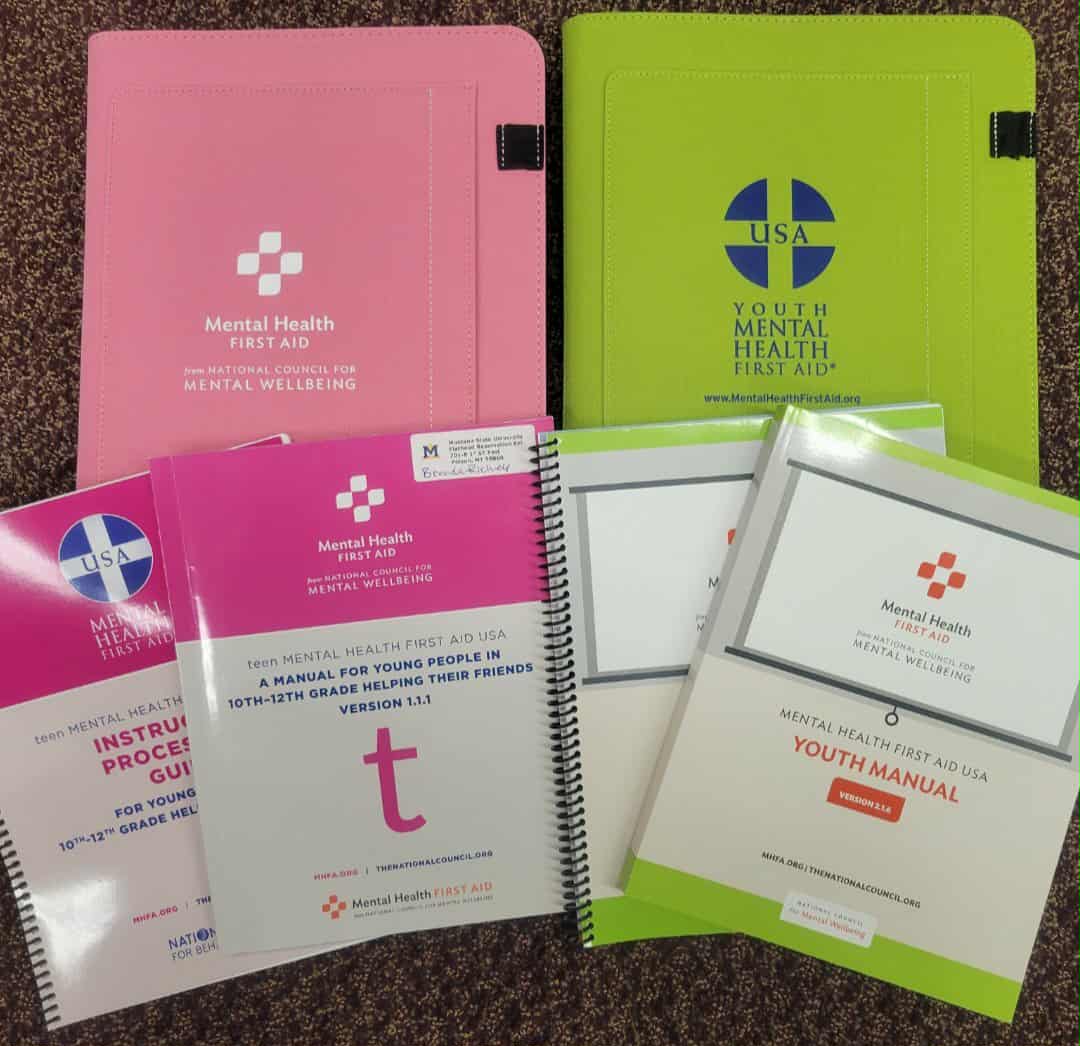
Caption: Materials for Teen Mental Health First Aid
Credit: Brenda Richey
Agriculture & Natural Resources
Extension support of SQK Quality Meats Processing Center
The Confederated Salish and Kootenai Tribes will welcome a new addition to food sovereignty efforts when the Tribally-owned SQK Quality Meats Processing Center opens in late 2025. The federally inspected facility has been made possible through a USDA Indigenous Animals Processing grant. MSU Extension staff helped write and manage the implementation of the $7.2 million dollar grant, design an onsite composting system, develop an employee training program, and secure an additional $150,000 of funding for the project. When operational, the processing center will bring seven new jobs to the region and produce a local supply of animal protein sources to food sovereignty programs.
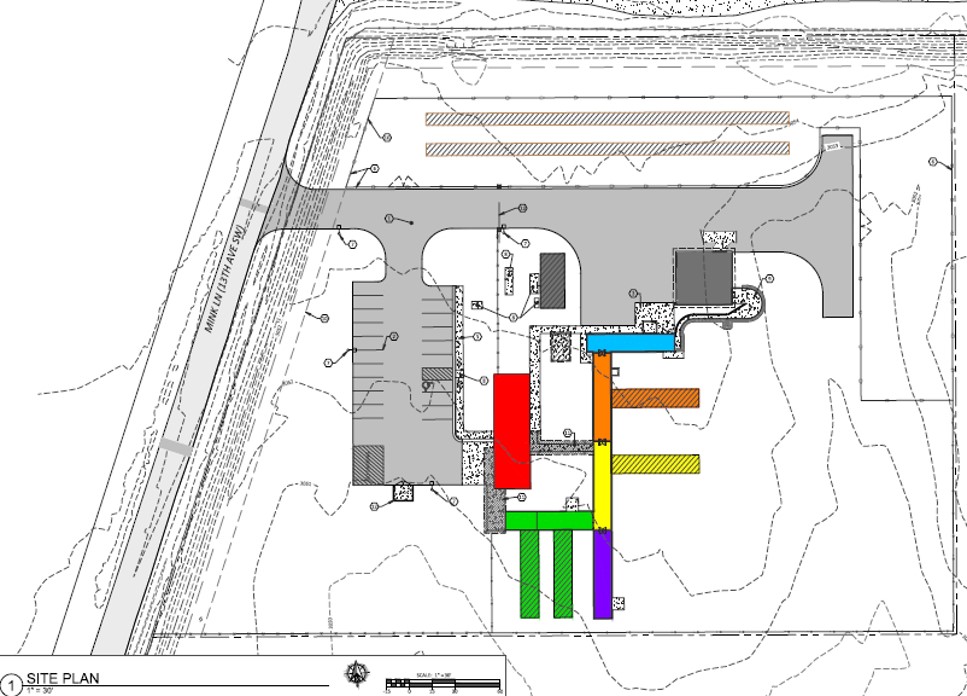
Caption: Blueprint of the SQK Quality Meats Processing Center
Credit: CSKT Tribal Economic Development Office
Family & Consumer Science
Nutrition Education – Changing Lives One Meal at a Time
A couple who uses SNAP benefits received a flier for free nutrition classes. They live an hour away from the closest in person class, but felt the drive was a worthwhile investment, and had perfect attendance through a 9-class series. This couple attributed class learning to many life changes they were making, and said "I think this class saved our lives."
They mentioned shopping more at the farmers market and using coupons from class that expanded their SNAP dollars, and sleeping better and feeling better throughout the day. One thing they enjoyed was receiving kitchen tools in the class, and on the last day of class, an Instant Pot. Participants learned to use Instant Pots to cook low-cost, nutritious meals, and were excited to take new knowledge and tools home to work toward better health.
A third grader participated in SNAP-Ed nutrition classes and sent a thank you letter to the educator after the 6-class series. She reflected on what she learned and thanked the instructor for the yummy kale chips snack. She remembered nutrition classes from first grade as well, and this time around, looked forward to the classes every week. She especially liked taking a virtual trip around the world to see how to eat healthy foods from the USDA MyPlate all around the world. At the end of the world tour, her class wrapped up with a look at My Native Plate and healthy foods found right at home.
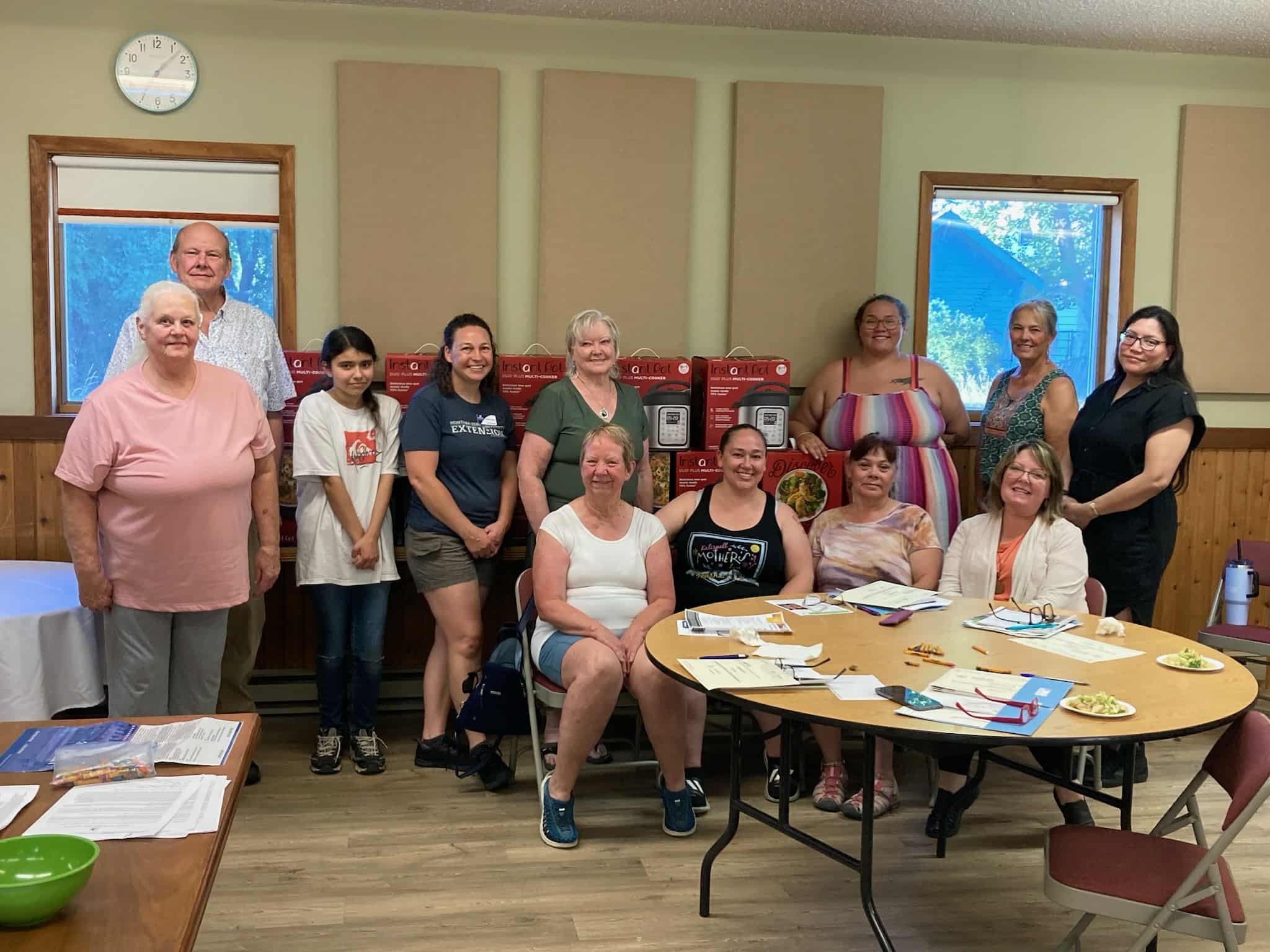
Caption: Adult nutrition education class
Credit: Havilah Burton
Agriculture & Natural Resources
Tribal Youth Explore What Agriculture Means to Other Tribes at National Conference
The Two Eagle River Agriculture Club fulfilled big dreams, attending the Intertribal Agriculture Council Annual Conference in Las Vegas. Youth attended the three day conference to learn more about food sovereignty, traditional practices other Tribes use in their agricultural systems, and how they as youth can get more involved and potentially follow careers in agriculture and natural resources.
While at the conference there were a few opportunities to explore Las Vegas and the glitz and glamour of a big city. Students visited a college campus, Cowboy Christmas, and took a tour of the Strip. “It was awesome to hear what other Tribes do to support their people through food and growing plants,” one youth participant wrote. “Made me think about whether we could do things like that on our reservation.”
.jpg)
Caption: Tribal Youth in Agriculture Club in conference hotel during the Intertribal Agriculture Conference Annual Meeting
Credit: Patrick Mangan
Family & Consumer Science
Master Food Preserver resumes in-person training
In May 2025, 13 participants and five instructors gathered from across Montana to attend a two-day Master Food Preservation Train the Trainer Certification. This workshop, offered through MSU Extension, has not been offered in-person since before COVID. It is an intensive program with in-person and virtual requirements.
Following the in-person workshop, the cohort has facilitated monthly classes in their respective communities and checked in virtually with instructors. Online check-ins give new Master Food Preservation Educators the opportunity to share class updates, ask questions, and receive the following month’s assignment. To date, members of the cohort have taught multiple pickling, fermentation, jam/jelly, freezing/drying, hot water bath and pressure canning classes. More than 25 classes have been held and over 150 youth and adults have actively participated in a food preservation learning opportunity.
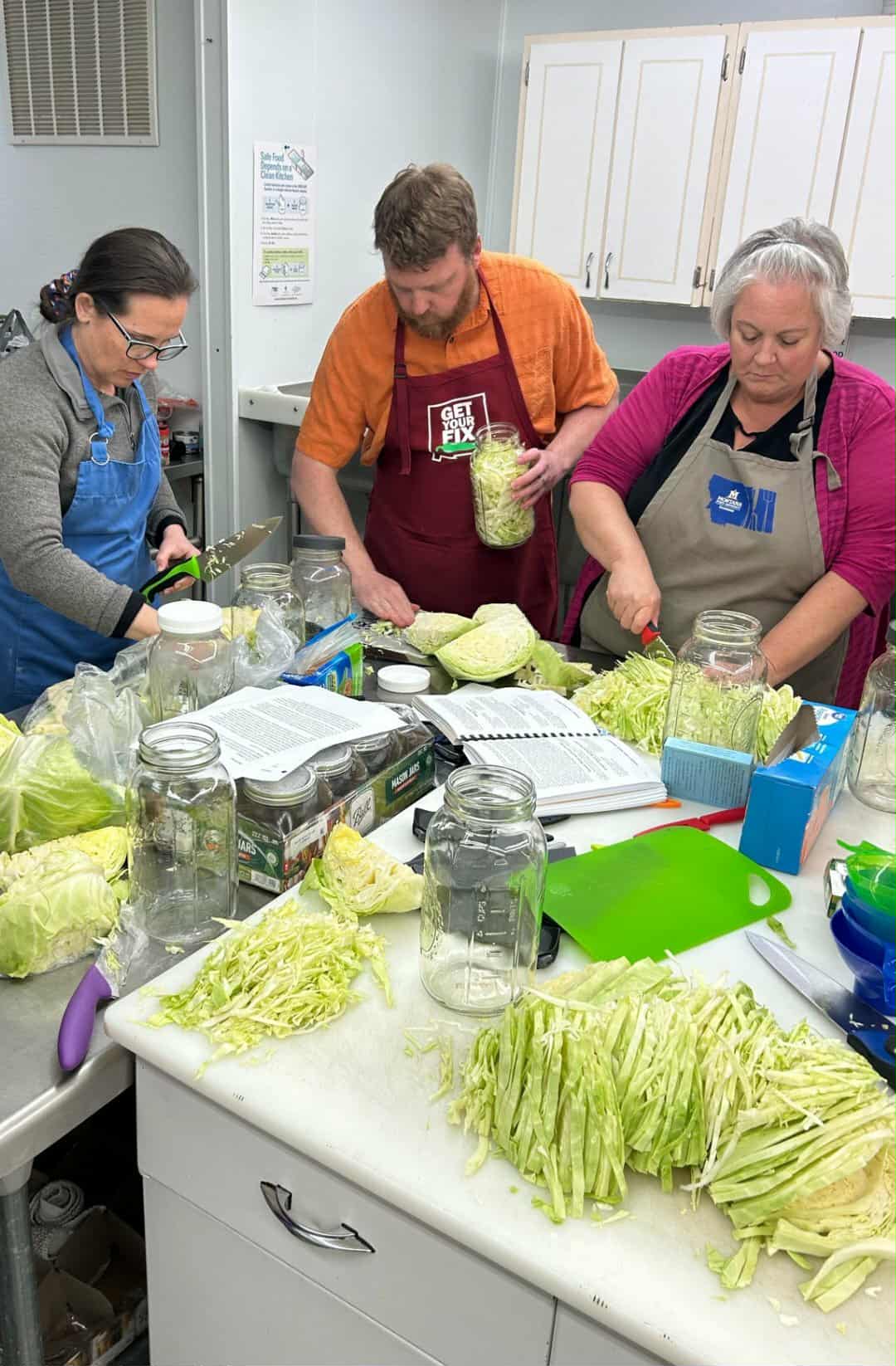
Caption: Class participants preparing food.
Credit: Erin Gregory
Family & Consumer Science
Increasing Community Knowledge & Participation in Making Policy, System & Environmental Changes
SNAP-Ed has participated in a joint stakeholder initiative whose goal is to increase interagency and community knowledge and participation in healthy and sustainable nutrition resources for residents of the Flathead Reservation. In this role, the SNAP-Educator has increased stakeholder participation, facilitated meetings, and compiled and edited the stakeholder newsletter called the FRESH Foods Network Newsletter (Flathead Reservation Eating Sustainable, Healthy Foods).
This network consists of stakeholders from many agencies across the reservation, with representatives from CSKT Tribal Health, MSU and SKC Extension, Hospital Food Service, Food pantries, teachers, Farmers Markets, and local businesses. The group has participated in several area outreach opportunities like the annual Harvest Festival hosted by Tribal Health, local purchasing Initiatives in conjunction with the Montana Food Bank Network, farm to school in multiple schools across the reservation, and multiple inter-agency partnerships to combine nutrition support with nutrition education classes.
Montana State University Extension is an ADA/EO/AA Veteran’s Preference Employer and provider of educational outreach.