

Fort Peck Reservation
2025 MSU Extension Highlights
2025 MSU Extension Highlights
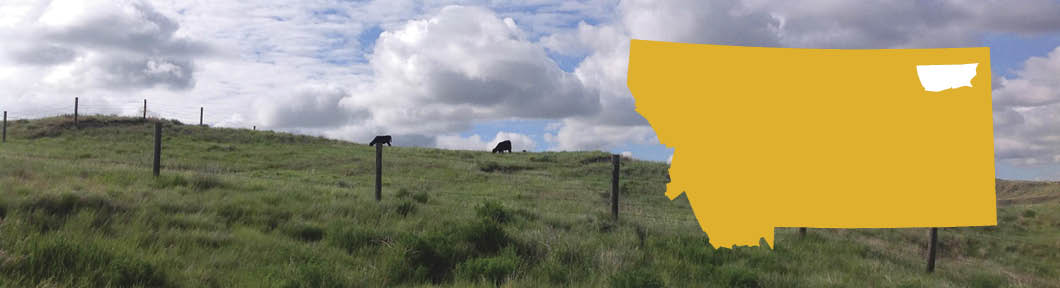
Situated in the far northeast corner of Montana, the Fort Peck Indian Reservation spans over 3,200 square miles, making it one of the largest reservations in the United States in terms of land area. Home to approximately 10,000 residents, most of whom identify as Native American, the reservation is the homeland of the Assiniboine (Nakoda) and Sioux (Lakoda) Nations. It lies approximately 40 miles west of the North Dakota border and 50 miles south of the Canadian border, with its boundaries defined by four major waterways: the Missouri River to the south, the Milk River to the northwest, Big Muddy Creek to the east, and Porcupine Creek to the north.
Poplar serves as the administrative center, housing the Tribal Council headquarters and the Federally Recognized Tribes Extension Program (FRTEP) office. Since 2000, FRTEP has partnered with Montana State University Extension and the Fort Peck Tribes to deliver impactful education and outreach across communities of Wolf Point, Poplar, Brockton, Frazer, Fort Kipp, and others.
The program focuses on strengthening agriculture, natural resource management, and youth development while honoring the traditional values of the Assiniboine and Sioux. Through culturally grounded 4-H initiatives and life skills training, FRTEP empowers families and youth to build healthier schools, homes, and futures. In a region where poverty, school dropouts, and suicide rates remain pressing challenges, this work is vital.
By blending ancestral knowledge with modern best practices, the Fort Peck Reservation Extension Program continues to cultivate resilience, economic opportunity, and environmental stewardship across generations.
Contact
501 Medicine Bear Road
Poplar, MT 59255
406-768-3431
https://www.montana.edu/extension/fortpeck
Agriculture & Natural Resources
Welcoming a New Agent to the Fort Peck Reservation Extension Program
After several years without a full-time Extension agent, the Fort Peck Reservation is proud to welcome a new Agriculture and Natural Resources Extension Agent, Kwanele "Portia" Magwaba, who is dedicated to serving the Assiniboine and Sioux communities. With an associate's degree in agriculture, a bachelor's degree in agricultural economics, and a master's degree in agricultural economics, the new agent brings a strong academic foundation and hands-on experience in both agricultural production and Extension programs.
Having worked directly in the field, the agent understands the unique challenges faced by farmers and ranchers on the reservation, where geographic isolation, limited access to services, and economic hardship continue to impact agricultural sustainability. Her background includes practical work in crop and livestock management, soil and water conservation, and community-based agricultural education.
In addition to agriculture and natural resources, the agent is actively involved in 4-H youth development. Through culturally responsive programming, she supports activities that build leadership, life skills, and confidence among native youth, helping to strengthen families and schools across the reservation.
Since joining the program, the agent has been engaging with producers, tribal leaders, educators, and families to build relationships and begin a formal needs assessment. She is committed to revitalizing essential services, including pesticide applicator licensing, soil and forage analysis, and youth-focused agricultural education, while ensuring that all community members have access to Montana State University resources.
With a deep respect for traditional knowledge and a passion for community empowerment, the Fort Peck Reservation Program is embarking on a new chapter, one that combines cultural heritage with modern agricultural practices to build a stronger, healthier future for all.
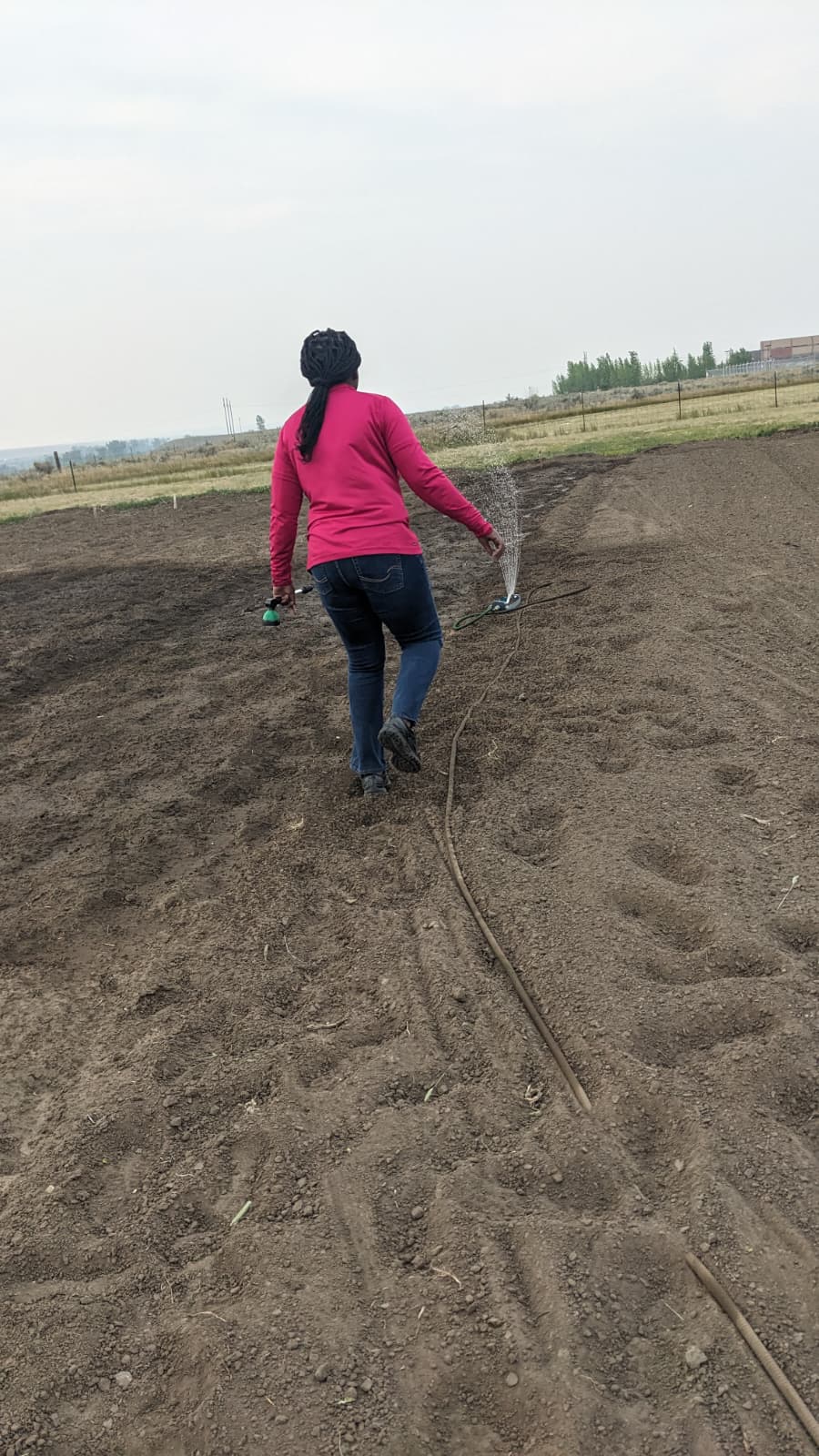
Caption: Fort Peck’s newest team member making sure the pumpkins get a perfect start.
Credit: Tapiwanashe Magwaba
4-H & Youth Development
Seeds of Discovery: Kindergarteners Explore the Pumpkin Patch
Seasonal outdoor learning experiences are crucial for the cognitive, emotional, and physical development of young children. On the Fort Peck Reservation, kindergarten students benefit from opportunities to engage with nature and explore agricultural themes in a hands-on way. Outdoor learning supports observation skills, creativity, and environmental awareness.
MSU Extension organized a pumpkin patch exploration activity where children learned how pumpkins grow, examined varied sizes and shapes, and harvested the ones they wanted—and could carry—home. Two varieties were grown: a traditional Native type and a smaller Orange Smoothie variety, which was planted explicitly in June for this event. Students compared the various stages of growth of the pumpkins to spark curiosity and early science learning.
The excitement was contagious. Children and adults alike expressed joy and appreciation throughout the activity. Due to the overwhelmingly positive response, additional schools reached out to request inclusion. The program added an extra day to accommodate more students and delivered the remaining pumpkins to schools for use in classroom projects. Teachers also asked that the activity be extended to Pre-K and first grade students, reinforcing the value of experiential learning across early childhood education.
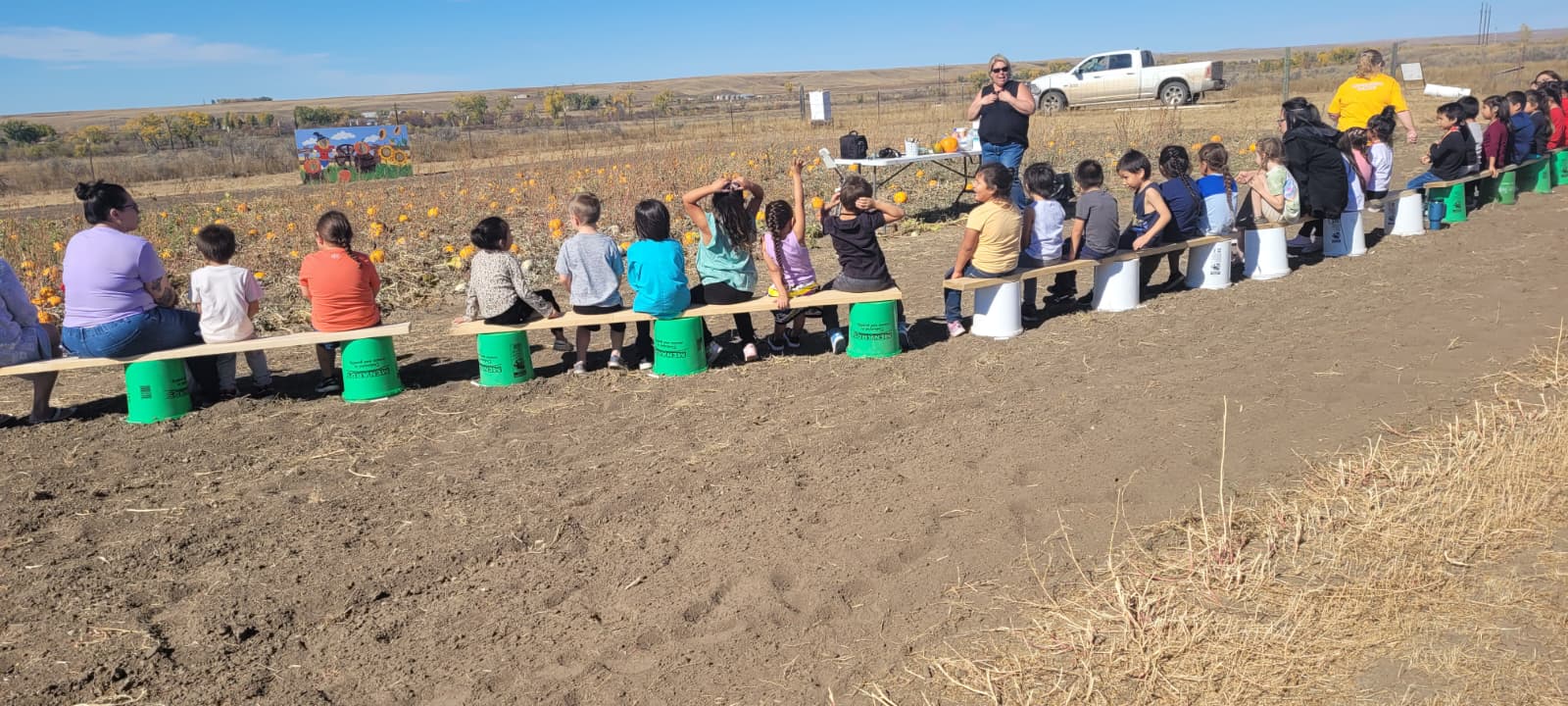
Caption: A harvest of knowledge: Wendy Becker guiding young learners through the world of pumpkins.
Credit: Portia Magwaba
4-H & Youth Development
Wearing Our Stories: Pin-Making for Cultural Expression
Creative expression is a powerful component of youth development, particularly in Native American communities where cultural identity and storytelling hold deep significance. On the Fort Peck Reservation, opportunities for youth to explore and express their heritage through creative activities are growing in importance as part of community and educational efforts. Cultural expression plays a crucial role in building confidence, pride, and emotional well-being among young people.
MSU Extension organized a pin-making workshop where students designed and assembled personalized pins. Each participant selected colors, added drawings or meaningful words, and learned how to put the pieces together to complete their creations. This hands-on activity encouraged storytelling and self-expression, allowing students to share aspects of their identity and experiences. Youth and adults who took part were enthusiastic and proud of their work, expressing appreciation for a space that celebrated culture and creativity together.
4-H & Youth Development
Building Healthy Plates: Nutrition Made Fun
Nutrition education is crucial for youth development, particularly in communities facing food insecurity and limited access to healthy foods. Through MSU Extension, students participated in two engaging activities: a MyPlate sticker activity to build balanced meals and a cultural plate drawing activity to showcase traditional foods.
These hands-on lessons made nutrition concepts easy to understand and enjoyable, sparking meaningful conversations about healthy eating. Both children and adults participated enthusiastically, sharing smiles and stories as they explored what balanced meals look like across cultures, strengthening both nutrition knowledge and community connection.
Montana State University Extension is an ADA/EO/AA Veteran’s Preference Employer and provider of educational outreach.