

Gallatin County
2025 MSU Extension Highlights
2025 MSU Extension Highlights

Gallatin County continues to emerge as one of Montana’s most vibrant and rapidly expanding regions. As of 2025, the county’s population is estimated at approximately 128,000 residents, marking steady growth since the 2020 Census. The City of Bozeman accounts for more than 58,000 of these residents, with additional growth occurring in the surrounding communities of Belgrade, Manhattan, Three Forks, and Big Sky. This growth reflects Gallatin County’s reputation as an area of opportunity—one that balances economic innovation, agricultural heritage, and unparalleled outdoor access.
Gallatin County’s character is defined by its diverse and engaged population. The presence of Montana State University contributes to a highly educated workforce and a culture of innovation, research, and entrepreneurship. Agriculture remains a cornerstone of the county’s economy, supported by generations of producers who steward the land and drive the region’s food and fiber systems. The expanding technology and service industries, alongside a strong tourism sector, contribute to a thriving and resilient local economy.
In partnership with Montana State University and supported by the Gallatin County Government, Gallatin County MSU Extension remains committed to addressing the evolving needs of this dynamic population. Through research-based education and outreach in agriculture, natural resources, horticulture, and 4-H youth development, MSU Extension provides vital resources that strengthen communities, enhance sustainability, and promote the well-being of Gallatin County’s residents.
Contact
903 N. Black Ave
Bozeman, MT 59715
406-582-3280
https://www.montana.edu/extension/gallatin/
4-H & Youth Development
A Year of Growth and Gratitude in Gallatin 4-H
The 2024–2025 4-H year was one of record growth and meaningful change for Gallatin County 4-H. With 675 youth members—the highest enrollment since before COVID—and 138 certified adult volunteers, the program continues to thrive as a cornerstone of youth development in the community. With 12 active clubs across the county, the program serves youth from urban, suburban, and rural areas through a wide range of project offerings to provide youth with opportunities to develop confidence, citizenship, and life skills that will last a lifetime.
Youth participation expanded into several new projects, including Livestock Judging, Welding, and Quilting, while long-standing favorites such as Cloverbuds, Dog Obedience, Robotics, Baking, and Sewing continued to thrive, many reaching full capacity due to strong interest and demand. In addition, county-level educational workshops offered youth instruction on record keeping, interview skills, and parliamentary procedure. Volunteer development remained a priority with a Winter Volunteer Training Series, facilitated in partnership with various MSU Extension professionals, to provide learning sessions on positive youth development, leadership, and program planning. These efforts strengthened volunteer confidence and supported consistent, high-quality programming across clubs and projects.
A focus on continuous improvement guided internal operations throughout the year under the theme “Revise and Revamp.” The office and 4-H committees worked collaboratively to streamline processes, update materials, and realign budgets to better serve emerging needs of youth and families. Our program celebrated 44 graduating seniors in 2025, the largest class in recent memory. Maintaining active involvement among older youth remains a statewide challenge, and this milestone reflects the effectiveness of local leadership and program diversity in keeping teens engaged through their senior year. In response, the Gallatin County 4-H Foundation committee expanded its scholarship program to include support not only for traditional four-year degrees but also vocational and apprenticeship pathways—reflecting the diverse futures our 4-H members pursue.
This year’s accomplishments reflect program growth and the collective grit and dedication of youth, volunteers, parents, and staff. Gallatin County 4-H remains deeply grateful for the community’s continued support and for the countless individuals who make the program’s success possible.
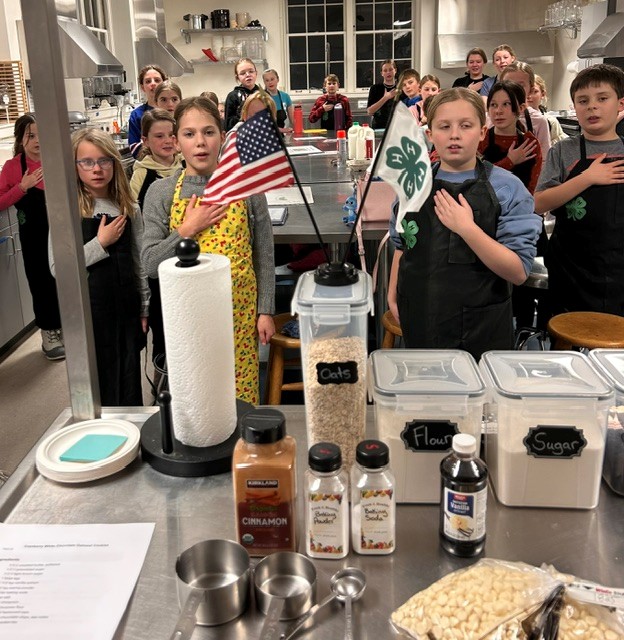
Caption: Youth reciting the 4-H Pledge before a project meeting.
Credit: Erin Neil, Gallatin 4-H Volunteer
4-H & Youth Development
Hands, Heart, and Hard Work
The 2025 4-H program year showcased the dedication, creativity, and strong work ethic that define Gallatin County 4-H members and volunteers. Through experiential learning, leadership opportunities, and community engagement, Gallatin County 4-H continues to empower youth to live the 4-H pledge—using their hands for larger service, hearts for greater loyalty, and hard work for lasting impact.
The 2025 Gallatin County 4-H/FFA Fair serves as one of the program’s most visible and impactful events. 4-H families contributed more than 2,000 volunteer hours preparing fairgrounds and facilities to host 344 youth exhibitors and over 1,000 animals across multiple species. A total of 393 market animals were sold, reflecting the dedication and responsibility of local youth. The livestock sale exceeded $1.4 million in sales, reaffirming the community’s strong commitment to youth agricultural education. The fair continues to serve as a capstone experience, providing members with opportunities to demonstrate learning, professionalism, and community connection.
Due to facility and management challenges, the 4-H Café was not operated during the 2025 Big Sky Country State Fair. Rebuilding or re-envisioning the Café remains a key objective for 2026, as it has traditionally served as a major fundraiser, service project, and public engagement space. In the meantime, Gallatin County 4-H continued to manage concessions at Montana State University home football games and other events at Bobcat Stadium and the Brick Breeden Fieldhouse. This partnership offers meaningful fundraising opportunities and hands-on experience in customer service, teamwork, and financial management—providing both program income and valuable visibility for 4-H in the community.
Teen leadership development remained a hallmark of the program. The County Ambassador Team was re-established, with teen leaders mentoring younger members and contributing to county-level initiatives. Gallatin 4-H was represented at all major statewide events, including Fall Leadership Training, Montana 4-H Congress, and the Legislative Breakfast. The 2025 Gallatin 4-H Camp welcomed 66 campers supported by 38 trained teen counselors. The “Out of This World” space-themed program emphasized hands-on educational, recreational, and creative learning experiences. Through the collective efforts of members, volunteers, and community partners, Gallatin County 4-H continues to build lifelong skills in leadership, service, and citizenship.
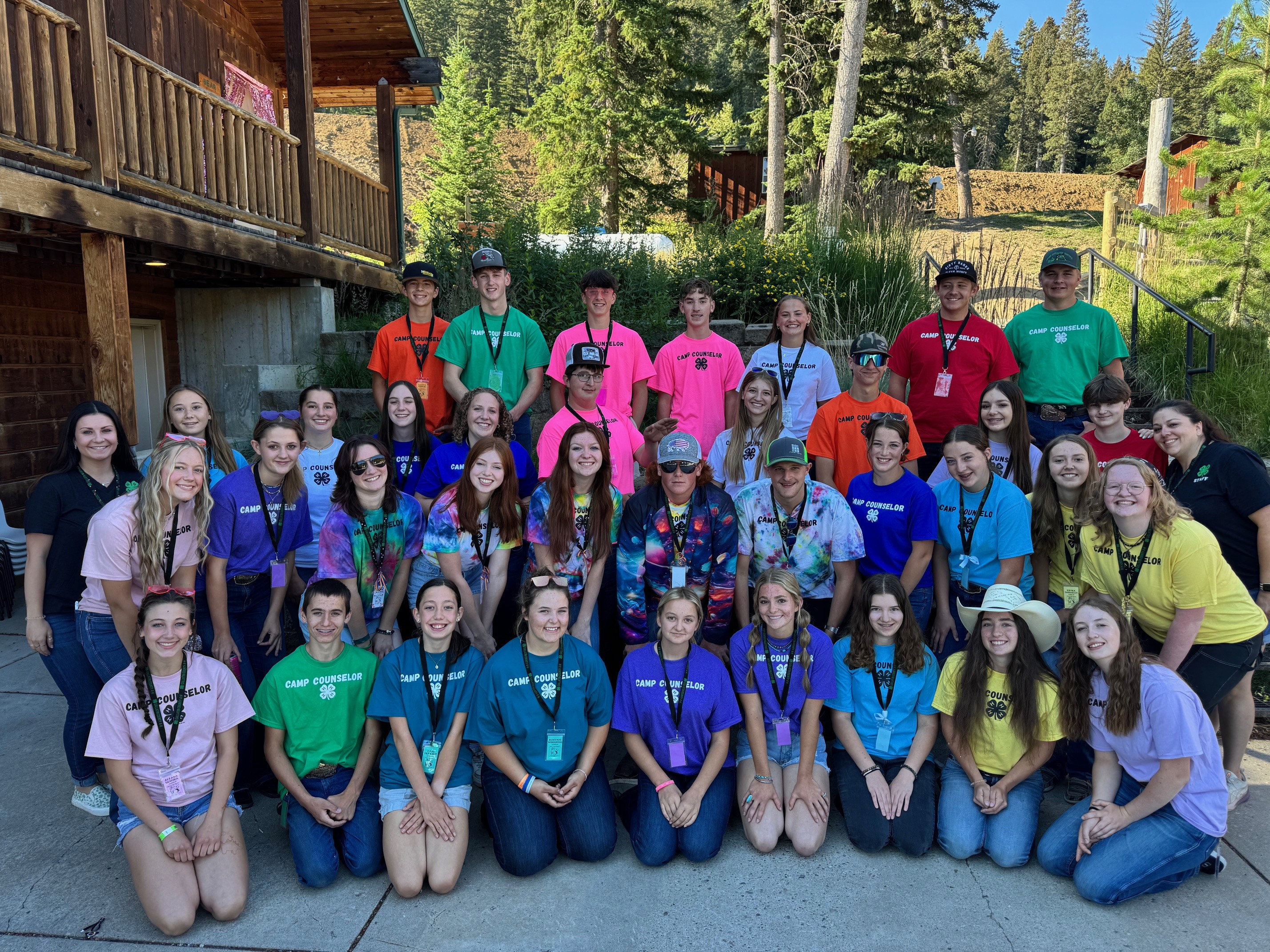
Caption: 2025 Gallatin 4-H Camp Counselors & Directors
Credit: Molly Yurdana, Gallatin 4-H Agent
Agriculture & Natural Resources
Invasive Weed Management Education
Noxious weeds continue to be a top concern among landowners. Gallatin County MSU Extension receives regular requests for weed identification and management options, to the extent that nearly half of the requested site visits in 2025 were related to weed management. To address this increasing volume, Gallatin County MSU Extension coordinated multiple education programs.
Early in the year, a Weed Management Update was offered as a part of the Ag News and Brews program. MSU Extension Cropland Weed Specialist Tim Seipel spoke to a group of 20 landowners about new and emerging issues including management of annual invasive grasses, the potential use of fungal biocontrol, and precision weed management technology. Participants had time to ask questions and apply this information to their specific needs. Half of the attendees received pesticide applicator credits.
In the spring, agriculture agent Elizabeth D’Imperio co-hosted a station on invasive weeds with MSU Extension Specialists, Grow Wild, and the Gallatin County Weed District at the annual Gallatin County 4th Grade Farm Fair. During the event over 1,100 fourth graders had the opportunity to learn about why invasive weeds are a concern, how weeds spread, and what students can do to help stop them from spreading.
To round out these efforts, a Weed ID and Management class was held for the City of Bozeman Parks and Recreation Department maintenance team. The program covered common invasive weeds found in and around city properties with a focus on integrated management practices, and herbicide-free options. Following the talk, crews indicated that they would adjust practices, such as cleaning equipment between parks, to help prevent the introduction of weeds to new areas.
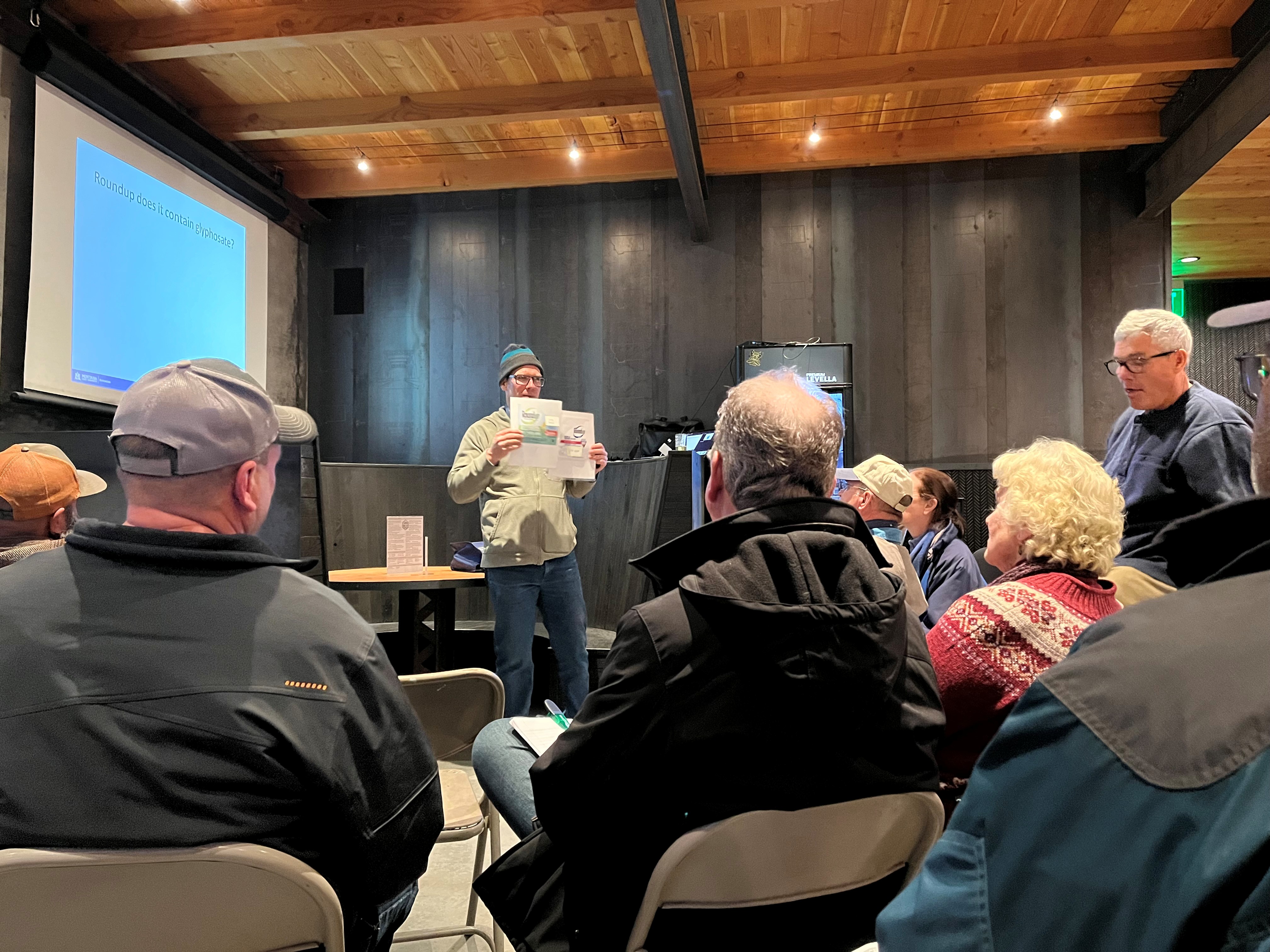
Caption: MSU Extension Cropland Weed Specialist, Tim Seipel presenting at the Ag News and Brews progam.
Credit: Elizabeth D'Imperio, Gallatin Ag Agent
Agriculture & Natural Resources
Master Gardeners Host Plant Clinic
The summer season is a particularly active period for horticulture-related inquiries within Gallatin County MSU Extension. In response to this ongoing community need, the office reinstated its Plant Diagnostic Clinic for the 2025 growing season. The clinic operated on Wednesday afternoons throughout the summer months and was staffed by two trained Master Gardener volunteers. During that time, community members could bring in samples and receive in-person support for their plant identification and diagnostic questions. Throughout the summer more than 20 individuals used the clinic and received help with vegetables, trees, and landscape plants. Volunteers helped identify garden weeds and diagnosed issues associated with insect damage, transplant shock and fire blight.
To prepare for the clinic’s operation, MSU Extension hosted a two-hour Plant Identification and Diagnostic Training for current Master Gardeners. The 12 participants learned about plant identification skills, how to use a diagnostic key, useful books, and online tools. The class also covered identification of common plant problems including abiotic issues such as transplant shock and they spent time learning how to collect useful information to make an informed diagnosis. Half of the class helped volunteer at the diagnostic clinic, and everyone received continuing education credits for Master Gardener Certification.
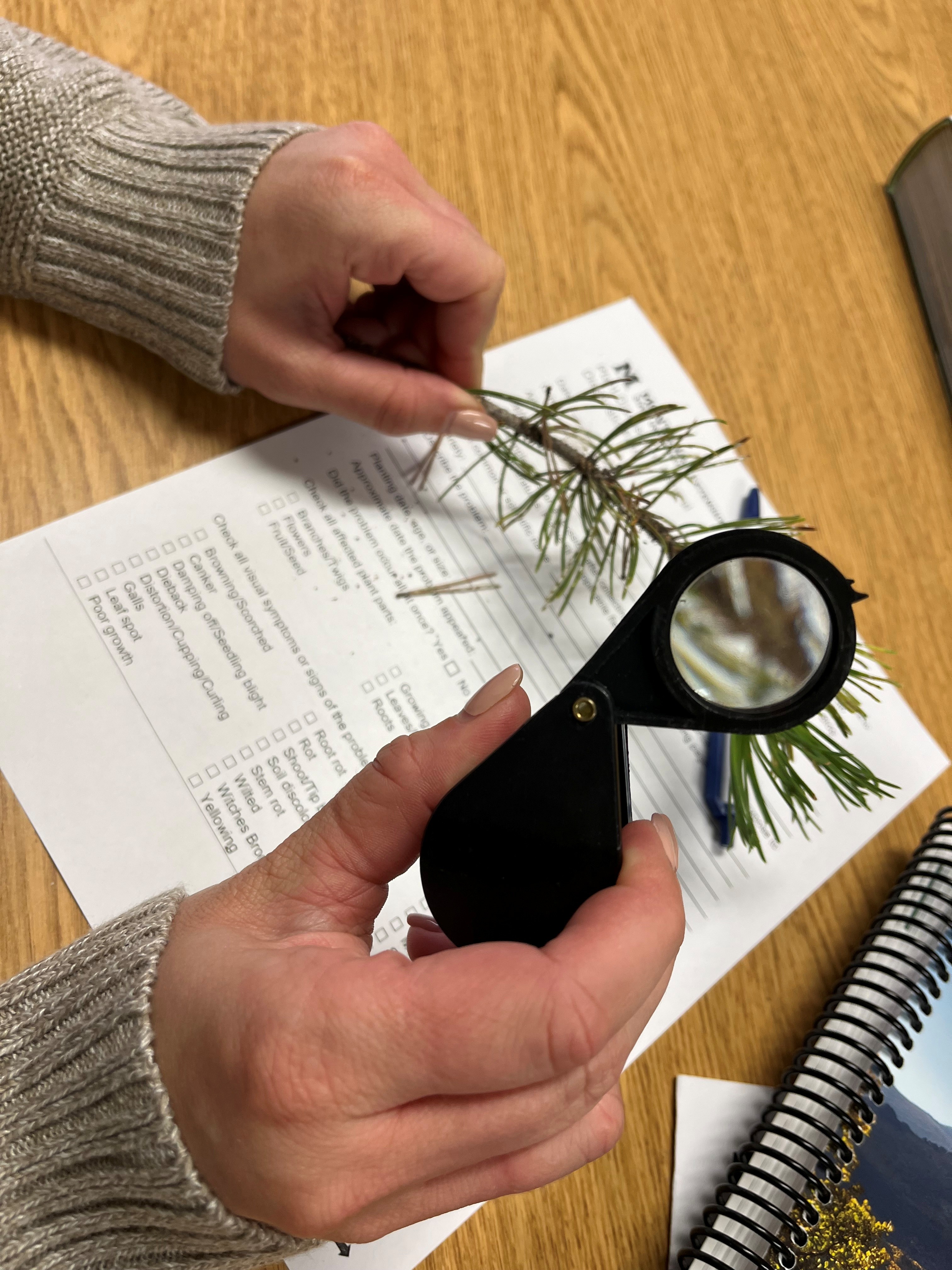
Caption: Plant Clinic findings
Credit: Elizabeth D'Imperio, Gallatin Ag Agent
Montana State University Extension is an ADA/EO/AA Veteran’s Preference Employer and provider of educational outreach.