

Glacier County
2025 MSU Extension Highlights
2025 MSU Extension Highlights
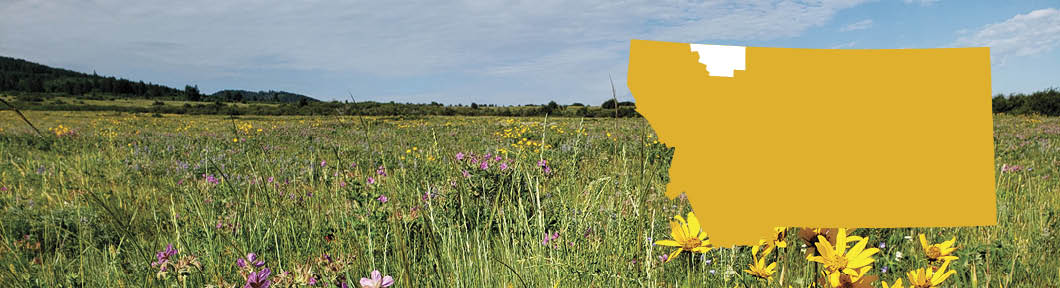
The Glacier County area receives essential support through its unique position as a Montana State University Extension location. The community stands as a diverse cultural center which unites the plains with mountains and traditional ways with modern approaches and agricultural history with natural beauty. The programs of MSU Extension function as a connection which brings research-based knowledge from the university to Glacier County residents. Our organization provides customized educational resources, operational solutions and technical assistance to support Glacier County residents. MSU Extension connects university knowledge to local needs through practical solutions that benefit our community.
The Blackfeet Indian Reservation spreads across 1.5 million acres of Montana territory within Glacier County, which contains 13,800 residents who call it home. The Blackfeet Nation maintains their ancestral connection to the "Backbone of the World" through their 17,000 enrolled members who have lived on this land for many generations. The tribal headquarters of Browning operates as the central point for both cultural and economic activities of the reservation. The Blackfeet people play a crucial role in the social and economic and cultural advancement of the region because they represent a substantial number of residents in the county.
The eastern entrance of Glacier National Park extends through our county to welcome worldwide visitors who explore its 700 miles of trails and alpine lakes and Going-to-the-Sun Road. The community enjoys special advantages because of its proximity to America's most famous national park, but deals with multiple complicated issues. The area faces two main difficulties because of tourism growth: it needs methods to handle visitor numbers for economic growth, and it must protect natural resources and unique ecosystems for upcoming generations. The area spans from the highest point at Chief Mountain which reaches 9,000 feet above sea level down to the lowest point at 3,400 feet where the prairie grasslands stretch across the landscape.
The Blackfeet Nation, local organizations, agricultural producers, families and youth work with MSU Extension in Glacier County to tackle the distinctive prospects and difficulties which affect our region. MSU Extension continues its dedication to community development through its work with ranchers on livestock management, Family and Consumer Sciences, 4-H Youth Development programs and economic sustainability initiatives for communities. This report highlights our program's success which proves how MSU Extension creates substantial positive effects through its direct delivery of university resources to Glacier County residents.
Contact
1210 East Main Street
Cut Bank, MT
406-873-2239
https://www.montana.edu/extension/glacier
Community Vitality
Mental Health Awareness Through Community Connection: Main Street Music and Food Fest
Main Street Music and Food Fest established a wellness-focused event which united people through music and local food to promote mental health awareness. The festival welcomed 353 participants who found a supportive space to focus on wellness by connecting with their community network and easily accessible resources.
The festival featured multiple mental health organizations and information about counseling services, support groups, crisis resources and wellness programs. The event connected participants with previously unknown services to help overcome barriers to care. By fostering a welcoming, judgment-free environment, the festival enabled community members to discuss mental health issues naturally and openly, reducing stigma and making vital conversations a normal part of community dialogue. Shared activities helped foster neighbor relationships after the festival ended.
The street closure turned Main Street into a public area to reduce social isolation while fostering stronger community ties. The event brought visibility to local vendors and artists and wellness providers while attracting customers and boosting sales for local businesses which proved a dual value of social impact and economic growth.
According to post-event feedback, attendees expressed strong interest in making this a recurring event, citing the importance of sustaining access to mental health services and continuing community connection. Of the survey respondents, 100% felt more comfortable talking about mental health issues with a friend, family member, or professional. The festival demonstrates long-term potential because vendors also expressed their desire to join future events. The festival developed an effective system to raise mental health awareness by involving community members instead of medical interventions, which showed that wellness initiatives can lead to better public health outcomes and economic development for participants.
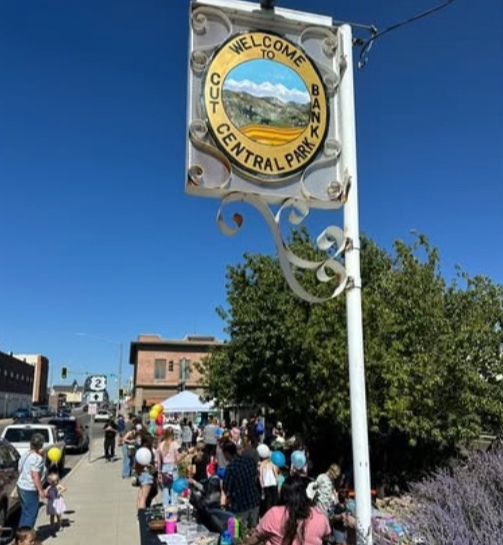
Caption: Building community bonds: Over 350 attendees enjoying music, food, and mental health resources on Main Street.
Credit: Lisa Cline
Family & Consumer Science
Building Healthier Communities Through Family and Consumer Sciences
MSU Extension's Family and Consumer Sciences (FCS) programs in Glacier County deliver essential education that strengthens families and builds workforce capacity across the region. Serving approximately 13,700 residents, including significant Native American communities on the Blackfeet Reservation, MSU Extension programs address critical needs in food safety, nutrition, and health education through culturally responsive, research-based approaches.
A cornerstone of FCS programming has been food safety education and ServSafe certification courses offered to Glacier County and surrounding areas. Over the past three years, MSU Extension has seen participant pass rates climb from 68% to 91%, reflecting enhanced instructional methods and better alignment with industry needs. ServSafe certifications have enhanced employment opportunities for over 150 food service workers, with industry managers reporting increased job stability, wage improvements, expanded career advancement options, and reduced staff turnover. Local restaurants and institutional food services benefit from reduced foodborne illness risk and improved compliance with health regulations. Nutrition programs focus on school-based education, including beef education, MyPlate lessons, and dietary guidelines instruction, helping students understand balanced nutrition and healthy eating patterns that establish lifelong habits.
Health and wellness initiatives have expanded significantly, with mental health awareness becoming a priority focus. Through MSU Extension's Mental Health Conversation Curriculum, FCS programs increased mental health awareness at two major local events: the Glacier County Community Wellness Expo and Main Street Music and Food Fest. These community-centered initiatives reaching over 400 residents reduce stigma around mental health challenges and normalize conversations. By meeting people in familiar settings, MSU Extension creates opportunities for open dialogue about mental well-being, connecting residents with resources and support systems. Community members report greater comfort discussing mental health challenges and increased awareness of available resources, helping shift community culture around mental well-being.
4-H & Youth Development
Golden Triangle 4-H Volunteer Summit trains 4-H leaders from seven counties
The Golden Triangle 4-H Volunteer Summit in November, 2024, in Shelby was a success thanks to a Montana 4-H Foundation Innovative Programming grant and collaboration from local agents and volunteers. The event attracted volunteers from Hill, Liberty, Toole, Glacier, Teton, Chouteau, and Cascade counties.
This regional training was based upon observations as an Extension agent and conversations with 4-H leaders. This led to the agenda of workshops on Record Books, Project Books, and Resources, Instilling Life Lessons through the Livestock Project, Swine, Tech Tools for Leaders, Cultivating a 4-H Community, Helping Create Success in the Livestock Project, Cloverbuds, Creating Effective 4-H Project & Club Meetings, and Conflict Management. Through a 4-H Kahoot trivia game, 'Best Practices' to present 4-H policy was covered in a positive manner. Jane Wolery of the Montana 4-H Foundation presented on 4-H Investment Opportunities as well.
The Innovative Programming grant assisted with refreshments, lunch expenses and paid for two 4-Hers to provide free, onsite babysitting which was utilized by five young families with eight children. The grant also covered expenses to allow Glacier County 4-Hers to prepare a variety of homemade cookies for the event, which provided them a learning opportunity and gave them a chance to contribute.
Volunteers noted that a few of the best things about the event were networking, the knowledge shared, hearing about 4-H's effect on youth and generations, and seeing the 4-H curriculum and resources available. Leaders also appreciated having questions answered as a new parent, the variety of topics, positive energy, beef and livestock ideas, and meeting people from other counties who were like-minded.
As a result of attending the Summit, volunteers planned to begin recordkeeping activities at the beginning of a meeting instead of the end, move recreation activities earlier in the meeting, and have the club make a budget. They also planned to keep better club records, bring speakers into their counties, collaborate more with other clubs and leaders, and add more education and project leaders to their club.
Overall, the event was rated 4.9/5. The average volunteer who attended works with 51 youth/year, which means the volunteers who participated are reaching over 865 4-H youth annually. In addition, the event provided a template for Southcentral Montana agents to host a similar event in January 2025.
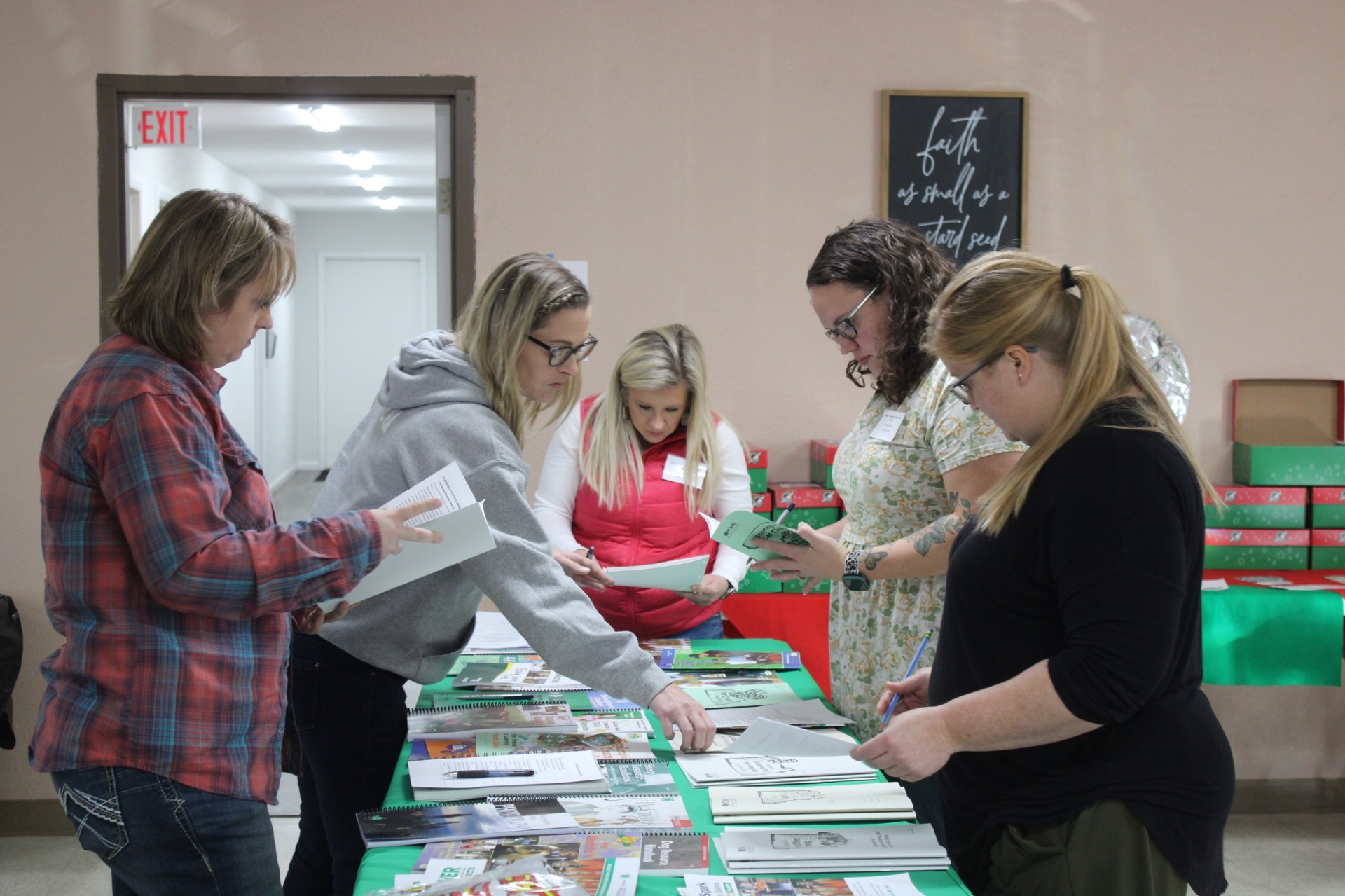
Caption: 4-H volunteers had the opportunity to see a variety of 4-H resources available through a Curriculum Scavenger Hunt.
Credit: Kari Lewis
Agriculture & Natural Resources
Ranchers and 4-H beef members delve into livestock genomic testing
Eighteen 4-Hers from Glacier, Toole, Pondera, and Blackfeet 4-H programs recently completed a beef cattle genomics project. Thanks to support from the Montana 4-H Foundation and Zoetis, participants had the opportunity to collect tissue samples from their or their family’s cattle herds and submit them for genetic analysis of economically relevant traits. In total, families submitted samples from 31 cattle.
Samples were analyzed using the Inherit Select test, a genetic testing tool for commercial females. Nearly 1.5 million straightbred and crossbred animals have been evaluated through this test, which provides rankings for 20 different traits, three economic indexes, and predictions for crosses of eight major breeds.
After results were processed, each 4-Her received an individual report showing rankings for growth, maternal, and carcass traits, as well as economic indexes and breed composition percentages. Jed Hutchison, Zoetis Genetics Account Manager for the Western U.S., met virtually with participants and their families to review the results. He explained that the test helps identify which animals will be most profitable over their lifetime, allowing for improved marketing, breeding, and benchmarking decisions. The test can also match calves to sires, helping ranchers identify which bulls are producing the best or poorest calves. One rancher commented, “It’s an economical way for commercial operations to avoid keeping poor-performing heifers as mother cows.”
Through the project, 4-Hers learned how to collect tissue samples from live animals, gained understanding of genetics technologies available to commercial cattle producers, and discovered how to use genomically enhanced Expected Progeny Differences (EPDs) for selection, mating, and marketing decisions.
Three-fourths of participants said they plan to use genomic testing in their future cowherds. “I learned so much, and it was super cool!” one 4-Her shared. Another added, “I’d like to do this again—especially as we have calves born from the ones we tested—to see how the genetics have improved.” Participants also enjoyed seeing how their cowherd compared to others in the national database.
This project had lasting impacts on both 4-H youth and ranch families, demonstrating a successful collaboration between 4-H, private industry, and local producers.
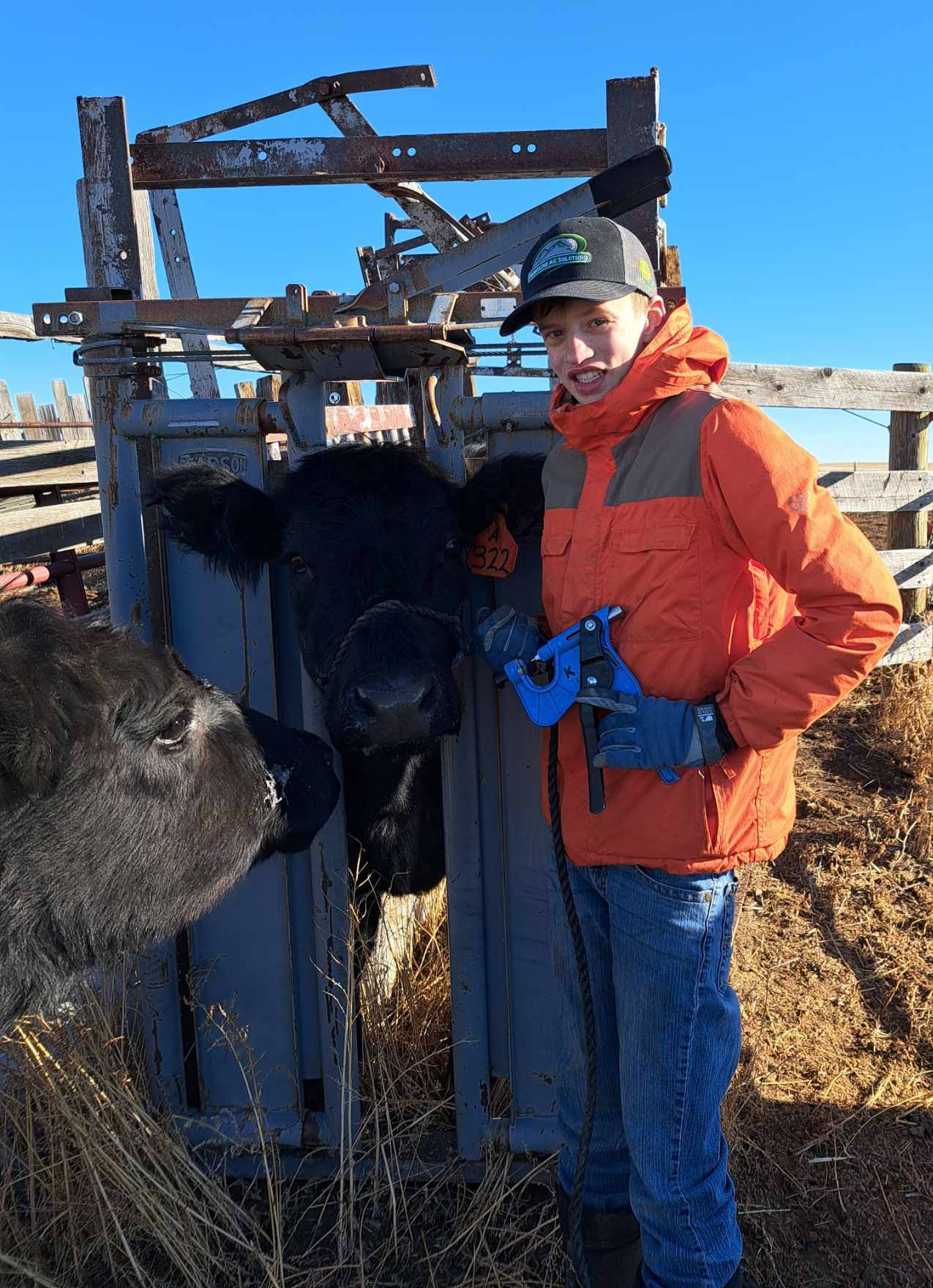
Caption: Alec Morrisett collected a tissue sample from his heifer for participation in the genomics project.
Credit: Kari Lewis
Community Vitality
Local Leadership – Practical Skills for Productive Meetings ignites local leaders
Local leaders from Glacier and Toole counties left the Local Leadership - Practical Skills for Productive Meetings session both inspired and better equipped to serve on local boards. The intent of the session was to help grow local capacity and provide techniques for effective meetings. The session focused on strategies for productive meetings, decision-making within an organization, navigating group dynamics, building trust within a group, and engaging members to build the mission.
There was representation from the Glacier County Library-Cut Bank board, Cut Bank Community Foundation, Cut Bank Trails, Glaciereens, Lions, Cut Bank Education Foundation & Alumni Association, to Girl Scouts, Rocky Mountain Elk Foundation, 4-H, church groups, Healthcare Foundations, CASA, and more. MSU Extension Community Vitality specialists Tara Mastel, Katie Weaver, and Jennifer Anderson shared tools and strategies to bridge 'worst meetings' to 'best meetings' and also about stages of group development.
Overall, attendees gained a better understanding of local leadership roles, resources available, how to have effective meetings, and build a strong foundation for their group or organization. Several participants gained confidence in themselves through the training with one noting, “I feel more confident stepping into a leadership role” or “this gave me ideas for how to improve things in my town.”
Participants acknowledged that it’s ok to hold a board vacancy until the time is right, there are techniques to handle situations with boards, the importance of taking time to connect at each meeting, and that connecting with the mission at the outset of each meeting sets the tone for the meeting.
As a result of the training, participants said they plan to help board members learn to know each other better, enact a group agreement, develop a new member orientation, group agreements, and ground rules, etc. Other attendees said they plan to follow their organization bylaws for clear goals and decision making and also remember to celebrate their successes before moving on.
Participants also appreciated the opportunity to network with other leaders and gain understanding of common challenges, etc. when serving on local boards in rural communities. This training helped equip both the current and next generation of community leaders.
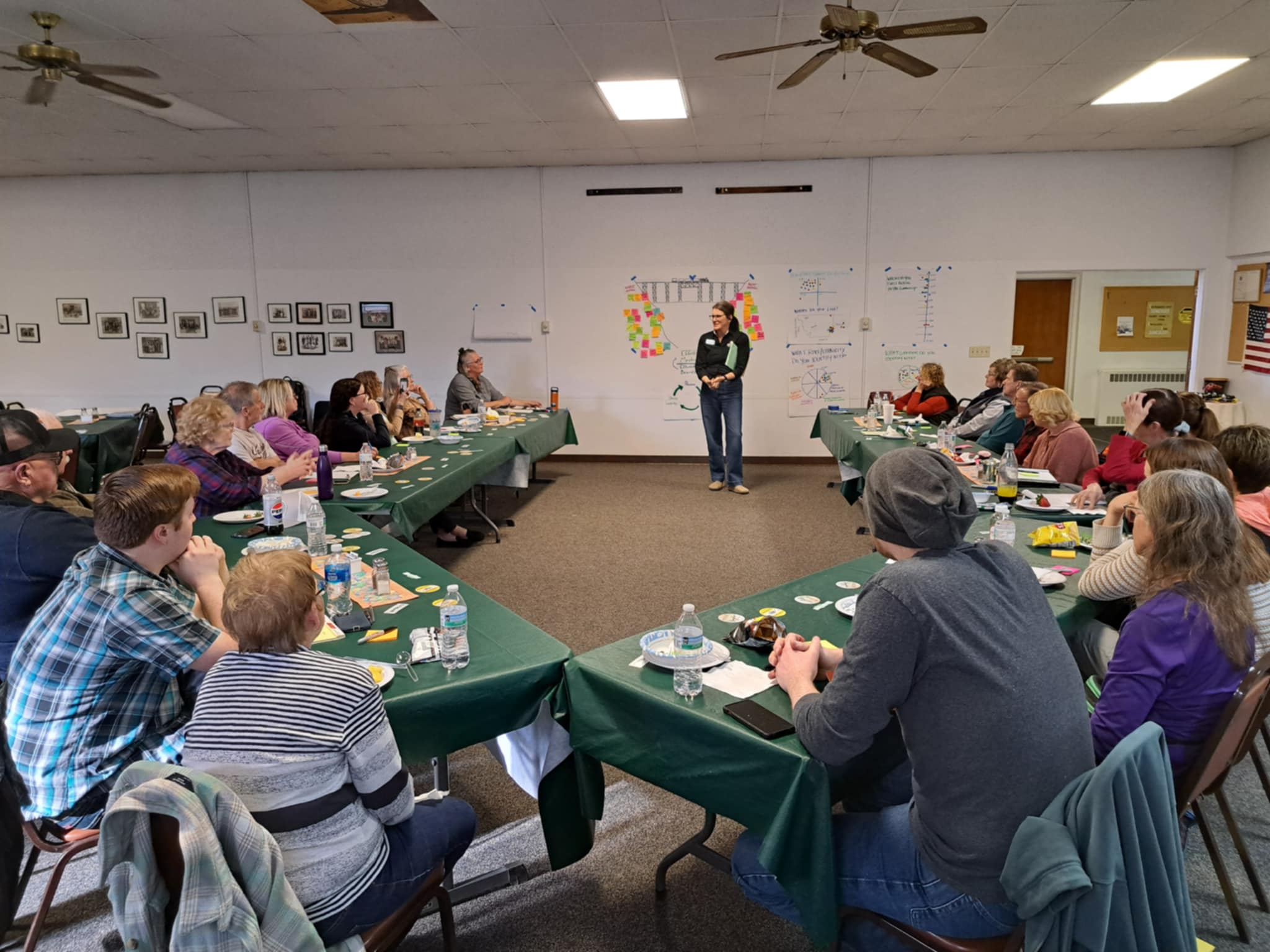
Caption: Tara Mastel helped local board members create a bridge between ineffective and effective meetings.
Credit: Kari Lewis
Family & Consumer Science
Nutrition Education in Browning
MSU Extension's Family and Consumer Sciences (FCS) program is strategically providing education efforts in Browning in response to recent SNAP-Ed funding cuts. Delivering nutrition education through the MSU Extension FCS program will ensure Browning families have continuing access to food and nutrition education services.
Browning is a community within the Blackfeet Reservation which serves about 1,000 people while dealing with specific barriers to food availability and nutritional education and health inequality. The elimination of SNAP-Ed programs resulted in a disruption of essential services for low-income families receiving nutrition and cooking education and information on food resource management. MSU Extension fulfills this requirement by providing their FCS programs for continued service delivery.
The FCS programs have three main components: nutrition education, teaching people to prepare healthy meals at affordable costs, and helping families access food assistance programs. MSU Extension will establish partnerships with local community organizations and tribal groups to create programs that honor Blackfeet cultural practices while providing services which address the requirements of Browning residents. The MSU Extension education approach of collaboration enables tribal services to operate while maintaining tribal autonomy in governance.
By filling this community need, MSU Extension demonstrates commitment to serving all Glacier County residents, particularly those in underserved rural and tribal communities. MSU Extension adopted this strategic move to provide nutrition education access to Browning families to continue support for their health and wellbeing. The enhanced program visibility allows MSU Extension to build stronger ties with tribal communities while delivering trusted information that helps address food security and nutrition challenges on the Blackfeet Reservation.
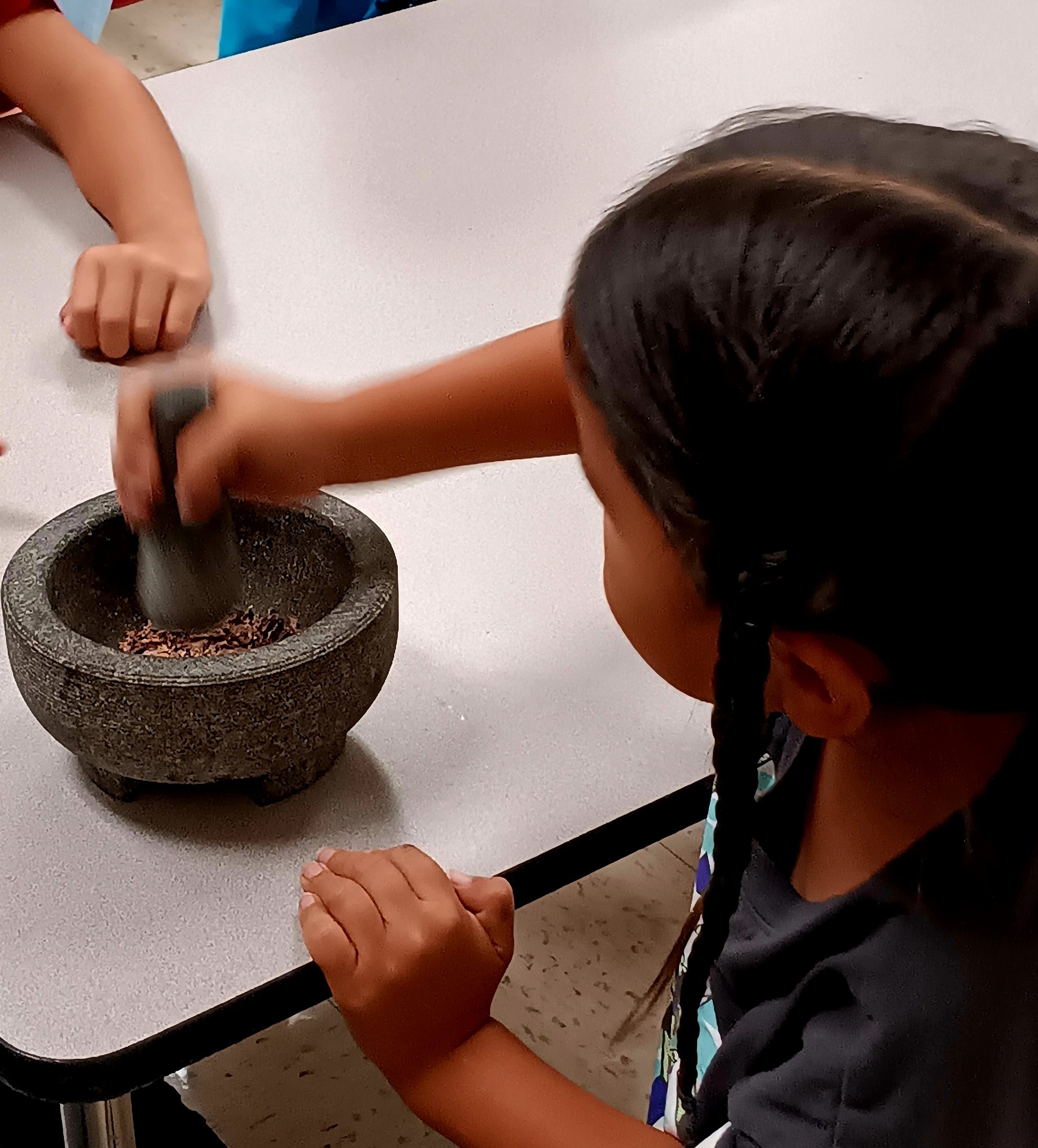
Caption: Kindergarten student in Browning creates Pemmican in school nutrition program
Credit: Lisa Terry
Montana State University Extension is an ADA/EO/AA Veteran’s Preference Employer and provider of educational outreach.