

Hill County
2025 MSU Extension Highlights
2025 MSU Extension Highlights
The Hill County MSU Extension office has two full-time MSU Extension agents and one full-time administrative assistant. The staff serves a population of 16,179 residents. Hill County, which encompasses 2,916 square miles in northcentral Montana, borders Canada to the north with Havre being the county seat with a growing population of 9,314 residents. One of the main economic drivers in Hill County is agriculture. The primary sources of employment include the U.S. Border Patrol, BNSF Railroad, healthcare and education sectors. The Rocky Boy Indian Reservation is located in the southeast corner of the county with a population of 3,794 residents. Montana State University and the United States Department of Agriculture provide funding for education and outreach in agriculture, family and consumer sciences, natural resources, horticulture and 4-H youth development.
Contact
315 Fourth Street
Havre, MT 59501
406-400-2333
https://www.montana.edu/extension/hill/
Family & Consumer Science
Caregiver Respite Retreats
The Caregiver Respite Retreats held in Hill County, including the Valentine's Retreat and two seasonal retreats in Havre, provided essential support to home and institutional caregivers facing the challenges of caregiving. These retreats addressed a critical need identified in the 2022 MSU Extension needs assessment, which found that 64.6% of Montanans value volunteer caregiver resources, yet 50.2% were dissatisfied with current educational offerings.
Through the Montana Respite Retreat Program, caregivers participated in a research-informed, in-person workshop designed to enhance well-being through four key modules: social engagement, mental health, nutrition/physical activity, and stress reduction. Activities such as crafting sun catchers and making simmer jars, enjoying harp music, and sharing meals fostered a sense of community and self-care.
Across all three retreats, 38 caregivers (34 females, 4 males) experienced a measurable increase in well-being. Participants reported feeling less isolated, more connected, and better equipped to manage the emotional demands of caregiving.
The retreats were made possible through collaboration with MSU Extension Gerontology Specialist Dan Koltz, who provided materials and led activities. Local facilitation included advertising, teaching, project assistance, and hospitality, ensuring a welcoming and restorative environment. Personalized touches—such as rose bowl centerpieces, harp music, and take-home charcuterie boxes—enhanced the experience and reinforced the educational message that caregivers deserve care too.
These retreats offered respite and renewal, and laid the foundation for ongoing self-care practices and peer support networks in Hill County. The sustained improvement in well-being scores highlights the long-term value of investing in caregiver support through thoughtfully designed, community-based programs.
.jpg)
Caption: Caregiver Retreat
Credit: Kati Purkett
Family & Consumer Science
ServSafe® Food Safety Certification
In partnership with the Hill County Sanitarian, Hill County MSU Extension continues its commitment to food safety through providing ServSafe® Food Handler and Food Manager Certification classes. These programs address the requirement for certified food managers in all restaurants and, though food handler certification isn’t mandated in Hill County, MSU Extension offers it proactively to promote safer food practices.
ServSafe® Food Manager Certification
In 2025, Hill County MSU Extension facilitated five in-person Food Manager classes,
certifying 20 individuals from restaurants, senior centers, cottage kitchens, and
other food service settings. Each session featured interactive instruction, real-life
scenarios, practice tests, and subject review, followed by the certification exam.
Key Outcomes:
- 100% pass rate
- Participants included restaurant managers, cooks, sanitarians, and food business entrepreneurs
- Attendees reported learning new techniques in cooling, fryer cleaning, food storage, and safe serving
- All committed to changing at least one behavior in their food handling practices, both professionally and personally
ServSafe® Food Handler Certification
Also during this period, Hill County MSU Extension hosted five Food Handler classes,
reaching 43 participants working in schools, motels, restaurants, and community kitchens.
These 3.5-hour sessions included hands-on instruction and an exam requiring 70% correct
to pass.
Key Outcomes:
- 100% pass rate in four of five classes
- Participants gained confidence in dishwashing, food timing, sanitizing, and proper reheating/cooling
- Several sessions were customized for organizations such as Rockyboy Headstart, Duck Inn Motel, and Blaine County Senior Center
- Attendees appreciated the practical examples and local accessibility
Overall Program Impact
- Increased collaboration with local officials
- Certified 63 food service professionals
- Improved food safety practices across restaurants, schools, senior centers, and homes
- Strengthened community health by reducing foodborne illness risk
- Reaffirms MSU Extension’s credibility as a responsive community partner
Agriculture & Natural Resources
MSU Extension Hill County Partners with Stone Child Extension
For the past two years, MSU Extension Hill County has partnered with Stone Child College on the Rocky Boy Reservation to support agricultural education and outreach. As part of this collaboration, Stone Child College hosted a Cattleman’s College Series and invited MSU Extension Hill County’s Agriculture and Natural Resources Agent, Colleen Pegar, to lead a series of one-hour workshops focused on cattle production.
Pegar developed and delivered workshops covering four key topics: branding and vaccinations, ranch management, weed and crop management, herd health and calf marketing. These sessions were tailored to meet the needs of local cattle producers and land stewards, offering practical, research-based knowledge in a concise, accessible format.
The success of the Cattleman’s College Series led to additional opportunities, including a lawn and garden workshop that Pegar presented for the Tribal Housing Committee. This expansion of programming demonstrates the growing trust and collaboration between MSU Extension and the Rocky Boy community.
Participants in the Cattleman’s College have reported increased awareness of the plants and vegetation on their land assignments, as well as improved understanding of cattle production practices. Many also noted that they enjoyed the sessions and found the information both useful and engaging.
This partnership highlights the value of community-based education and the impact of culturally relevant, locally delivered MSU Extension programming.
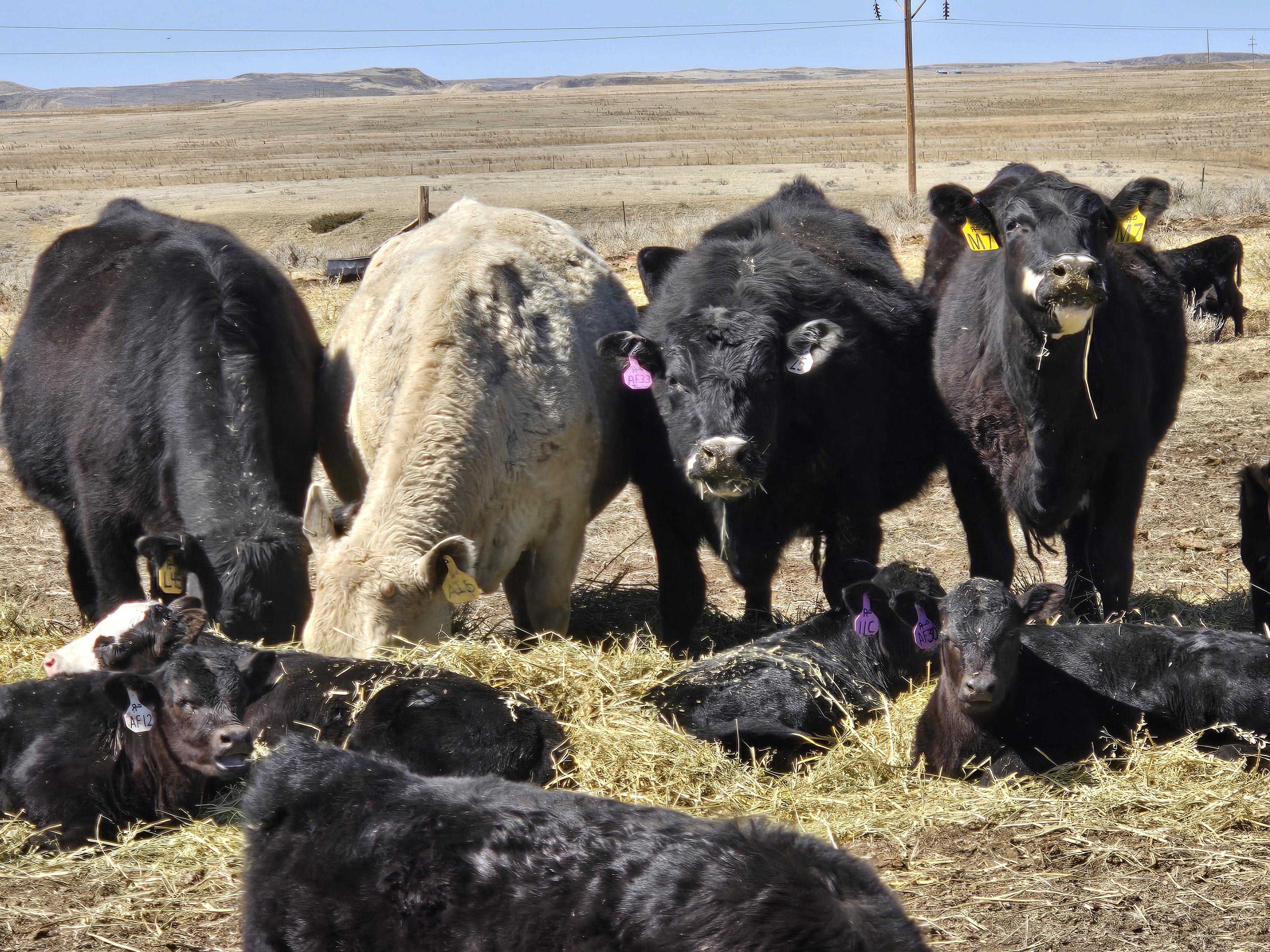
Caption: Cows and Calves on the Feedline
Credit: Colleen Pegar
Agriculture & Natural Resources
Palmer amaranth Found in Hill County
In 2025, Palmer amaranth was confirmed in Hill County for the first time. The discovery occurred when a local producer brought a suspicious plant to MSU Extension Hill County’s Agriculture and Natural Resources Agent, Colleen Pegar, for identification. The plant, measuring 12–18 inches tall, showed key characteristics of the Amaranthus species. It was first sent to the Schutter Diagnostic Lab for analysis, and then a DNA sample was forwarded to North Dakota State University (NDSU), where it was confirmed as Palmer amaranth.
To date, two Palmer amaranth plants have been confirmed in Hill County. Early detection is critical, as this aggressive weed can produce over one million seeds per plant and dramatically reduce crop yields. Making matters worse, it is resistant to six different modes of chemical control, making management extremely difficult.
Palmer amaranth is listed on the Montana Department of Agriculture’s watch list, alongside other invasive species such as Waterhemp and Ventenata. A warm-season annual, Palmer amaranth has previously been identified in Toole, Daniels, and Carter Counties. It spreads rapidly through multiple channels, including vehicles, trains, custom harvesters, and contaminated seed.
In response to the Hill County discovery, Pegar assembled and distributed informational packets to seed and equipment dealers, local government agencies, and ag-based businesses throughout the county. These resources are designed to help others identify and report suspected Palmer amaranth sightings promptly.
MSU Extension Hill County played a key role in this early detection effort and will continue to monitor the affected area over the next three years to track any further spread. Continued education and vigilance are essential to managing and minimizing the impact of this highly invasive weed.
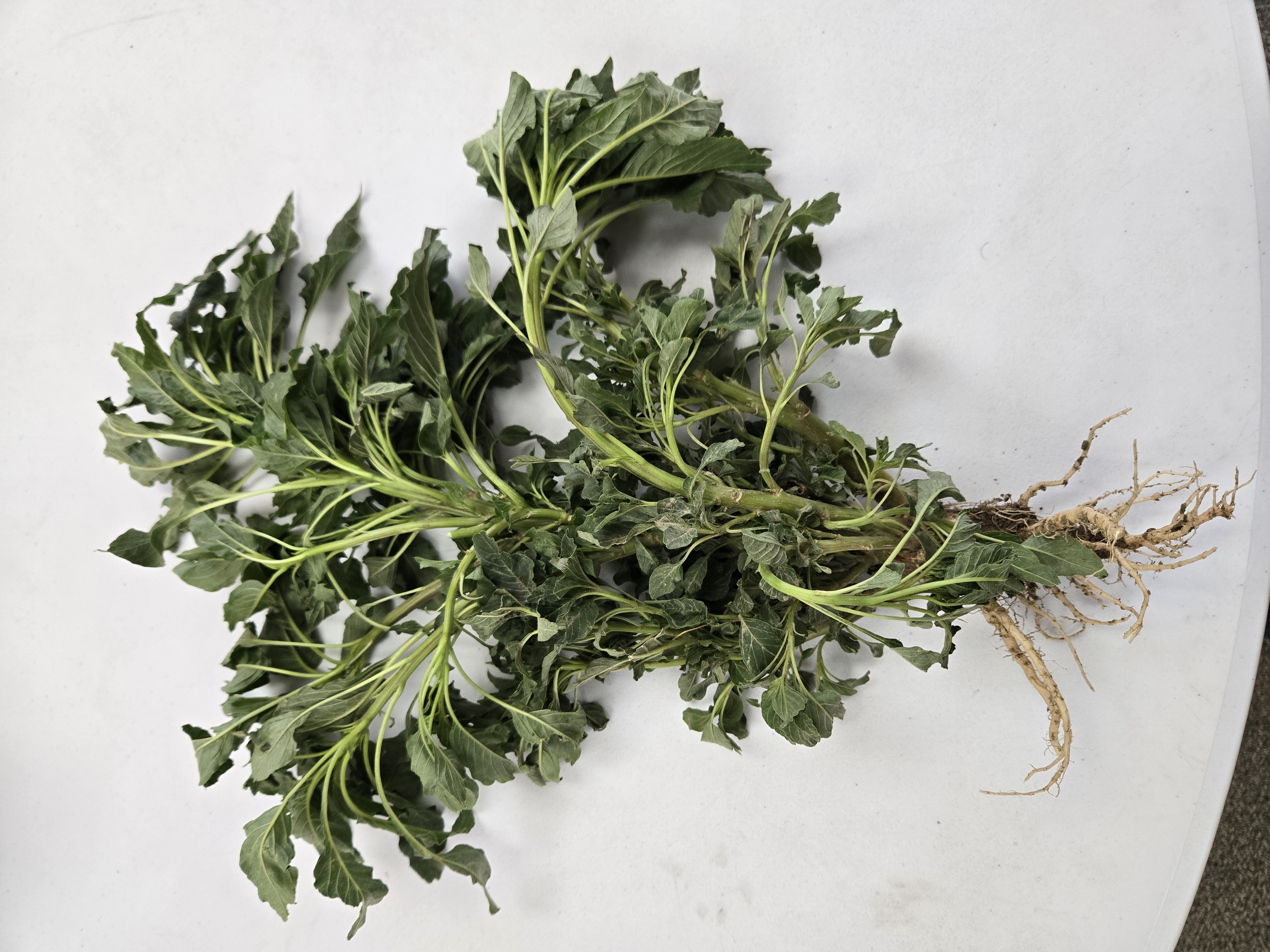
Caption: Palmer Amaranth
Credit: Colleen Pegar
Montana State University Extension is an ADA/EO/AA Veteran’s Preference Employer and provider of educational outreach.