

Mineral County
2025 MSU Extension Highlights
2025 MSU Extension Highlights

Looking Ahead Down the Long, Narrow Valley
“A long, narrow valley…” was the description of Mineral County in a report on timber resources published by the then Montana Department of State Lands and the Forest Service (USFS) in 1983. At that time, Mineral County produced over 86 million board feet of timber from one major sawmill and six smaller mills.
Additionally, at that time, there were two post and pole operations, two cedar mills, and one log home producer. The fact that the largest ponderosa pine tree in Montana is found in Mineral County alludes to the potential of the area to produce timber resources.
Today, that wealth of timber industry is gone from Mineral County; only a single post and pole operation, Big Sky Forest Products, and Mountain West Products, a company recycling wood by-products for the Lawn and Garden and Landscaping market, remain. Yet the resource that once supported the industry of Mineral County remains. Public lands, either federal or state, account for almost 93% of the acreage in Mineral County. As such, decisions made regarding the management and activities directly impact local residents.
Decisions regarding the management of public lands rely on input from the public. To facilitate input from Mineral County citizens, MSU Extension, and the USFS, Superior Ranger District, established a working collaborative called the Mineral County Resource Coalition (MCRC). MCRC provides a forum for Mineral County residents to voice their informed opinions to those making management decisions. Discussion revolves around the community input process and information from the USFS, the agency responsible for managing over 82% of the public land in Mineral County.
Supported by Mineral County, the collaboration continues to build and maintain relationships, provide local input, and engage in local community needs such as updating the Community Wildfire Protection Plan. This process has brought the forest back to the community and lessened the sense of disenfranchisement felt by local residents and the sense of separation felt by USFS personnel. MSU Extension facilitates and sustains these efforts wherein local government, congressional staff, state agencies, industry, schools, health industry, recreationists, and citizens-at-large all contribute and participate.
Contact
301 2nd Ave East #730
Superior, MT
406-822-3545
https://www.montana.edu/extension/mineral/
Community Vitality
Partnering for Wildfire Resilience: Mineral County's Collaborative Approach
Mineral County is surrounded by vast forests and natural resources. With wildfire risks increasing, the Mineral County Resource Coalition (MCRC) recognized the need to update the county Community Wildfire Protection Plan (CWPP). This update focused on identifying and prioritizing fuel reduction treatments and recommended practical measures to reduce structural ignitability and prepare residents for wildfire emergencies. The two main functions of the CWPP are to identify and prioritize fuel reduction treatments needed in the planning area and outline methods for addressing these, and to make recommendations for measures that reduce structural ignitability and outline methods for addressing these projects.
MSU Extension administered and facilitated the MCRC and secured $81,587 in funding from the DNRC Wildfire Defense Grant. Together, a core team of local stakeholders contributed expertise and perspectives to the planning process. Fire departments recommended evacuation protocols based on past fire events, helping shape the updated communication strategies. The DNRC and NRCS offered technical knowledge on forest management and fuel reduction, while the Superior Ranger District contributed insights on public land and trail accessibility for evacuation. Community members, including private landowners, shared personal stories and concerns, highlighting the need for accessible information and tailored resources.
In coordination with SWCA Environmental Consultants, Extension Agent Emily Park organized virtual and in-person community engagement events at several locations across the county, provided grant administration through the Mineral County Economic Development Corporation and provided educational resources. They facilitated workshops to gather community input and collaborated with local stakeholders to prioritize wildfire mitigation strategies. Together, they helped guide discussions, identify key priorities, and develop actionable strategies to mitigate wildfire risks.
A collaborative environment was created that empowered residents to contribute their insights and concerns. The updated CWPP offers practical resources for private landowners, includes enhanced evacuation plans, improved communication strategies, and targeted fuel reduction projects to safeguard the community. These enhancements have positioned Mineral County to secure future federal and state funding for ongoing wildfire defense and community development initiatives.
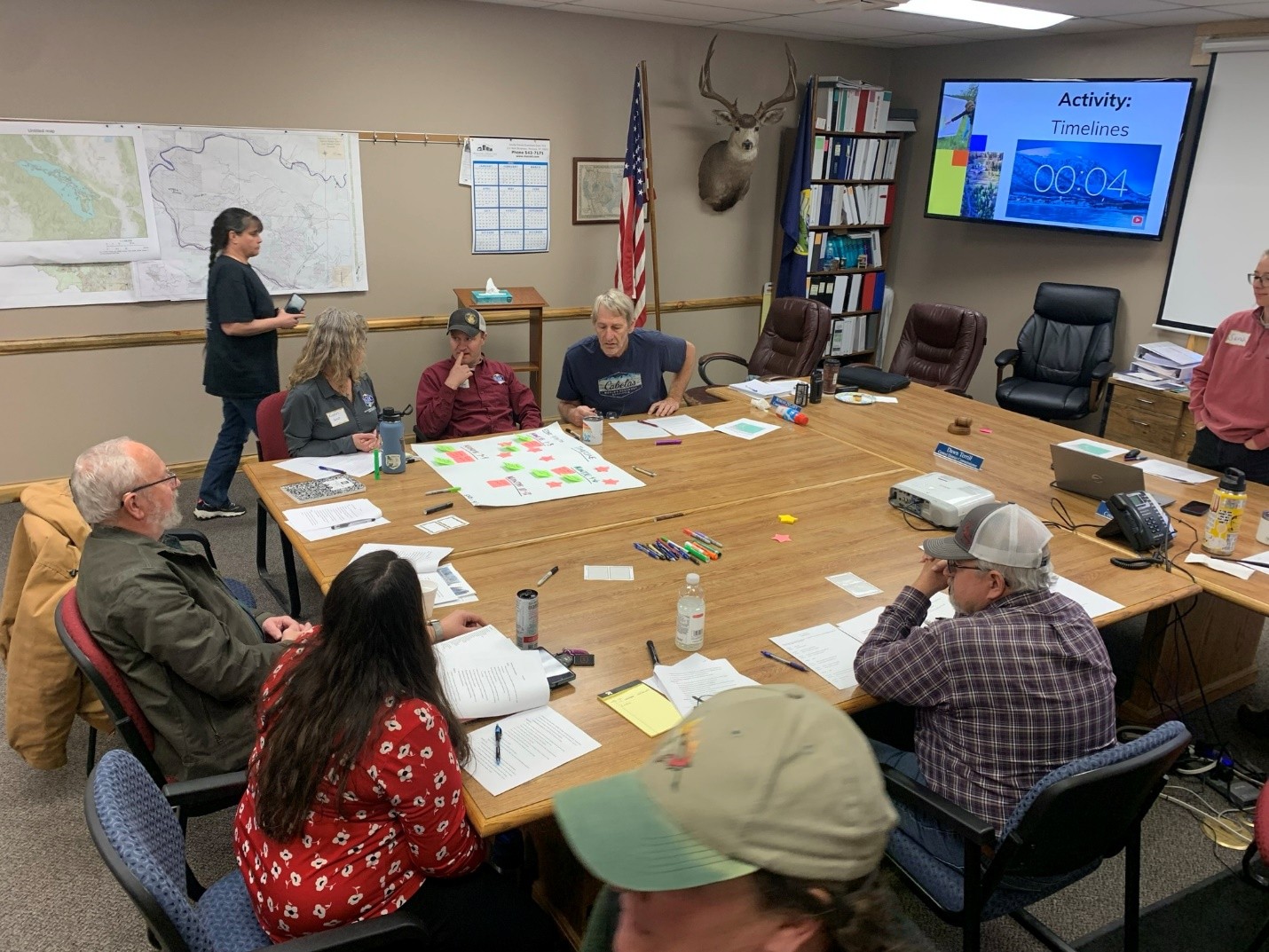
Caption: Community Wildfire Protection Plan Core Team members participate in a training led by Sarah Kleinhanzl, DNRC Wildfire Resilience Specialist.
Credit: Montana DNRC
Agriculture & Natural Resources
MSU Extension: Always Open to Meet the Many Needs of Mineral County
Mineral County MSU Extension had a busy year fielding calls about plant, insect, and plant disease identification and control, soil fertility and recommendations for gardens and crops, vertebrate pest control, private forest stewardship and numerous other topics in 2025.
Throughout May, June, and July, MSU Extension personnel responded to over 290 requests for diagnoses and management of plant identification and diagnoses of diseases or disorders. Clients received individual attention in each case that often included site visits. University-researched data concerning management of each clients specific needs was distributed and in many cases, Extension Agents revisited sites with clients to monitor progress. One benefit of the unusual spring weather was fewer insect pests reported.
The individualistic approach to most agricultural and natural resource-related questions in Mineral County continues to be a strength of MSU Extension. Clients appreciate and report favorable results from individual assistance as opposed to more formalized programs and events.
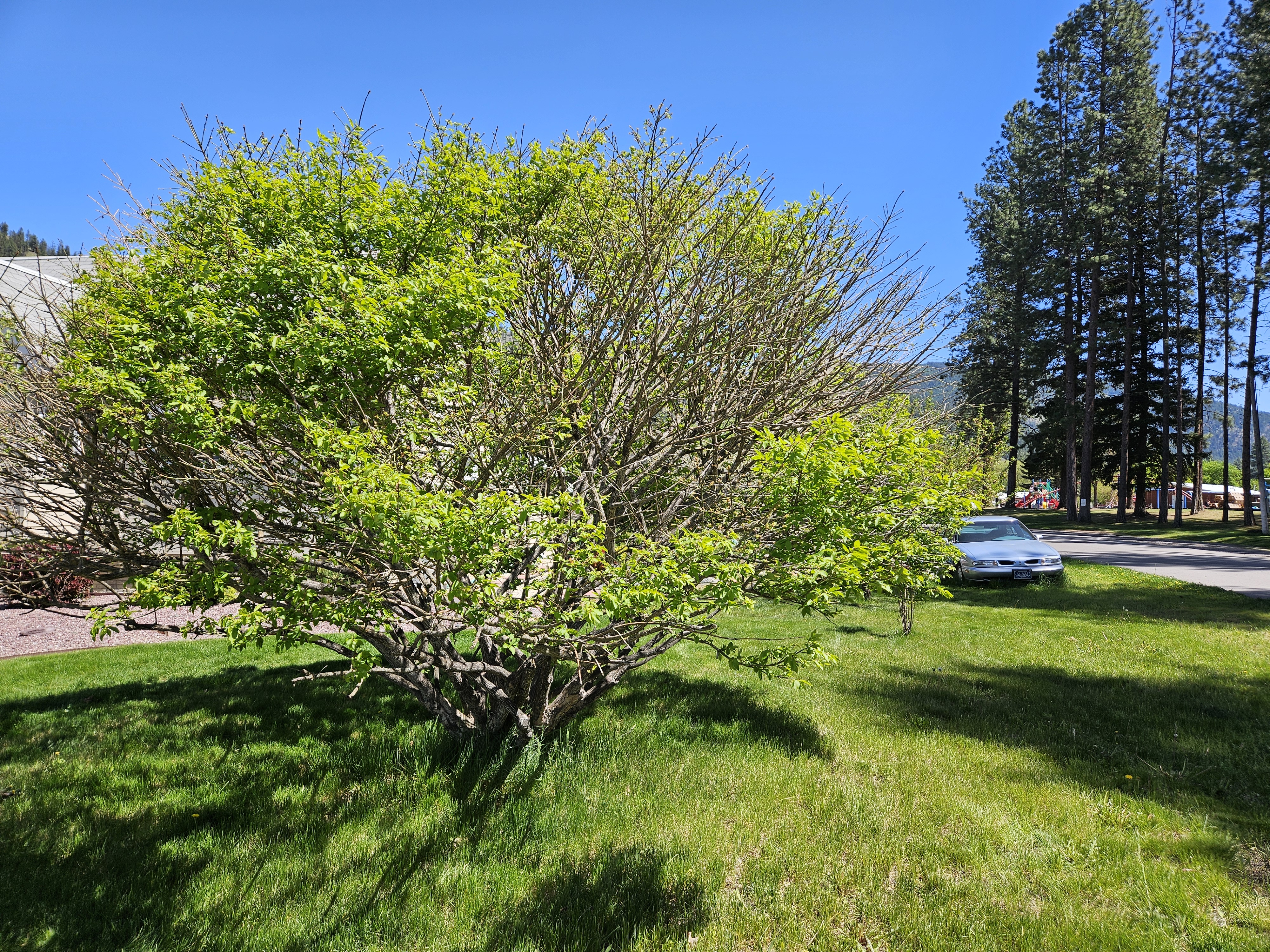
Caption: A typical field visit to evaluate a Euonymous (burning bush) shrub.
Credit: Dave Brink
4-H & Youth Development
Moving Forward in Positive Youth Development
Participation in 4-H has a positive impact on the choices youth make, both in their daily lives and future careers. Adult volunteers working with youth foster active learning and enrich self-esteem, all of which build a strong foundation for positive youth development and achievement.
Mineral County youth enrolled in 4-H youth development programs continue to explore new opportunities. Whether it be new projects like robotics or cake decorating, qualifying for national shooting sports tournaments, or leadership roles as camp counselors or club officers, all 4-H work includes an adult volunteer or MSU Extension staff member. It is the mission and role of MSU Extension to make these opportunities possible for both youth and adults and provide program support. Youth working alongside and learning from caring adults has long been a hallmark of the 4-H program, and this continues to be the case in Mineral County. Youth in 4-H report learning responsibility, planning, and community service skills, in addition to the hands-on, practical skills necessary to finish projects or tasks.
The 2024-2025 Mineral County 4-H program enrollment consists of 61 youth members and
12 adult volunteer leaders. Superior and St. Regis are home to organized clubs, and
there are several “at-large” 4-H families in areas without organized clubs. Livestock
projects, especially market swine, remain the most popular with 4-H youth, with shooting
sports and cooking following close behind. Adult volunteer leader participation continues
to improve as they challenge youth to improve their efforts and expand their interests.
The combined enthusiasm of youth and adult 4-H members has a cascading effect within
the community. An increasing number of adult volunteers are interested in sharing
their time and life
experiences with youth members of 4-H. Likewise, community support for the 4-H program
remains high, which is also encouraging in these times of strained economic conditions.
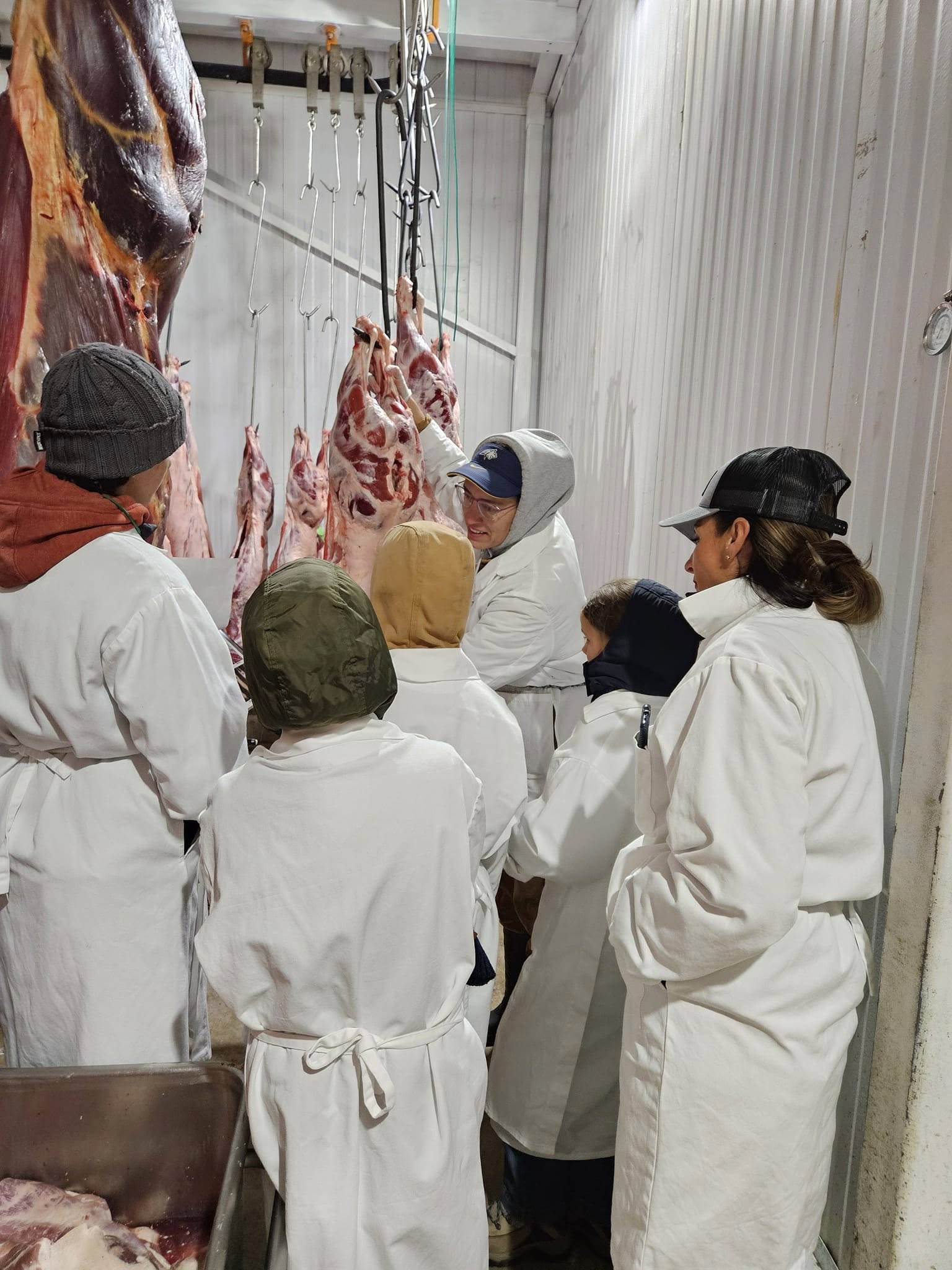
Caption: Sanders County Carcass Grading for 4-H members.
Credit: Dave Brink
Montana State University Extension is an ADA/EO/AA Veteran’s Preference Employer and provider of educational outreach.