

Park County
2025 MSU Extension Highlights
2025 MSU Extension Highlights
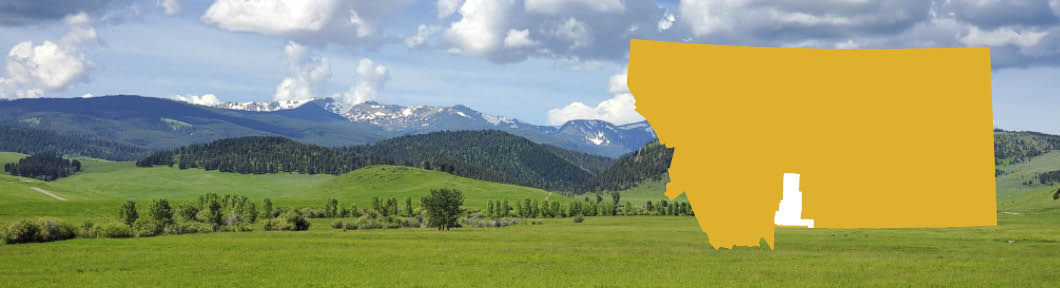
Park County, located just north of Yellowstone National Park, provides the only year-round
gateway park entrance communities. The county encompasses over 1.7 million acres,
including 57% public lands and the highest peak in Montana – Granite Peak. Just over
17,000 residents enjoy the beautiful expanse of scenic mountains and river valleys
the landscape offers. The largest employment categories are typical of a tourism-based
economy: accommodations, service, and retail, then construction, healthcare, and social
assistance. Nine communities are spread throughout the county beginning with Wilsall
in the north and ending with Cooke City in the far southeast. Livingston, the largest,
with a population of approximately 8,000, is centrally located. Park County MSU Extension
has four staff members who provide research-based, non-biased information to county
clientele.
Contact
119 S 3rd St
Livingston, MT 59047
406-222-4156
https://www.montana.edu/extension/park
Family & Consumer Science
Using 4-H Curriculum to Engage Youth in Positive Development
Students in pre K-8th grade at Arrowhead School have been experiencing the joy that comes from sharing food with friends and family. This experience is extra sweet as students have been responsible for baking treats for the entire school.
During monthly sessions, all students lend a hand chopping, mixing, and tasting their creations. They're learning food safety, proper measuring, and basic baking techniques and skills in each class. This program reaches 70 students in Paradise Valley once a month.
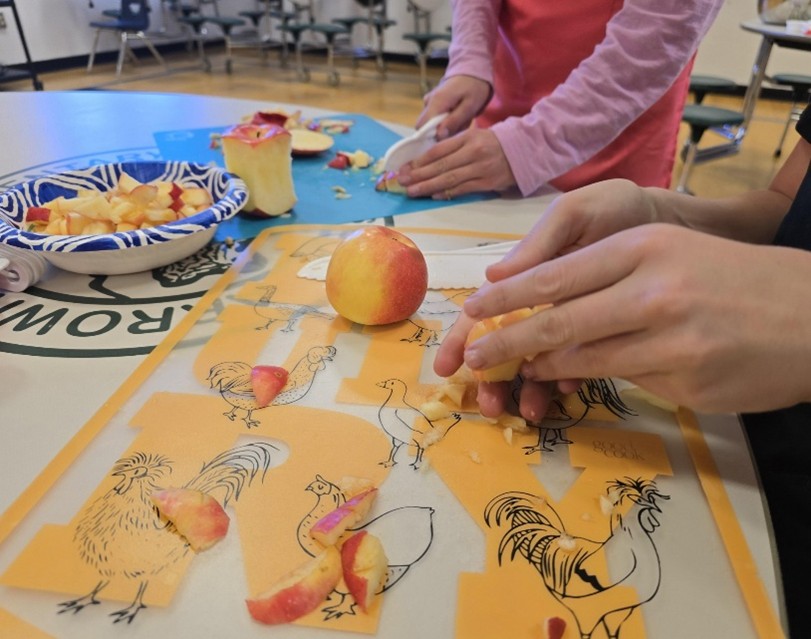
Caption: Youth practice safe knife skills on fruit at a program at Arrowhead Elementary School.
Credit: Veronica Baca
4-H & Youth Development
Park County 4-H Grows Interest in Leadership Skills
The last year has brought a surge of interest in 4-H statewide events. Thanks to a small group of dedicated Teen Leaders who have worked to promote the positive experiences and growth that leadership events provide, we have had an enormous rise in attendance.
Teen leaders were excited to help agents to plan Rec Lab event activities and assist with the event opening ceremony in spring. In July 2025, 11 Park County 4-H members attended 4-H Congress; in previous years we have had just 2 or 3 youth attend. Our 4-H Council is supportive of the opportunities provided for these up-and-coming leaders and plan to keep sending members as it benefits learning and growth for the entire program and county.
Family & Consumer Science
Connection through Family & Consumer Science Programs
In addition to teaching Food Safety classes throughout the year, the Family and Consumer Sciences Extension agent continued to offer programs such as Charcuterie Basics and Silent Book Club. These programs teach food safety and networking skills while also combating social isolation. With winter months being tough for social gatherings in Park County, these interactive classes give residents an opportunity to engage with new skills and time to connect with others.
Charcuterie classes have been a success-monthly classes filled quickly and more classes were offered in additional locations. Silent Book Club has seen a steady increase in participants and one participant at the October meeting shared that “having book club scheduled on my work calendar got me through a really tough week!”
Agriculture & Natural Resources
Promoting Desirable Plant Communities through Agriculture, Gardening, and Weed Management in Park County
Park County MSU Extension supported diverse needs of landowners, gardeners, and agricultural producers in promoting healthy plant communities across the county. MSU Extension provided education and technical assistance to improve soil health, manage invasive species, and encourage the use of native and drought-tolerant plants.
MSU Extension staff responded to more than 280 inquiries related to weed control, tree health, garden planning, forage and pasture management. Participants received guidance on identifying and managing noxious weeds, interpreting soil test results, and building revegetation plans for pasture and disturbed areas. Staff conducted site visits to diagnose plant diseases, assist with land use planning and helped residents select appropriate species for windbreaks, pollinator habitat, and erosion control. Gardeners and small-acreage landowners received support in choosing low-input landscaping options and managing pests without excessive chemical use. Large land managers and private pesticide applicators received support during license renewal and attended pesticide classes to earn credits towards their license.
As a result, residents improved their ability to manage resources, restore native vegetation, and reduce weed pressure. Participants reported increased confidence in selecting forage mixes, planting trees, managing weeds, and maintaining healthy gardens. These efforts contributed to the long-term ecological health and resilience of plant communities in Park County.
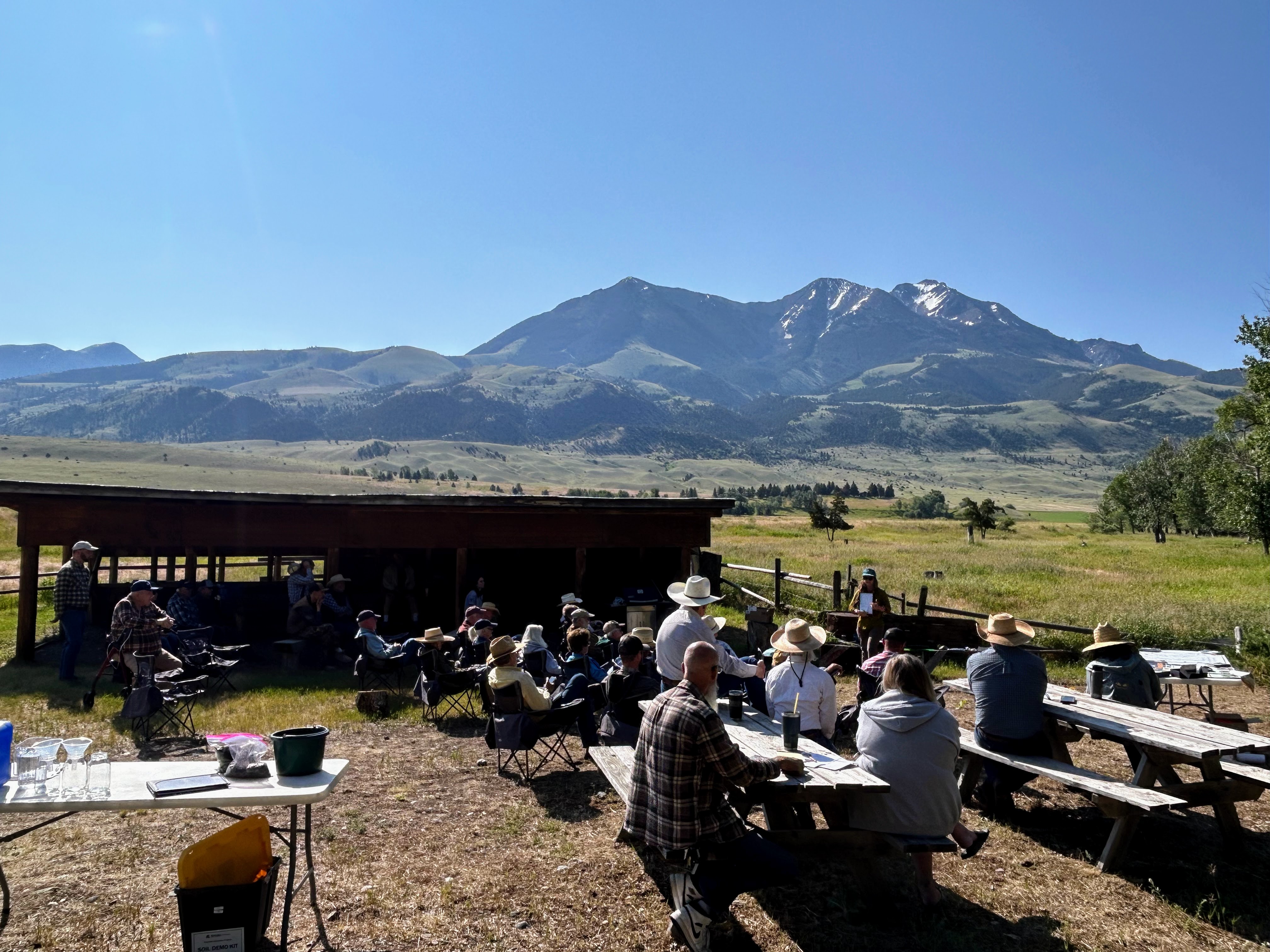
Caption: Participants at a Weed Field Day with Emigrant Peak in the background.
Credit: Jackie Petersen
Agriculture & Natural Resources
Launching Gardening in Montana option for Park County Home Gardeners
After gathering feedback from two years’ worth of Master Gardener students and one-on-one consultations with home gardeners in Park County, we recognized the need for one-off gardening classes for regionally important concerns. Three Gardening in Montana topics were offered during the winter of 2025: Managing vertebrate pests on small acreages; Pollinator Conservation with Native Plant Landscaping; and Ornamental / Fruit Tree Establishment and Management.
Participants reported increased knowledge in these topic areas and several reported successes following their class attendance. Three participants asked follow-up questions at the MSU Extension office regarding vertebrate pest management and these individuals acted early in the season, resulting in better success managing vertebrate pests on their landscape. All participants of the native landscaping class indicated plans to renovate unhealthy turfgrass and replace with drought tolerant and/or native plants. Several attendees at the tree care class scheduled follow-up site visits to diagnose tree issues and practice pruning. The success of offering Gardening in Montana opportunities indicates further need for programs relating to small acreage management, and MSU Extension plans to offer both Master Gardener and Gardening in Montana in 2026 to fulfill these needs.
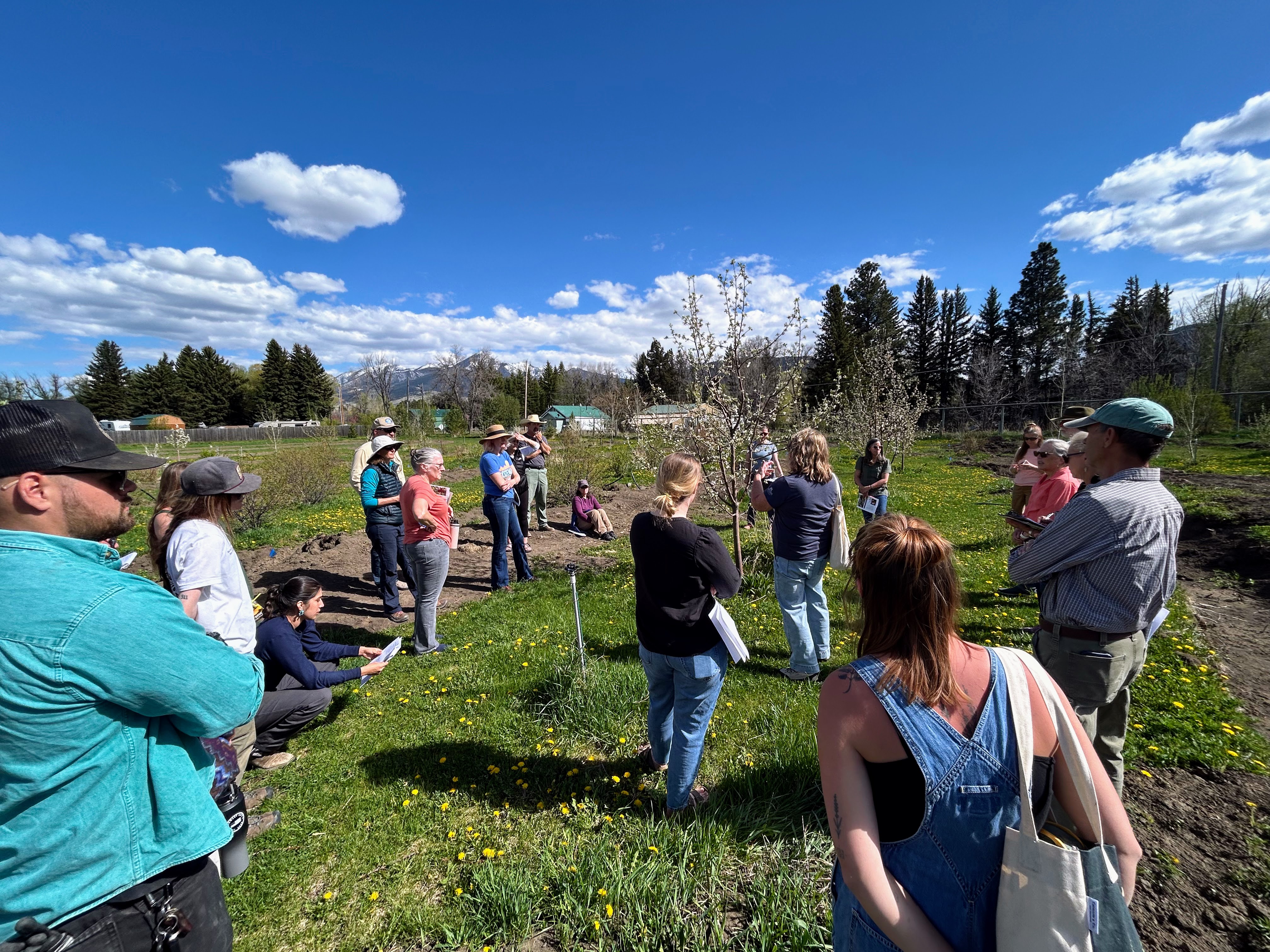
Caption: Sarah Eilers, Master Gardener Coordinator, teaching tree health, planting, and pruning at an orchard in Livingston.
Credit: Jackie Petersen
Community Vitality
City of Livingston and Clyde Park Commission Candidate Training
All eight candidates for the City of Livingston Commission and three candidates for Clyde Park Town Council joined MSU Extension for a crash course on Local Government. When running for Commissioner or Council for the first time, it is often the unknowns about the Montana Code Annotated (state laws) and open meeting laws that are on the top of candidate's minds.
Citizens run to represent themselves. In other industries, leadership positions require formal training and extensive on-the-job experience. In government, the requirements include a passion to serve and two years of residency in the county. This leaves many commissioners without the tools necessary to govern and manage. In surveys, candidates for local municipal offices indicated they had low to moderate knowledge of government structure, city and town budgeting and funding, and Montana’s open meeting and ethics laws.
MSU Extension Park County offered two comprehensive municipal candidate trainings. These included budgeting, open meeting law case studies, and organizational structure discussions. After the training, all participants indicated a high level of understanding in the skills necessary to govern. Participants said, “This training has given me a stronger understanding and the language and tools to speak more proficiently…I feel more confident.”
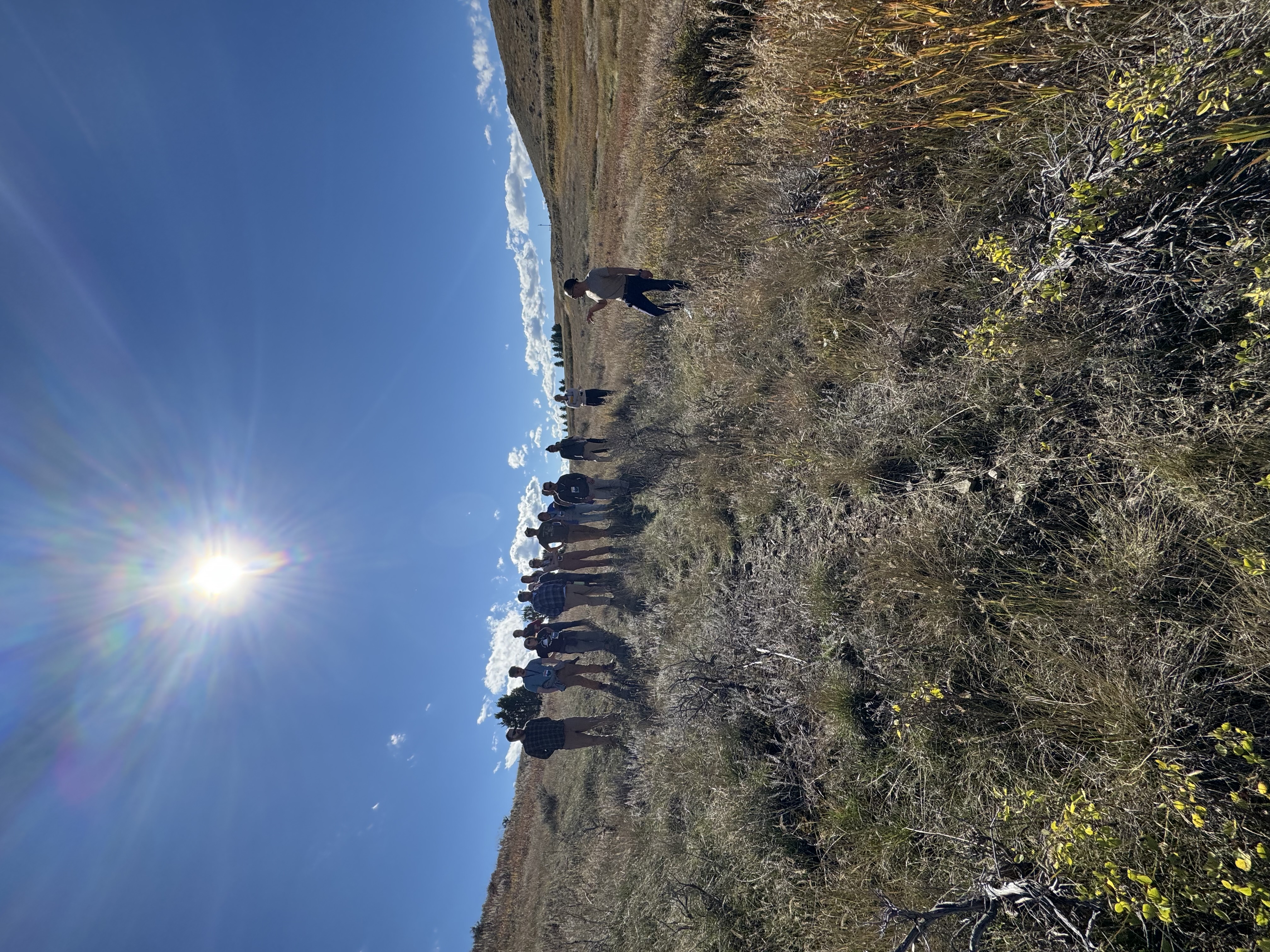
Caption: People learning outside at a field site.
Credit: Trent Balestri
Montana State University Extension is an ADA/EO/AA Veteran’s Preference Employer and provider of educational outreach.