

Sanders County
2025 MSU Extension Highlights
2025 MSU Extension Highlights

Sanders County covers a diverse area spanning 130 miles of the lower Clark Fork River valley in Northwest Montana. The county consists of forested valleys and mountain ranges on the west end and open grasslands towards the east. Thompson Falls, the county seat, lies in the west-central portion of the county.
While areas of western Sanders County receive in excess of 36 inches of average annual precipitation, locations near Niarada and Lonepine may experience less than 10 inches, making them fairly arid. The agricultural and natural resource base of the area follows a similar pattern. Traditional farming and ranching communities occupy the eastern third and a mixed small farm-logging economy is found towards the west. A population shift from the incorporated cities to rural dwellings occurred in Sanders Co. during the late 1980s and early 90s. While the incorporated cities of Thompson Falls, Plains, and Hot Springs lost 10-30 percent of their population, the county as a whole grew by approximately 18 percent to slightly over 10,000.
Sanders County MSU Extension is staffed by one part-time Agriculture/Natural Resources Agent, one 4-H & Youth Development/Horticulture Agent & one Nutrition Education/Family & Consumer Science Agent. It is also staffed with one Administrative Assistant.
Contact
PO Box 729, 1037 W. Main St
Thompson Falls, MT 59873
406-827-6934
https://www.montana.edu/extension/sanders
Family & Consumer Science
Promoting Health and Wellness through SNAP-Ed in Sanders County
The Supplemental Nutrition Assistance Program-Education (SNAP-Ed) continued to make a meaningful impact on the health and well-being of Sanders County residents in 2025. Through hands-on, research-based education, SNAP-Ed classes helped community members build practical skills in nutrition, meal planning, physical activity, food safety, and stretching their food dollars.
Throughout the year, a total of 129 SNAP-Ed classes were offered to a wide range of audiences, including SNAP-eligible adults, families, and elementary school students. Collaborations with five local school districts created opportunities to integrate nutrition education into classrooms, with three districts receiving grant funding to strengthen their farm to school initiatives. These partnerships supported local food systems while helping students learn where their food comes from and how to make healthy choices.
SNAP-Ed also played an active role in the county’s WINter Wellness program, encouraging residents to stay active during the colder months. The 2025 challenge engaged 84 participants who logged physical activity throughout the season, supported by local businesses that donated prizes to boost motivation and community spirit.
In addition, SNAP-Ed continued to offer flexible learning options through virtual 9-week courses focused on healthy meal planning. These online lessons included interactive webinars and practical tools to help participants make nutritious, affordable meals at home.
Efforts remain focused on empowering individuals and families to lead healthier lives through education, community collaboration, and local partnerships that make the healthy choice the easy choice for Sanders County residents.
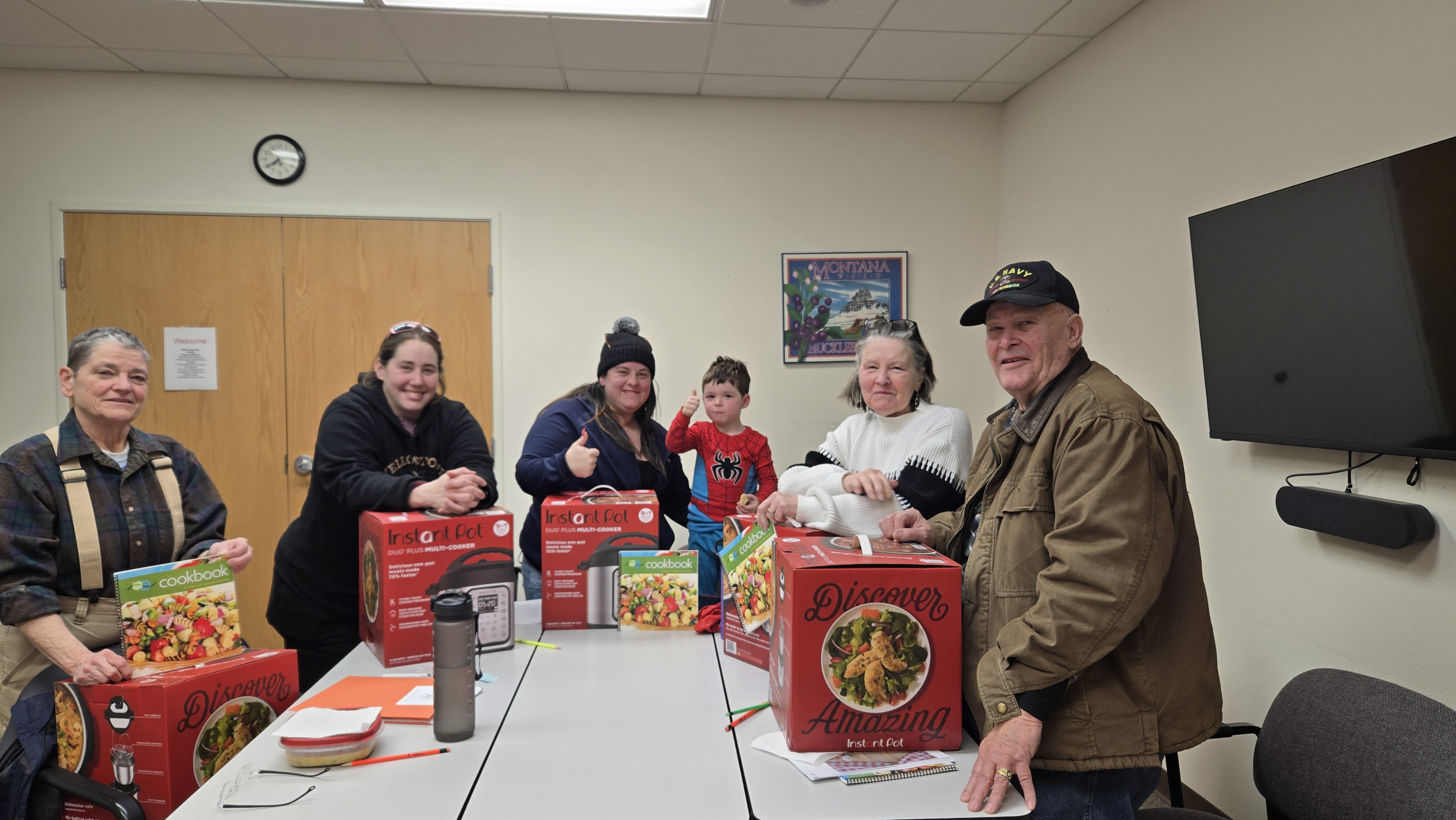
Caption: An adult community cooking class provided grant-funded electric pressure cookers for participants.
Credit: Jeanette Allday, SNAP-Ed Instructor
Family & Consumer Science
Legacy Learning: Planning Today for Peace of Mind Tomorrow
Launched in September 2025, the Legacy Learning project invites Sanders County residents to take a thoughtful and practical approach to estate planning. This innovative program, funded through a grant from the MSU Extension Administrative Team, will continue into spring 2026, offering participants a supportive environment to learn, discuss, and take meaningful steps toward organizing their estates.
The series is led in partnership with Marsha Goetting, Ph.D., CFP®, MSU Extension Family Economics Specialist, and Jeanette Allday, MSU Extension Family and Consumer Sciences Agent for Sanders County. Together, they have designed a unique, discussion-based “book club” format that brings estate planning to life in a relaxed and accessible way.
Each monthly session focuses on one or more MSU Extension MontGuides, addressing key estate planning topics such as wills, powers of attorney, beneficiary designations, transferring property, and understanding probate. Light snacks and refreshments are provided as participants gather to learn, ask questions, and share experiences in a comfortable setting.
The primary goal of Legacy Learning is to help community members feel more confident and informed about their personal and family financial decisions. By breaking down complex estate planning concepts into manageable pieces, participants are empowered to begin conversations with loved ones, seek professional guidance when needed, and make decisions that align with their values and goals.
Beyond individual learning, the program also strengthens community connections. Participants often discover shared concerns and find encouragement in knowing they are not alone in navigating the estate planning process. The welcoming and interactive format helps transform what is often viewed as a daunting or uncomfortable subject into one that is approachable, even inspiring.
As the Legacy Learning program continues into 2026, MSU Extension looks forward to expanding its reach and helping more Montanans plan wisely for the future, leaving a legacy of peace of mind for themselves and their families.
Caption: Legacy Learning Logo
Credit: Jeanette Allday, FCS Agent
Agriculture & Natural Resources
The Night Check: Reducing Stress During Calving Season
Montana Agriculture Wellness Mini-Grant Initiative | USDA & WRASAP Funded
In rural Sanders County, calving season means long nights, unpredictable weather, and high stress. With limited access to veterinary care, ranchers need to be ready when calving emergencies arise. To help ease that burden, 75 local producers gathered for “The Night Check,” a hands-on event focused on building skills, reducing stress, and supporting rancher wellness during one of the most demanding times of the year.
The event was made possible through the Montana Agriculture Wellness Mini-Grant Initiative, funded by USDA via the Western Regional Agricultural Stress Assistance Partnership (WRASAP), and organized by Sanders County MSU Extension in collaboration with generous sponsors: Ladies Who Ag, Western Montana Stockmen’s Association, Montana Farmers Union, Northwest Counties Farm Bureau, Wildhorse Feed & Farm, Diamond D Ranch Insurance, and Lonepine Farm & Feed.
Katie Rein of Crazy Mountain Vet led a hands-on session featuring Stella, her life-sized calving simulator. Participants practiced handling calving challenges, learned how to identify labor stages, and discussed when to intervene and when to call a vet. The training emphasized managing dystocia (difficult or obstructed labor) and gave attendees real-life scenarios to work through.
Beth Blevins from All Creatures Mobile Veterinary Clinic presented a detailed Calving Checklist—covering essential supplies, vaccine protocols, and facility setup. She also discussed pasture management and disease prevention strategies to support calf health.
A panel of local ranchers shared their own “Stories from the Calving Barn,” offering practical advice from experience and heartfelt encouragement of favorite calving stories. Their message was clear: no matter how long you’ve been ranching, you can always learn something new—and no one has to face calving season alone.
The event concluded with Nicholas Courville, beef nutrition consultant at CHS, who discussed mineral nutrition strategies and introduced Moss products to support cow and calf health during calving.
The Night Check proved that with preparation, education, and community support, even the most stressful season can become more manageable—and more successful.
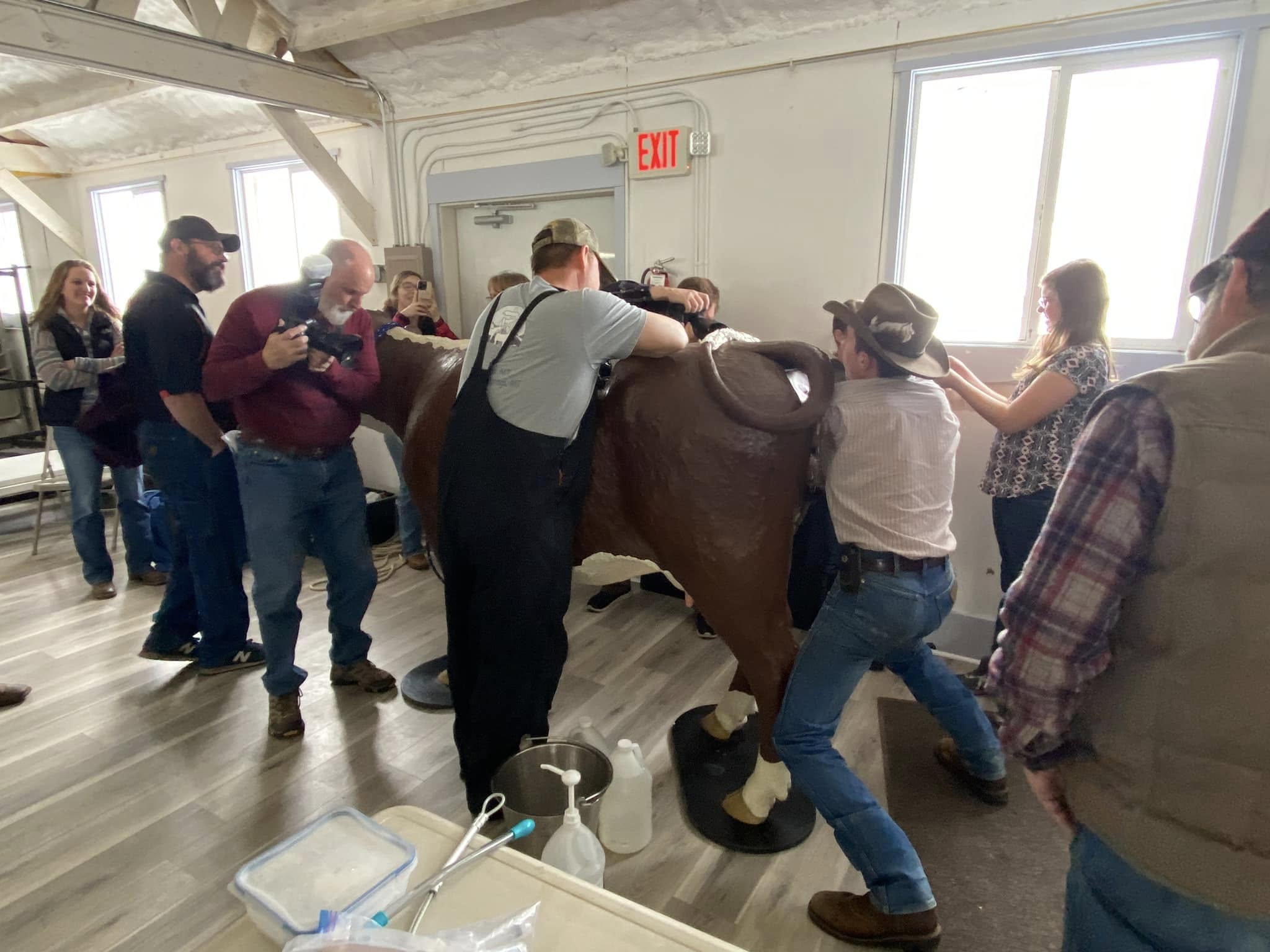
Caption: Sanders County participants at the Night Check, a calving education event.
Credit: Wendy Carr, Sanders County MSU Extension Agent
Agriculture & Natural Resources
Rangeland, Grazing, and Pasture Tour: Restoring Rangeland in Rough Terrain
In response to ongoing drought, invasive weeds, and the need for sustainable land practices, Sanders County MSU Extension, in partnership with Sanders County Ladies Who Ag, hosted a Rangeland, Grazing, and Pasture Tour focused on restoring productivity to rangeland and pasture in Northwest Montana. The event brought together 40 producers, landowners, and conservation professionals from across the region to explore practical, regenerative solutions for healthier grazing systems.
Glenn Elzinga of Alderspring Ranch near Salmon, Idaho, served as the featured speaker. Known nationally for his work in regenerative grazing and wilderness ranching, Glenn shared techniques for restoring rough terrain, improving soil health, and building long-term land resilience through low-stress livestock handling. He encouraged attendees to view rangeland health as both an ecological responsibility and economic opportunity.
Tour highlights included:
• Restoring Rangeland and Rough Terrain: On-site demonstrations showcased how to boost
plant diversity, reduce erosion, and improve underutilized areas.
• Grazing Recommendations for Sanders County: Glenn offered practical strategies for
rotational grazing, rest periods, and stocking rates, including a hands-on demo of
quick electric fencing setups.
• Doubling Stocking Rates Through Soil Health: Attendees learned how improved soil
structure and biology can significantly increase carrying capacity without degrading
land.
• Irrigated Soil Moisture Retention: Drought-adapted practices focused on organic
matter management and reduced soil disturbance.
• Weed Identification and Management: A hands-on session helped participants identify
invasive grasses and manage them using competitive planting and targeted grazing.
• Learning from Legacy Ranchers: Local rancher Jim Baker shared decades of experience
in land stewardship and practical insights from a lifetime on Western Montana rangeland.
Strong community support made the event a success. The Eastern Sanders Conservation District sponsored Glenn Elzinga’s appearance. Harlow Ranch Bison Company, Western Montana Stockman’s Association, Jerry Hamel, and Sanders County Feed generously supported the meal and social time, creating space for further learning and networking.
This event highlighted the power of blending research, tradition, and innovation to build resilient rangelands and stronger ranching communities.
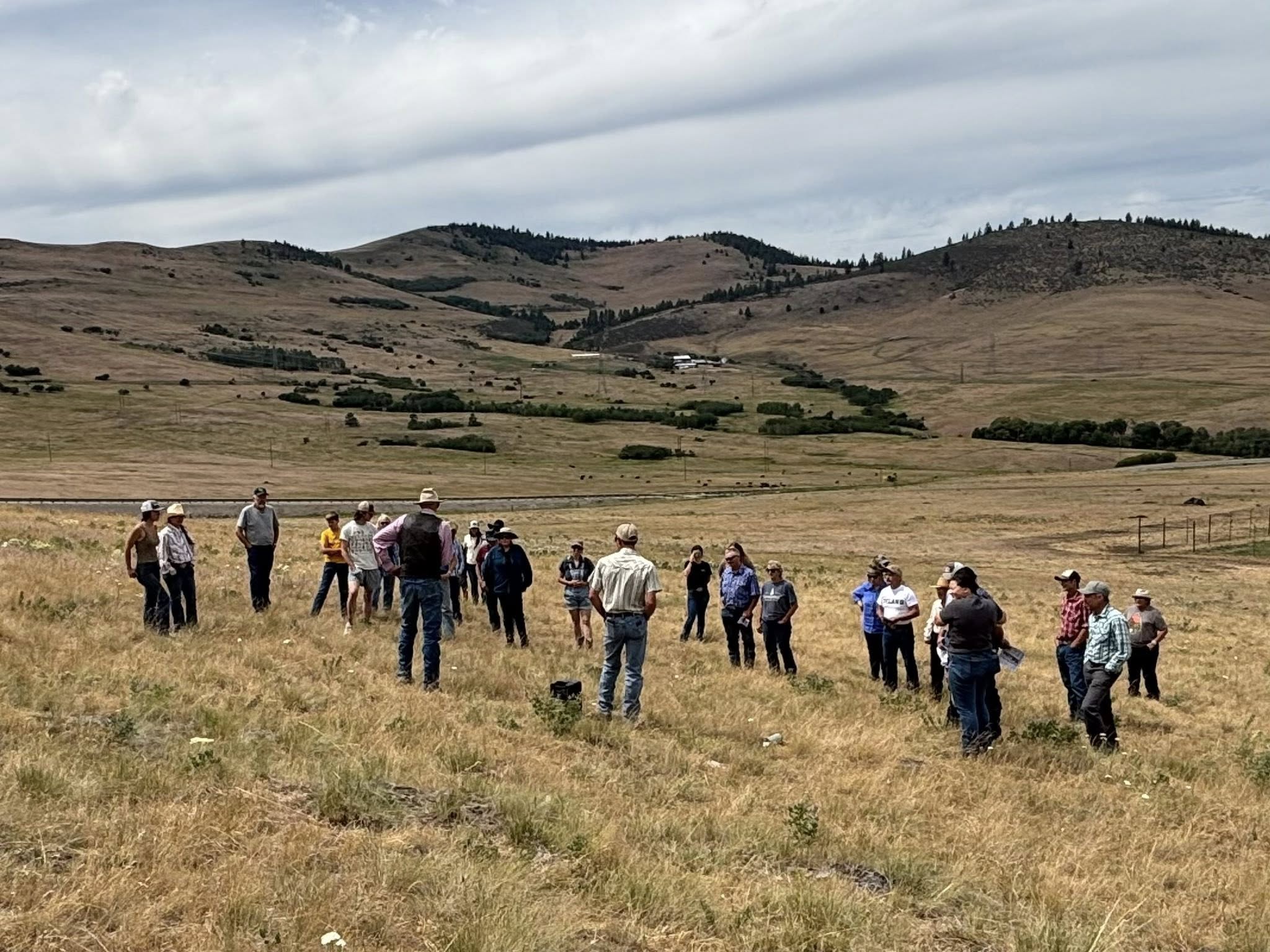
Caption: Sanders County participants at the Rangeland, Grazing, and Pasture Tour.
Credit: Wendy Carr, Sanders County MSU Extension Agent
Montana State University Extension is an ADA/EO/AA Veteran’s Preference Employer and provider of educational outreach.