

Sweet Grass County
2025 MSU Extension Highlights
2025 MSU Extension Highlights
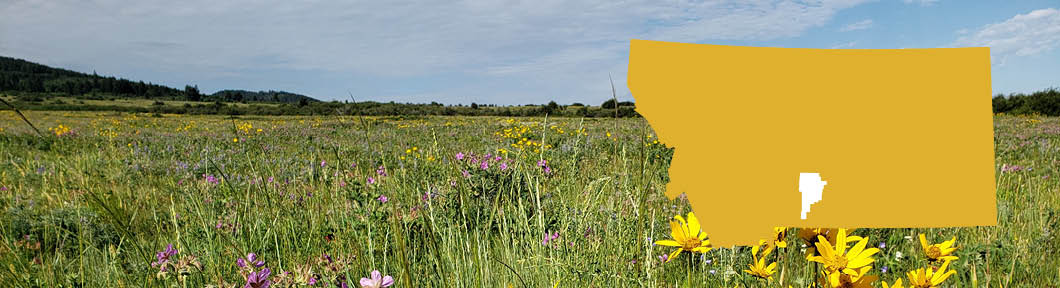
Sweet Grass County is located in south central Montana. Sweet Grass County became a county in 1895, formed from parts of Park, Meagher, and Yellowstone Counties. The county is 1,855 square miles of various topography. The current population is 3,824. Ranching and mining are the primary economic drivers of Sweet Grass County. Sweet Grass County was known for its raw wool in the early part of the 1900s and was the largest inland shipping point in the US for raw wool. Today, platinum and palladium are mined in the Absaroka Beartooth Mountain range south of Big Timber. The mine is home to one of the purest forms of these valuable minerals and employs many residents in Sweet Grass County.
The Crazy Mountains also reside in Sweet Grass County. There are several theories on how this range was named. The Native Americans called them the Mad Mountains for their rugged beauty and haunting winds that blow down the canyons. Geology plays a part in another theory: the lava upthrusts are young in the perspective of geological time and do not fit in with neighboring rock formations, hence the name “crazy,” or because of being wholly disconnected from any other range.
Contact
P.O. Box 640
Big Timber, MT 59011
406-932-5146
https://www.montana.edu/extension/sweetgrass
Agriculture & Natural Resources
Wool
The continued contraction of the sheep and wool industry combined with the current global economy has continued to have a negative effect on the sheep industry. In an effort to assist producers in sorting and marketing their annual wool clip on a more uniform and consistent basis, MSU Extension assisted producers in grading and sorting their wool clips during the shearing season.
Sweet Grass County MSU Extension cored the baled wool and shipped cores to New Zealand for testing and provided management for the co-op owned wool warehouse. The management of this facility included grading incoming wool, re-baling smaller lots of wool, stacking wool, marketing wool and coordinating and loading trucks to ship the marketed wool.
Sweet Grass County MSU Extension also coordinated the delivery, storage and shipping of the Montana Consolidated Wool Pool inventory in the Sweet Grass County Wool Warehouse. By receiving and shipping this wool, it has added close to $6000 to the Sweet Grass County Wool Warehouse to be used for upgrades and maintenance of the co-op owned facility.
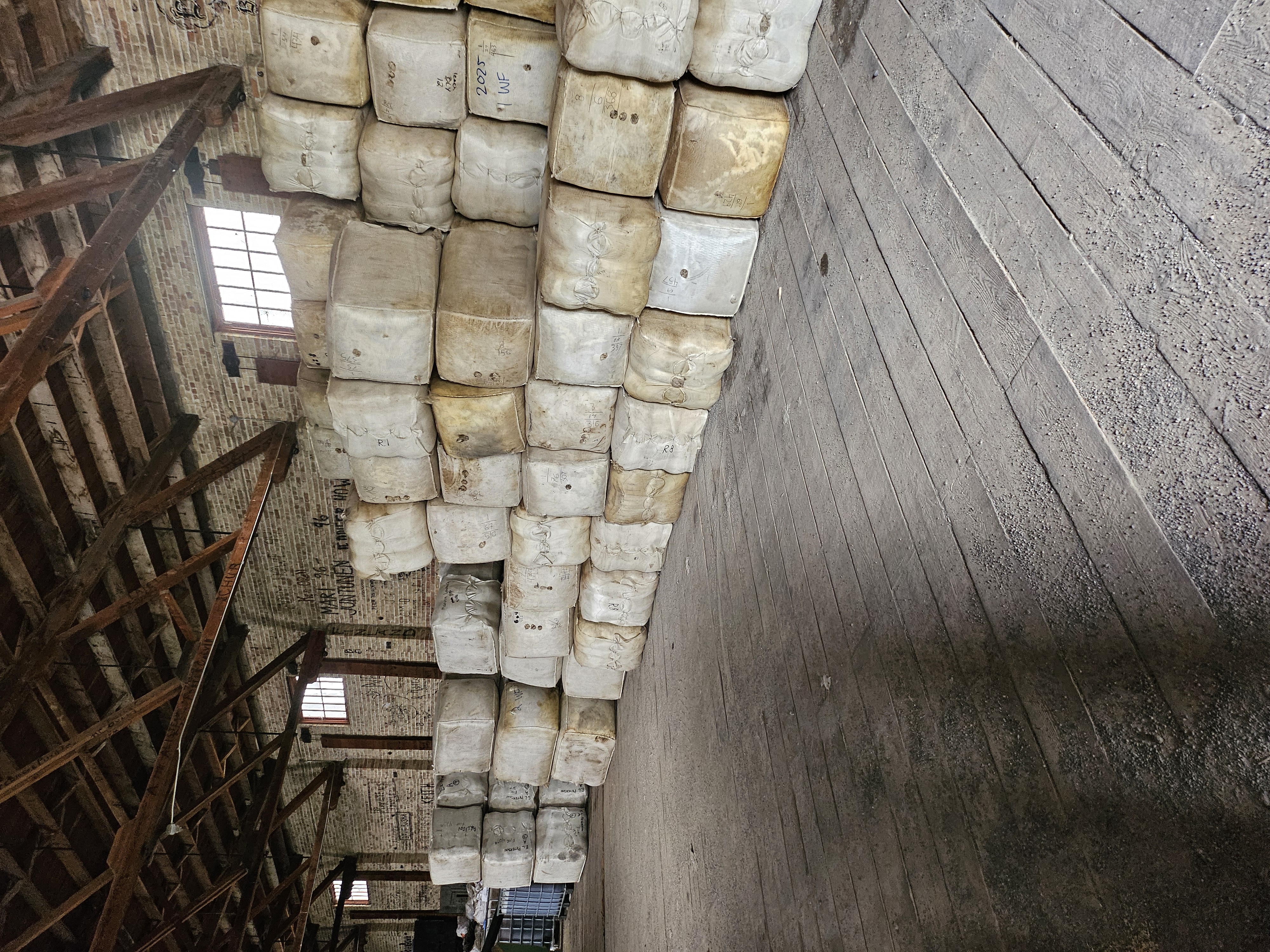
Caption: Stacked wool in the Sweet Grass Wool Warehouse.
Credit: Marc King
4-H & Youth Development
4-H in Sweet Grass County
The Sweet Grass County Fair is held annually in late July and is the culmination of youth members’ project work. Members present projects to be judged and learn life skills such as perseverance, time management, salesmanship, knowledge of various projects and interview skills. The Sweet Grass County Fair Sale wraps up the week of activities and judging, and provides members with the opportunity to sell completed projects to the community. This year the Sweet Grass County Fair Sale grossed $464,000. These funds are disbursed to the participating members and are typically used by youth to fund their future educational endeavors.
Twenty-six registered volunteer leaders mentored 127 youth enrolled in 4-H in Sweet Grass County during the 2024-2025 4-H year. Youth participated in a wide variety of projects, learning valuable life skills through the program.
One of the highlights of the year was the participation of 12 members in the Intermountain Livestock Judging clinic in Spanish Fork, Utah. Livestock judging teaches youth skills such as decision making, time management and public speaking. These young people traveled over 13,000 miles this past year, competing in contests in California, Colorado, Utah, Oregon, Idaho and Montana. Three have participated in livestock judging through the past 10 years as 4-H members. Three members from this group have been offered full ride scholarships to colleges to further their education and participate in livestock judging. In terms of financial impact, these scholarships represent over $12,000 per student in financial savings to these students and their families.
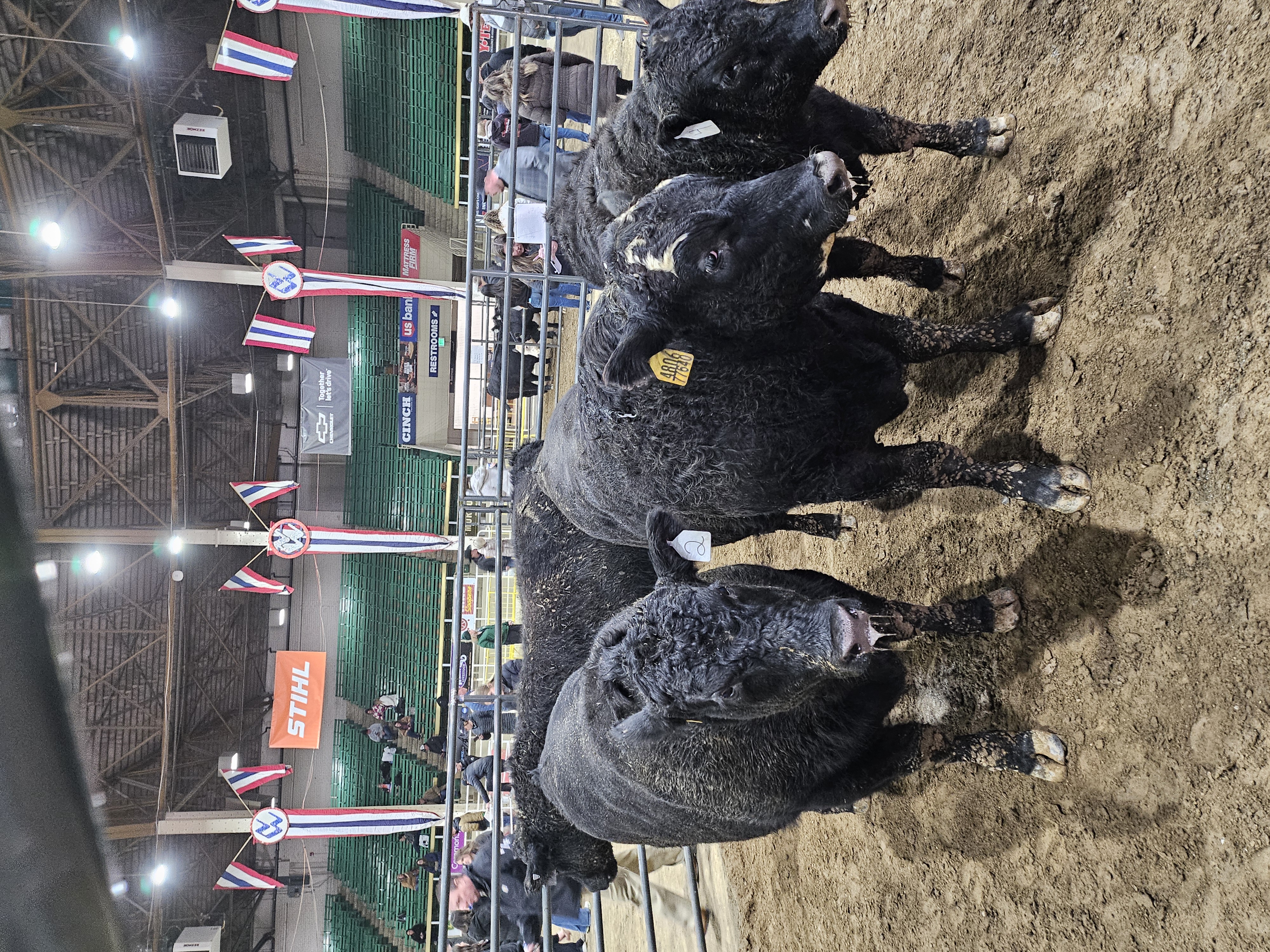
Caption: At the Western National Roundup in Denver.
Credit: Marc King
Agriculture & Natural Resources
Agriculture
MSU Extension provided programs on Risk Management for Livestock, Backgrounding Fundamentals and Pasture Management that helped producers understand how to protect prices for livestock enterprises, and options for building soil health, and veterinary technologies that have advanced over the past several years.
Sweet Grass County MSU Extension partnered with the Crazy Mountain Stockgrowers Association to host Rick Funston from the University of Nebraska to present a program on current technologies and advancements for beef cattle producers. Reports from this series were positive with numerous ranches reporting that because of the classes they were better prepared to deal with risk management, options for adding value to calf crops and forage management.
Sweet Grass County MSU Extension, along with Crazy Mountain Veterinary Services and several others, applied for and have received a SARE grant to study antibiotic use in the livestock industry. The initial data collection and analysis has been completed and the group is currently working on compiling the data. A piece of this grant will be to develop a treatment protocol for the five most reported issues from producer surveys.
Educating peers was the focus of hosting 53 county agents from around the US as part of the National NACAA Convention pre-tour in June. Sweet Grass County MSU Extension led a tour of the Sweet Grass County Wool Warehouse and ranches in Northern Sweet Grass County. The county agents traveled by bus to the wool warehouse and a local ranch to learn first-hand how wool was stored, sorted and marketed and how the commercial cow-calf ranch operated. Tour participants reported "this was one of the best tours I've ever participated in."
The farm to fork movement continues to grow as a way for producers to try and capture more of the consumer dollar. It also allows producers and consumers to develop a relationship over a daily need, food. To assist producers in knowing what they are producing, Sweet Grass County MSU Extension collected carcass data on over 600 carcasses at packing plants in Central Montana and the Yellowstone Valley. This data is then shared with producers, allowing them to make more informed marketing, genetic and feeding decisions.
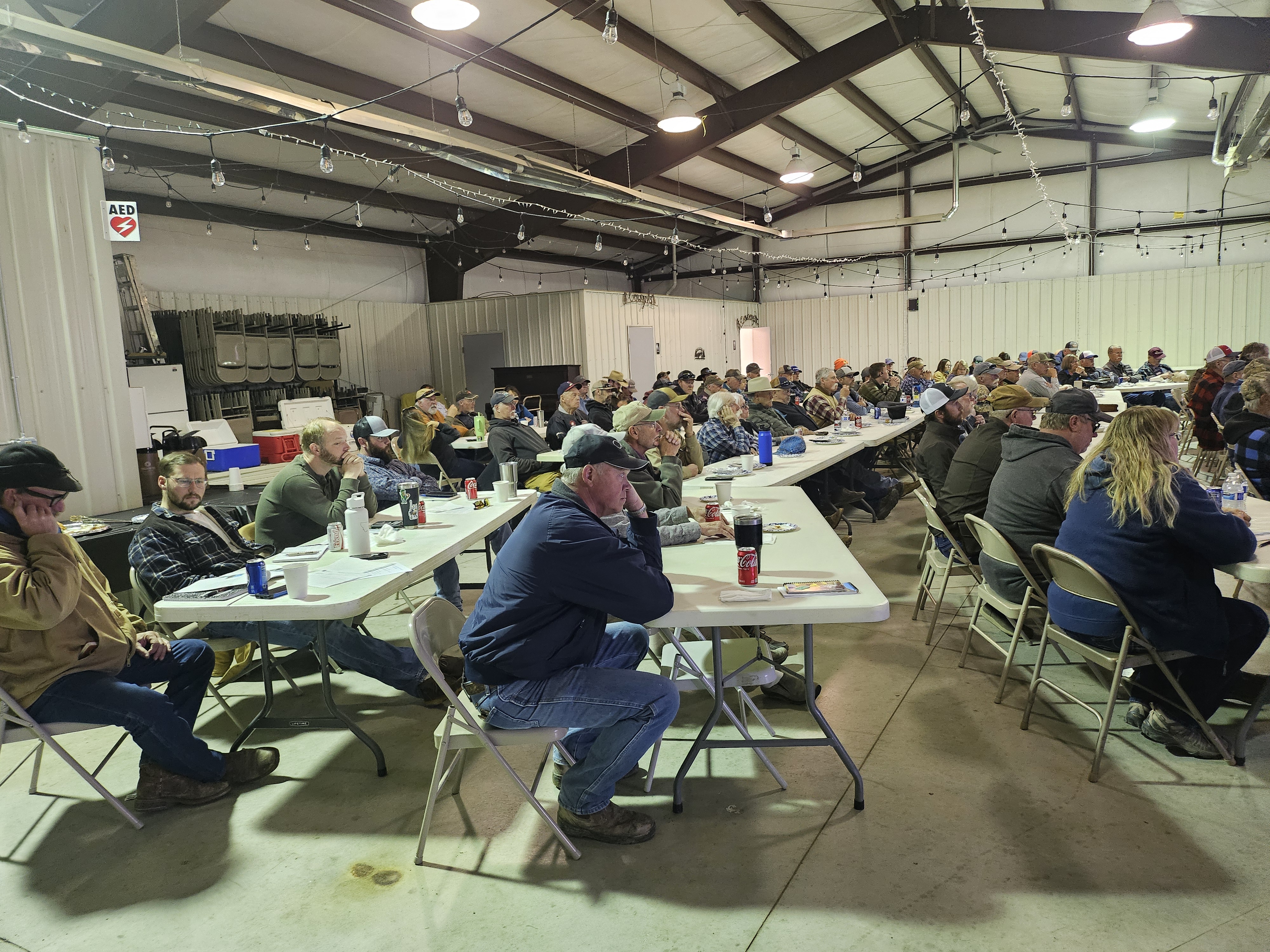
Caption: Rancher Roundtable Talk
Credit: Marc King
Montana State University Extension is an ADA/EO/AA Veteran’s Preference Employer and provider of educational outreach.