

Teton County
2025 MSU Extension Highlights
2025 MSU Extension Highlights

Teton County territory springs from the foothills of the Rocky Mountain Front and extends eastward onto the plains of North Central Montana. With just over 6,000 residents in 2,272 square miles (2.7 persons/square mile), an authentic, rural way of life is alive and well here. (As further proof, Teton’s human population is outnumbered by 6,300 sheep and 40,000 cattle.) Ranching and farming remain the lifeblood of our community, with winter and spring wheat, barley, peas, chickpeas, and lentils as the major crop commodities. Additionally, we are a gateway community to the Bob Marshall Wilderness and a hospitable stop on the road to Glacier National Park and the region known as the Crown of the Continent. Teton County MSU Extension has two agents offering a wide array of programs and services to support residents, including a 4-H youth development program with 149 members.
Contact
1 Main Ave, South
Choteau, MT 59422
406-466-2491
https://www.montana.edu/extension/teton/
Agriculture & Natural Resources
Idyllic Farm and Ranch Life?
While farming and ranching are essential and deeply rewarding vocations, any agricultural producer can tell you it’s hardly a stress-free way of life. In Teton County, relentless drought has negatively impacted soil health and correspondingly increased pressure from invasive plants and insects. Drought mitigation, water quality, and pest management continue to be hot issues for area agriculturalists.
The Golden Triangle Cropping seminar and the 2025 Pest Management Tour provided day-long opportunities for more than 90 farmers and ranchers to strategize and “up their game.” Participants cited plans to test and monitor their water resources and do more and earlier scouting for insects and weeds. Farmers and ranchers are also using failed cereal crops as forage, and testing those crops for nitrates – a service in high demand and offered by our MSU Extension agriculture program.
Two large area ranches requested rangeland assessments in 2025, which were provided by Teton County MSU Extension in conjunction with a rangeland expert at MSU. One of those landowners subsequently added a rangeland management position to their crew as a result of what they learned about proactive pasture monitoring and weed management. The Teton County MSU Extension program continues to monitor for new, highly-invasive species on our borders, including ventenata and palmer amaranth.

Caption: Clockwise: 2025 Pest Management Tour, 2025 Golden Triangle Cropping Seminar, Past and current Teton County MSU Extension Agriculture Agents appeared on Montana Ag Live.
Credit: Teton County MSU Extension Staff
Agriculture & Natural Resources
What Grows Up Must (Eventually) Come Down
Everyone in Teton County seems to appreciate the big, beautiful cottonwood and green ash trees that give our community its lovely ambiance. But large-diameter, dead trees that have succumbed to drought pose a threat to humans and property and are extremely expensive to remove. Teton County MSU Extension provides leadership and grant writing for the Choteau Tree & Sidewalk Board, which recently received two grants (for $25,000 and $10,000) to remove 15 aging and dangerous boulevard trees. To help replace those trees and diversify our urban forest, eight new trees have been planted (with help from local fourth graders across the county) and more plantings are coming soon.
Gardening Gurus!
Teton County gardeners grow a bumper crop of vegetables and ornamentals, as evidenced by their interest in garden soil testing, plant/tree disease diagnosis, disease management, and pest identification (with more than 250 horticulture-related calls to MSU Extension per year.) Teton County MSU Extension supplied one-on-one consultations (many of which included expert support from MSU’s Schutter Diagnostic Laboratory) and two regional educational seminars on garden soil and shelterbelts. Local gardeners committed to using more compost and less frequent tillage as a result. Additionally, 39 participants in a shelterbelt workshop learned how to rejuvenate trees and shrubs after winter damage and which species of trees are best adapted to our windy, arid climate.

Caption: Photo collage of common plant diseases and pests in Teton County.
Credit: Teton County MSU Extension
4-H & Youth Development
Teton County 4-H, part of America’s largest youth development organization, empowers 149 youth through eight active community and project clubs. These clubs foster a strong sense of belonging, supported by 58 certified adult volunteers who mentor youth and help them develop skills that go beyond the expected. County-wide events such as Communications Day, 4-H Fair, Camp, and the year-end 4-H Celebration provide meaningful opportunities for youth to engage, lead, and be recognized.
The 4-H Camp exemplified the Thriving Model by promoting belonging among 27 campers and 10 youth counselors. Camp counselors took full ownership of planning—from theme selection to daily activities—creating an inclusive and welcoming environment. This experience strengthened their leadership, decision-making, and teamwork skills, while ensuring every camper felt valued and connected.
The Teton County 4-H Fair encouraged youth to pursue their sparks—personal interests and passions—through hands-on learning and public exhibition. One hundred youth showcased 208 static and 85 animal exhibits, reflecting dedication and growth in life skills ranging from agriculture to creative arts. Sixty-four market animals were sold at the Livestock Sale, with generous buyers supporting both youth and the local economy by using local meat processors.
The year culminated with our 4-H Celebration during National 4-H Week, where clubs shared skits and presentations highlighting memorable moments. This event reinforced belonging and pride in achievement. The community honored two longtime members, Leona Somerfeld and Alan Peace, as inductees into the Montana 4-H Hall of Fame. Volunteers Kelly and Ryan DeBruycker were named Montana District 3 Volunteers of the Year, and Fred Ginther was recognized for 17 years of service in 4-H shooting sports.
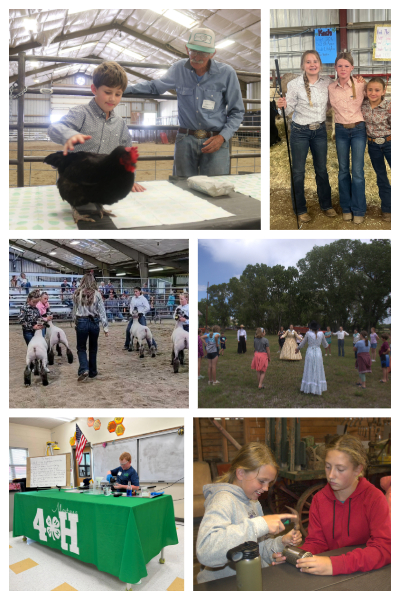
Caption: Collage of the major events in Teton County 4-H: Communications day, Fair, and Camp
Credit: Teton County MSU Extension Staff
Family & Consumer Science
Family and Consumer Science
The Teton County MSU Extension FCS program in 2025 actively addressed local challenges through educational and wellness programs. FCS programs respond to identified needs in the county: limited access to exercise, increased childcare demand, a growing aging population, developing employable skills, and rising interest in mental health and food preservation. Collaborations with schools, the Health Department, and local partners are equipping residents with practical skills to improve health, financial stability, and wellbeing.
To address the county’s 20% lower-than-average access to exercise, the Strong People program—offered in partnership with the Health Department’s Healthy Tracks—provides free fitness and social opportunities. Participants report improved physical health and wellbeing, with strong interest in program continuation.
To expand childcare options, 22 youth in Fairfield completed a 16-hour Babysitting Boot Camp in May 2025. This program, in collaboration with the Health Department and EMS, included CPR and first aid training. Participants reported increased confidence and readiness to provide responsible care, boosting childcare capacity in the community.
With 20% more adults over age 65 than the state average, estate planning support is in high demand. FCS services provided 32 residents with free MontGuides and estate planning forms, helping them manage finances and prepare for the future. Estate planning now represents the majority of FCS inquiries in the Extension office.
Mental health programs like Youth Aware of Mental Health (YAM), QPR, and COMET are building resilience. In 2025, 62 youth participated in YAM and reported increased ability to recognize depression and awareness of local resources.
In 2025, 35 high school students in Choteau and Power earned ServSafe Food Handler Certification, leading to better job opportunities. Additionally, 40 middle schoolers learned food preservation by canning local apples—80% expressed interest in continuing these skills. These efforts align with the 2024 Montana Food Preservation Survey, which showed young adults are motivated to preserve food to save money (49%) and understand food sources (43%).
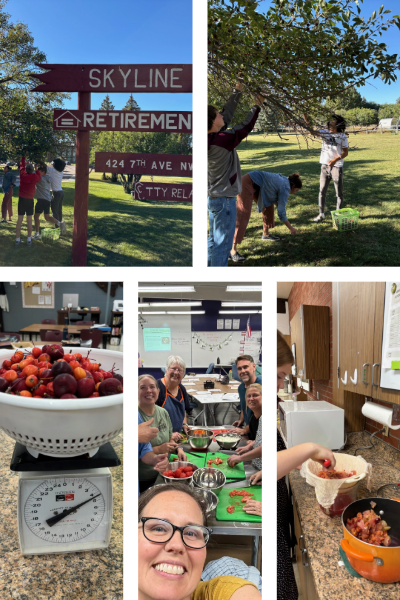
Caption: Collage of Home Food Preservation classes in Teton County
Credit: Teton County MSU Extension Staff
Montana State University Extension is an ADA/EO/AA Veteran’s Preference Employer and provider of educational outreach.