

Wheatland County
2025 MSU Extension Highlights
2025 MSU Extension Highlights
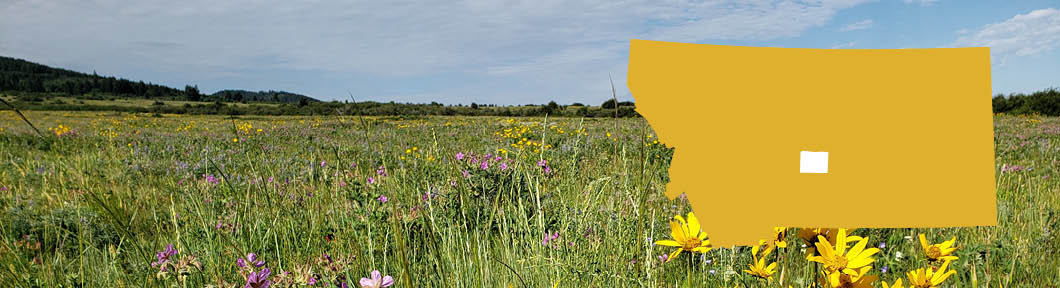
Established in 1917 and named for its expansive wheat fields, Wheatland County lies at the heart of Montana’s agricultural region. The county seat, Harlowton, is a small town with deep railroad roots, once serving as a major division point for the Milwaukee Road.
Other communities in the county include Two Dot, a historic ranching town with old western charm; Judith Gap, located at the southern edge of the county and known for its prominent wind farm; and Shawmut, a small rural settlement along U.S. Highway 12. Together, these communities reflect the county’s agricultural heritage and strong rural character.
Wheatland County is bordered by the Crazy, Little Belt, and Big Snowy Mountains, with the Musselshell River flowing through a landscape of open prairies and rolling hills. Most of the land is used for cattle grazing, with wheat and hay as key crops. While irrigation is limited due to the dry climate, the land supports hearty and resilient agricultural activity.
The local economy is anchored in farming and ranching, with additional contributions from wind energy, especially near Judith Gap, small-scale mining, and rural services.
As of the 2020 U.S. Census, Wheatland County had a population of approximately 2,069 residents, making it one of the least populated counties in Montana. Harlowton is the largest city, with a population of 944.
Contact
201 A Ave NE, Suite 8
Harlowton, MT 59036
406-632-4728
https://www.montana.edu/extension/wheatland
4-H & Youth Development
Creative Expression Through 4-H: Inspiring Youth in Wheatland County
Wheatland County youth had the chance to build new skills and confidence through a series of hands-on 4-H workshops during the 2024–2025 4-H year. Led by MSU Extension Agent Mandie Reed, the workshops focused on creative expression and practical skills like crafting, woodworking, and sewing.
December: Creating and Giving
Youth created handmade items that could be given as gifts. Projects included paper quill cards, painted wooden ornaments, and mugs and tile trivets decorated with alcohol inks. The workshop encouraged creativity and thoughtfulness, and many participants chose to give their projects as holiday gifts.
February: Introduction to Woodworking
Participants learned basic woodworking skills, including measuring, marking, and assembling wood pieces. Each youth made a simple, functional item like a napkin holder while practicing shop safety and problem-solving. The class provided a practical introduction to working with tools and materials.
March: Sewing Basics
Youth learned beginner sewing skills like how to read patterns, cut fabric, and use a sewing machine to make their own pajama pants. The project required patience and attention to detail, especially when fixing mistakes. One participant enjoyed sewing so much she completed two more projects over the summer and entered them in the county fair.
Building Confidence and Practical Skills
These workshops gave youth more than just technical experience—they built problem-solving skills, independence, and confidence. The program supports the mission of Montana 4-H and MSU Extension: helping young people learn by doing and grow through meaningful experiences.

Caption: A 4-H member models the pants she made in 4-H.
Credit: Mandie Reed
Community Vitality
Big Sky, Big Leadership: Growing Local Leaders in Wheatland County
The 2025–2026 class of Big Sky, Big Leadership (BSBL) marks the sixth cohort of the program in Wheatland County. With this incoming group, a total of 40 individuals will have graduated from BSBL, many of whom are now serving in key leadership roles throughout Wheatland County and their communities.
This impactful program equips participants with practical leadership skills for both
everyday life and formal leadership positions. One participant summed it up simply:
“I use what I learned every day.”
Developing Leadership from the Inside Out
At its core, Big Sky, Big Leadership is about self-discovery and growth. Participants
explore their personal leadership style and gain insights into their own temperament,
while also learning how to recognize and work with the temperaments of others. These
tools help build empathy, understanding, and effective communication, critical components
of leadership.
Participants also study how teams form, evolve, and function—and how leaders can support teams to be as effective and cohesive as possible.
A key component of the program is understanding and navigating conflict. In every community, conflict is inevitable. Through BSBL, participants gain tools to engage in complex conversations, foster dialogue, and work toward meaningful, lasting solutions.
Building Relationships and Strengthening Community Connections
In a small community like Wheatland County, residents often know of one another but
may not honestly know one another. BSBL creates intentional space for connection—encouraging
participants to engage in thoughtful conversations around leadership while building
authentic relationships.
Leadership in Action: Community Impact
As part of the program, each cohort completes a community-based project that allows
participants to apply their skills in real-world settings. The results of these projects
have had lasting impacts in Wheatland County. Past BSBL participants have:
- Founded the Harlo Farmers Market
- Organized a Resilience and Drought Seminar
- Created the Musselshell Valley Development Cooperative
- Coordinated a celebration and remembrance event for the historic Graves Hotel
These projects demonstrate the ripple effect of the BSBL program—empowering local leaders to create tangible, positive change in their communities. Big Sky, Big Leadership continues to be a transformative experience for participants and a powerful tool for building strong, connected, and resilient communities across Wheatland County.
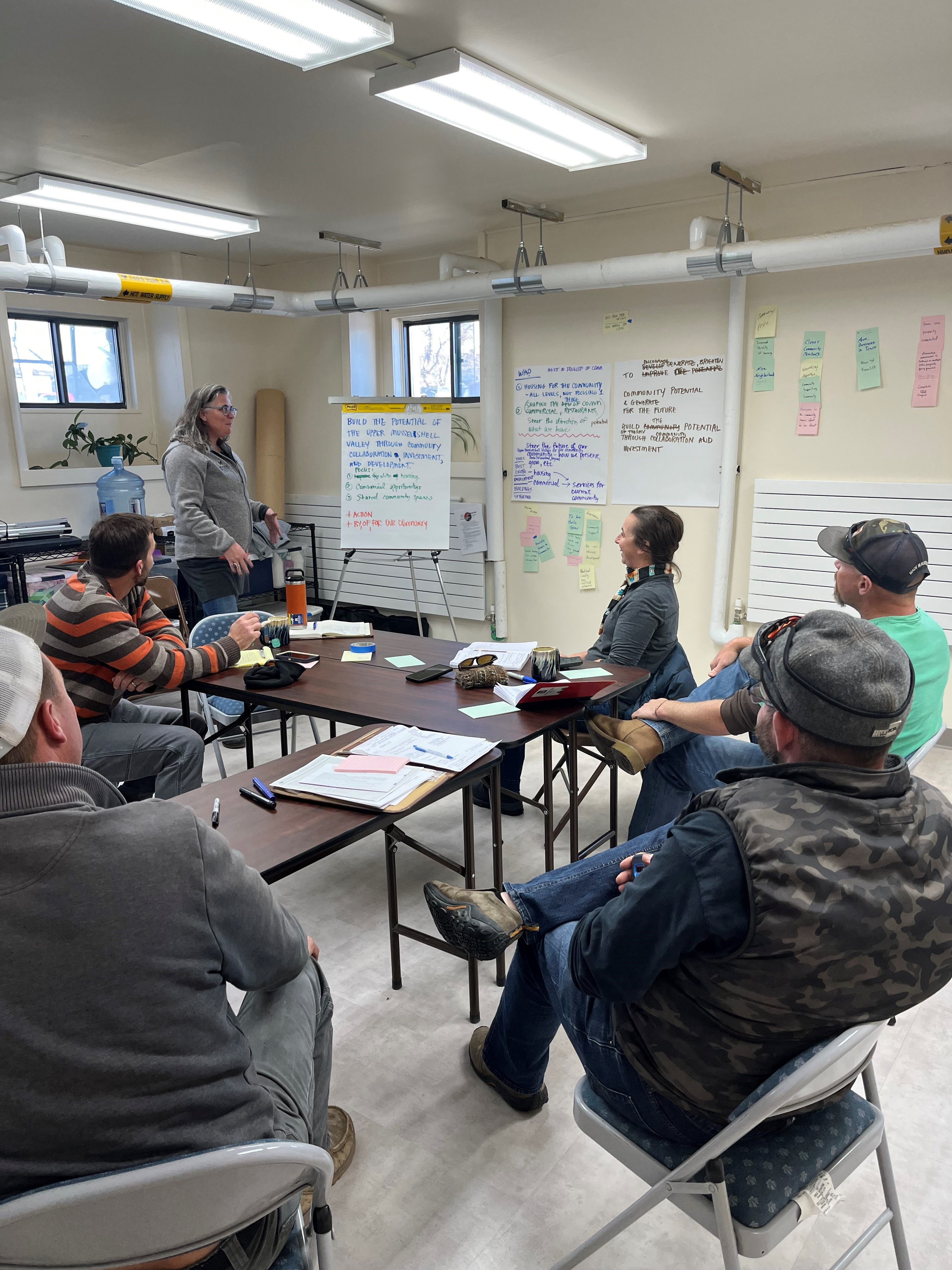
Caption: Big Sky Big Leadership graduates working on a vision statement.
Credit: Mandie Reed
Family & Consumer Science
Small Bites – Big Results: Building Better Habits in Wheatland County
Creating lasting change starts with small, consistent steps. That was the focus of Small Bites – Big Results, a workshop series led by Wheatland County MSU Extension Agent Mandie Reed, focused on building practical habits that support overall well-being.
Habit Formation
The first session explored how habits are formed and why they can be hard to change.
Participants learned the brain craves familiarity, and even small disruptions can
derail progress. The class focused on using small, repeatable actions and supportive
environments to build successful new habits.
Time Management
Time was reframed as a limited resource—like a daily budget. Participants looked for
ways to "invest" time more wisely and identified tasks that consume time with little
return. One participant shared they now stack and schedule tasks more efficiently
after the session.
Self-Care
Participants identified what recharges their energy and which self-care activities
align with their values. The session emphasized how intentional self-care builds resilience,
improves health, and increases motivation.
Budgeting and Money Management
Changing money habits is challenging. Participants explored budgeting styles, emotional
triggers around spending, and tools for tracking expenses. The class discussed the
difference between cost and value, and participants set personal financial goals aligned
with their priorities.
To reduce barriers, lunch and supplies were provided at each session, making it easier for participants to attend and focus on learning. Through this series, participants walked away with actionable strategies and a better understanding of how small efforts—repeated consistently—can create tangible benefits in daily life.
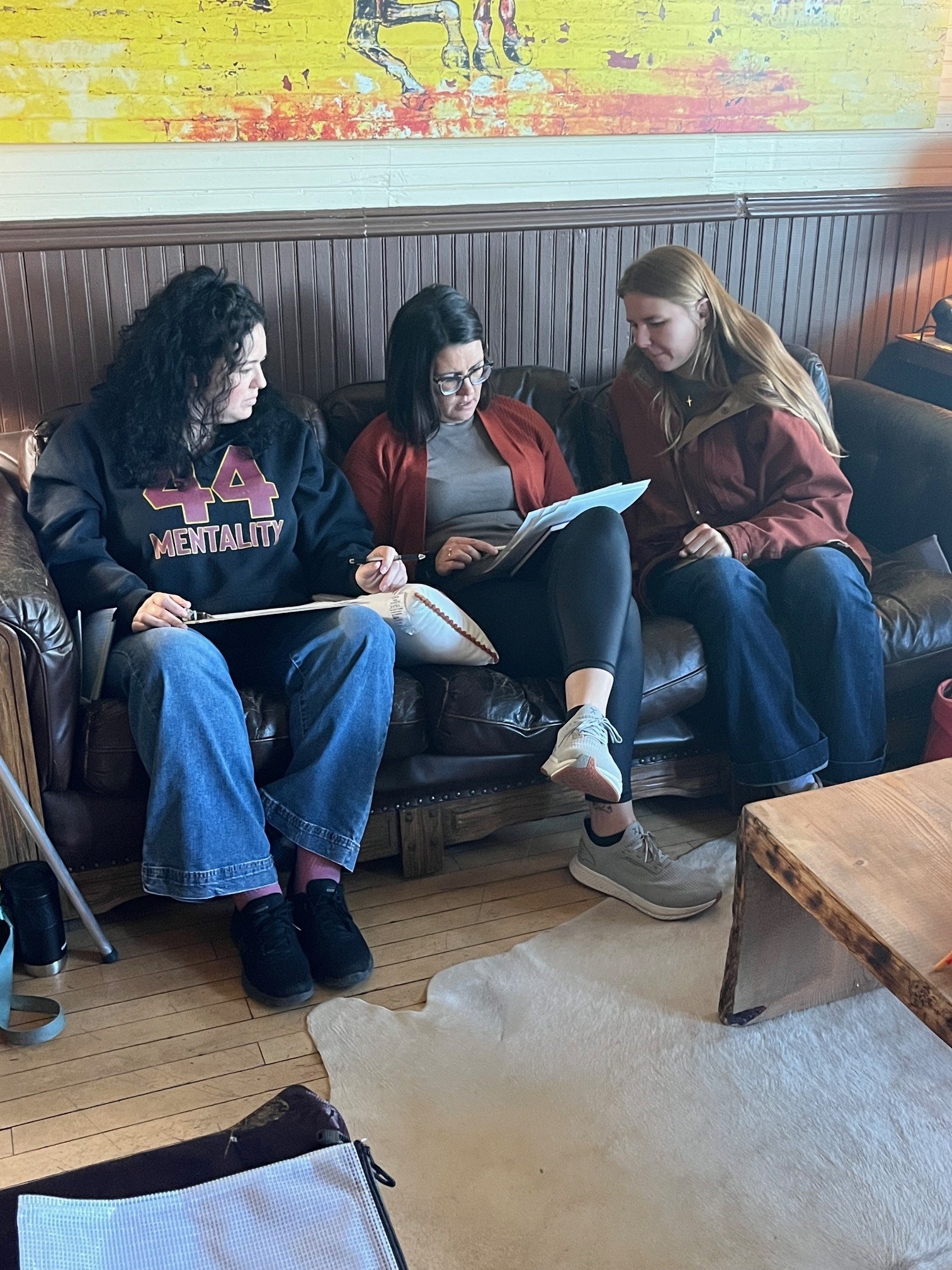
Caption: Participants in a small group discussion.
Credit: Mandie Reed
Montana State University Extension is an ADA/EO/AA Veteran’s Preference Employer and provider of educational outreach.