

Yellowstone County
2025 MSU Extension Highlights
2025 MSU Extension Highlights
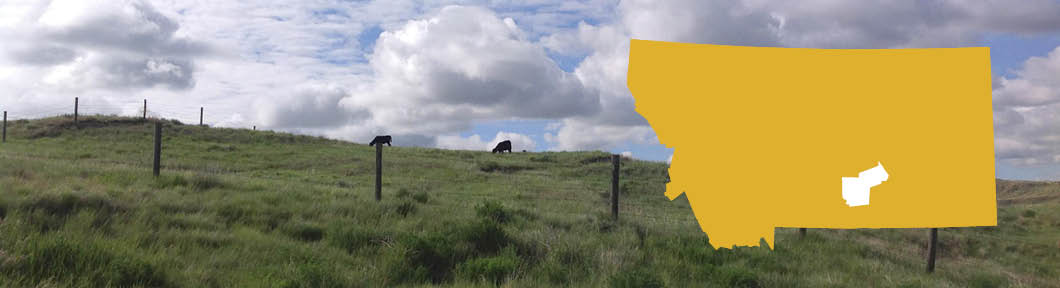
A unique blend of urban and rural communities makes Yellowstone County the most populous in Montana. Located in Southcentral Montana and anchored by the city of Billings, the county balances modern infrastructure with a strong agricultural foundation. Fertile valleys along the Yellowstone River support the production of wheat, barley, sugar beets, alfalfa, corn, and beef cattle, while the MSU Southern Agricultural Research Center in Huntley drives innovation and research in crop and livestock systems.
The local economy is powered by three primary sectors—agriculture, energy, and healthcare—providing stability, growth, and diverse employment opportunities. The county also serves as a regional hub for transportation, logistics, and trade, with expanding retail, service, and tourism industries that reflect steady population and economic growth.
Home to several institutions of higher education, Yellowstone County fosters lifelong learning, workforce development, and community engagement. Yellowstone County MSU Extension has one of the largest offices in Montana, with four Extension Agents, and it remains dedicated to serving the evolving needs of both urban and rural communities through research, education, and innovation.
Contact
301 N. 27th Street, Suite 330
Billings, MT 59101
406-256-2828
https://www.montana.edu/extension/yellowstone/
4-H & Youth Development
4-H Builds Servant Leaders
For over 100 years a key component of the 4-H program has been service learning. For generations, youth, volunteers and families have connected in their communities to help. The service-learning activity puts equal emphasis on youth learning and the action of service. Youth are encouraged to see what they provide through service and what they receive from it. All 26 Yellowstone County 4-H clubs do Service-Learning projects annually, ranging from park cleanup and planting flowers, to visiting assisted living facilities and reading with younger kids.
From selecting a project, to planning and executing the idea, youth assume an active leadership role in service-learning projects.
Brooklyn is a 4-H member who took the initiative to write a Montana 4-H Foundation People Partner Grant to make one-of-a-kind, hand-stitched quilts for newly diagnosed cancer patients. She presented her plan and asked for funds from the 4-H Council and solicited donations from family and friends. After identifying the need, she created a plan, timeline and budget before starting the project. She included other youth by inviting them cut fabric and help sew the quilts. She said, “It gives me something to be proud of. 4-H is something you can be involved in and be able to give back.”
Many times, 4-H clubs’ partner with other organizations for projects. Youth from all over the county worked with adults in the Elks Lodge No. 394 to tie blankets and put together care packages for soldiers
Adeliah, an 11-year-old 4-H’er, operates Kidz for Kids, an online shop where she sells her goats and goat milk soap and Kidz for Kids merchandise. Proceeds are used to help other children. She purchases school supplies and regularly stocks local food pantries with her soap. She said, “It makes me happy. 4-H teaches you how to care for the community.”
The 4-H pledge includes an inspiration which urges members to use their hands for larger service. Meaningful service projects build life skills such as problem solving, teamwork and concern for others. These experiences foster an ethic of service and participation in 4-H youth who will become tomorrow’s leaders.
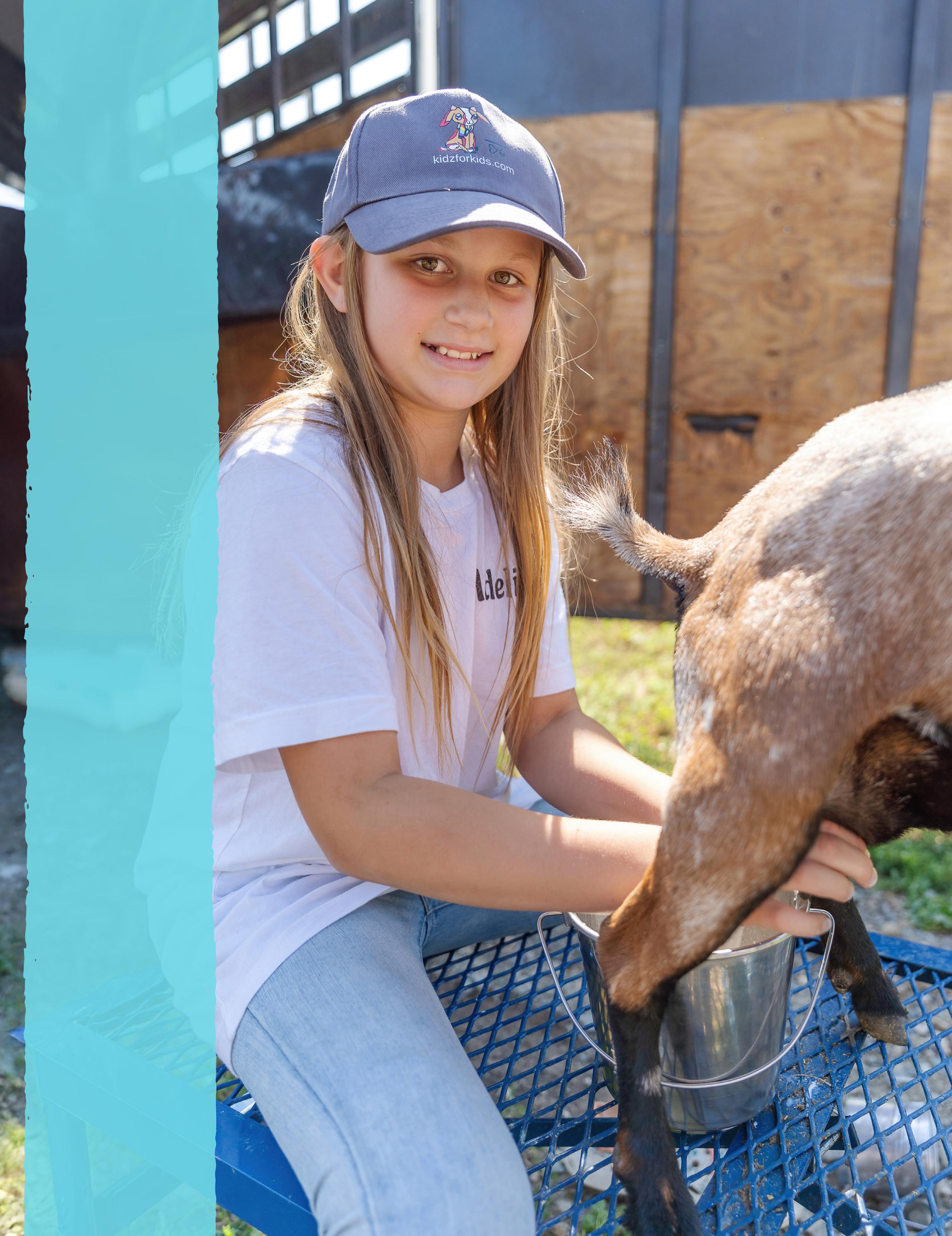
Caption: 4-H member Adeliah and her goat.
Credit: Daniel Sullivan
Agriculture & Natural Resources
Growing Success Together: Empowering Agriculture Through Knowledge and Partnership
In 2025, Yellowstone County MSU Extension continued to strengthen the foundation of local agriculture through personalized support, science-based solutions, and strong community partnerships. Nearly 285 producers received one-on-one consultations, conducted through phone calls, office visits, and on-site visits to farms, ranches, and agricultural businesses, reflecting the diversity and complexity of production systems across the county.
The most common requests focused on Integrated Pest Management (30%)—including plant, insect, and disease identification—followed by Crop Production and Agricultural Economics (24%), Livestock and Feed Quality (21%), and the Private Pesticide Applicator Program (13%). Each consultation provided timely, practical guidance to help producers make informed, sustainable management decisions.
To ensure feed safety and animal health, the MSU Extension Agriculture Agent supported ranchers with forage testing for nitrate levels and overall feed quality. Results confirmed that more than 3,800 acres of forage were safe for livestock consumption, helping producers safeguard their operations and maximize efficiency.
Ag education is a cornerstone of MSU Extension service. In partnership with the Montana Department of Agriculture, MSU Extension hosted six educational events featuring 24 expert-led sessions in crop management, horticulture, pest control, and emerging agricultural trends. These programs offered private, commercial, and government pesticide applicators opportunities to earn up to 26 continuing education renewal credits toward maintaining pesticide licenses.
By combining individualized assistance, accurate diagnostics, feed testing, and targeted educational programs, Yellowstone County MSU Extension continues to empower producers with the tools, knowledge, and confidence to thrive. Together, these efforts cultivate a resilient agricultural community—one rooted in learning, innovation, and partnership.
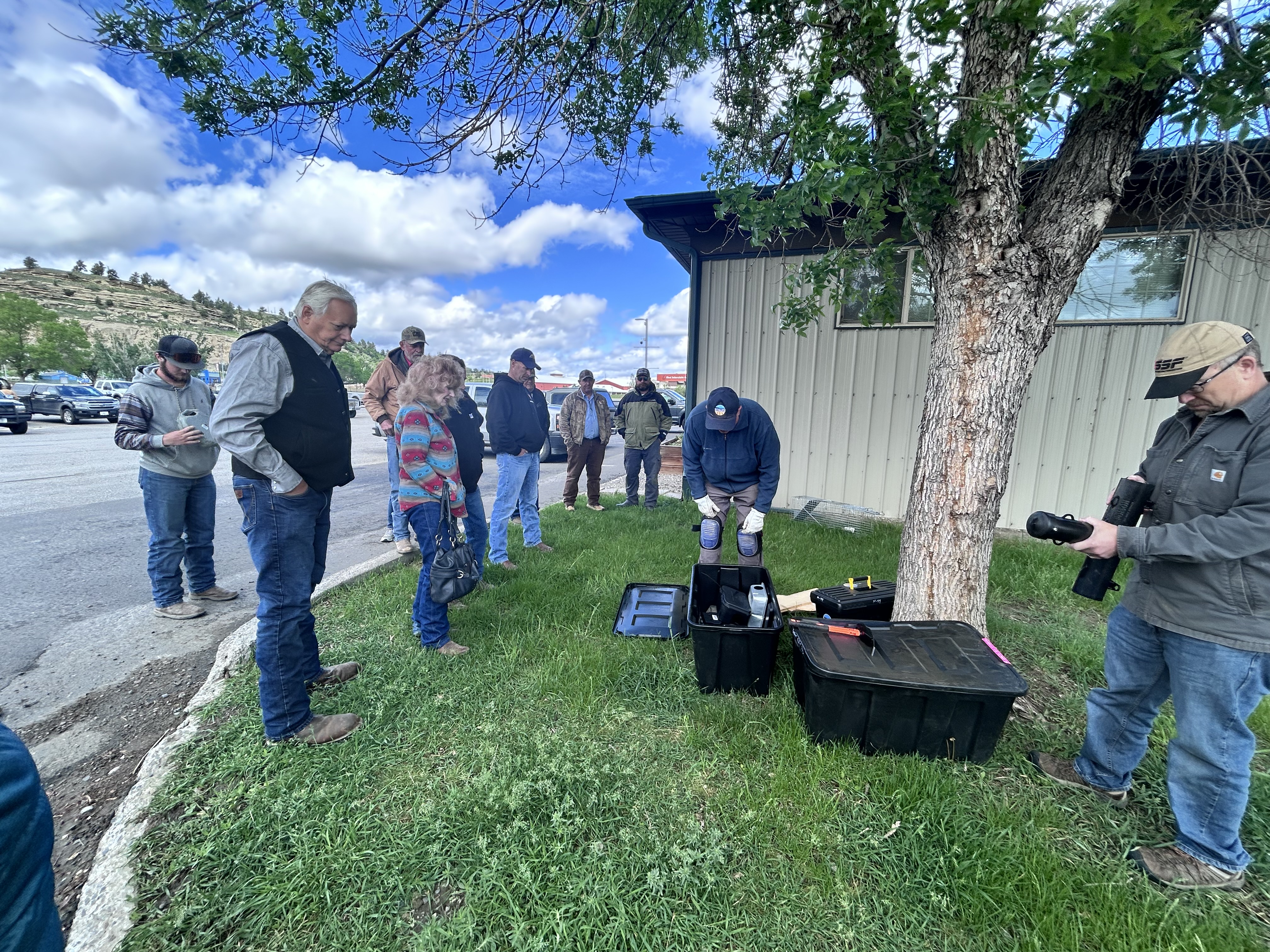
Caption: Yellowstone County producers at a Vertebrate Pest Management workshop.
Credit: Francisco Gamboa Herrera, MSU Extension Ag Agent
Family & Consumer Science
A New Chapter: Strengthening Family, Food, and Community Well-Being in Yellowstone County
Erin Gregory joined MSU Extension in March as the Yellowstone County Family and Consumer Sciences (FCS) Agent. Her work focuses on five key program areas—family finance and economics, food and nutrition, family and human development, mental health, and physical health—all grounded in Extension’s mission to strengthen individuals, families, and communities through evidence-based education.
The Yellowstone County FCS Program seeks to improve household well-being by increasing food-safety knowledge, expanding workforce credentials, supporting family communication and decision-making, and promoting physical and emotional wellness. Programs emphasize hands-on learning, local partnerships, and accessible outreach for both English- and Spanish-speaking participants.
Since March, Gregory has facilitated 36 ServSafe Food Protection Manager exams, including Spanish-language exams offered in collaboration with the Yellowstone County Agriculture Agent and native Spanish speaker Francisco Gamboa. She coordinated 10 hands-on food preservation workshops and dozens of consultations, reaching over 115 participants. A summer Food Preservation Mini-Series featured sourdough, pressure and water-bath canning, freezing, and drying sessions, supported by the Yellowstone County Master Gardeners, who grew community garden produce for classes.
Gregory also developed a contact list of more than 80 residents interested in seasonal food preservation programs. Her monthly cooking-skills partnership with Living Independently for Today & Tomorrow (LIFTT) expanded access to nutrition education for adults with disabilities, while collaborations with the Billings Public Library will bring intergenerational family learning to the community.
Gregory’s efforts have increased local food-safety knowledge, enhanced community access to certified food protection management courses, strengthened mental and physical health through experiential learning, and supported family decision-making through estate-planning and financial education consultations. These programs continue to build the foundation for a resilient, connected, and health-conscious Yellowstone County.
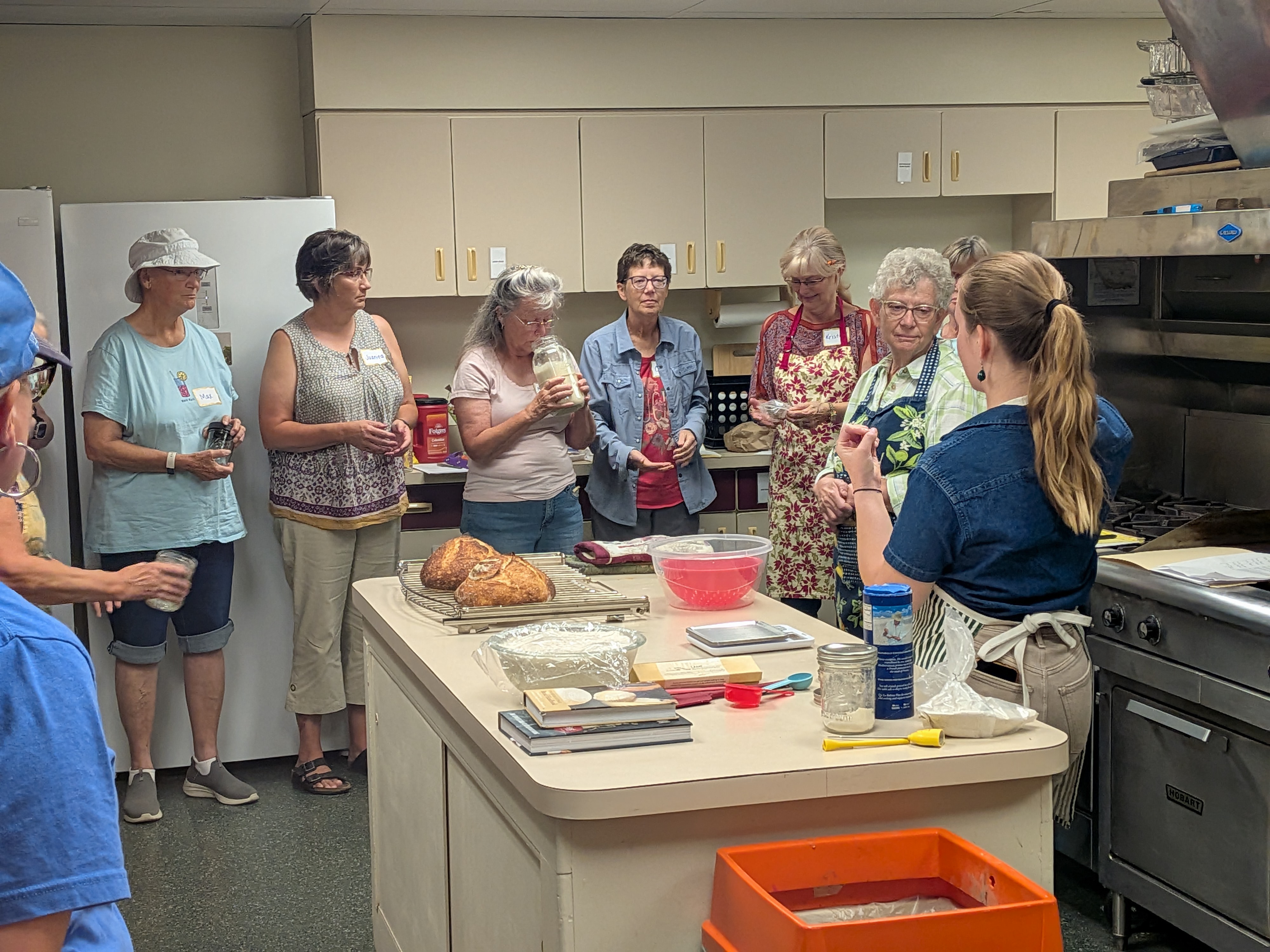
Caption: MSU Extension FCS agent Erin Gregory explains the sourdough bread making fermentation process.
Credit: Leslie Idstrom, Yellowstone County MSU Extension Administrative Coordinator
Agriculture & Natural Resources
Urban Agriculture in Action
According to a 2023 study by Feeding America.org, around 10% of Yellowstone County residents face food insecurity, with 65% of residents qualifying for food and nutritional assistance programs. To address this issue, a group of Yellowstone County Master Gardeners, Billings Public Library librarians, and AmeriCorps Vista members, formed the Billings Community Seed Library (BCSL) in 2020. A physical seed library was created and installed on the second floor of the Billings Public Library to provide free seeds and gardening resources to the public.
With an addition of the MSU Extension horticulture agent in 2024, the BCSL’s impact has grown, noted through the number of community members who use seeds from the physical seed library, and the growing attendance of workshops that BCSL organizes.
In 2025, 7,523 individual seed packets were used, and 719 individuals turned in forms sharing what seeds they took and their plans. Shared gardening plans included: seeds being sent to Uganda with AidSprit, creating a native plant garden, starting a community garden, and teaching materials for elementary school kids.
The BCSL’s educational workshops have grown in popularity. Workshops topics include Garden Soil Health Fertility, Basics of Seed Saving, and Discovering Invertebrates Kids Program. In March of 2024, BCSL hosted a Seed Swap and had 113 participants. The BCSL held the same event in 2025 and doubled attendance, hosting over 320 participants and introduced the new Yellowstone County FCS Agent and their upcoming classes.
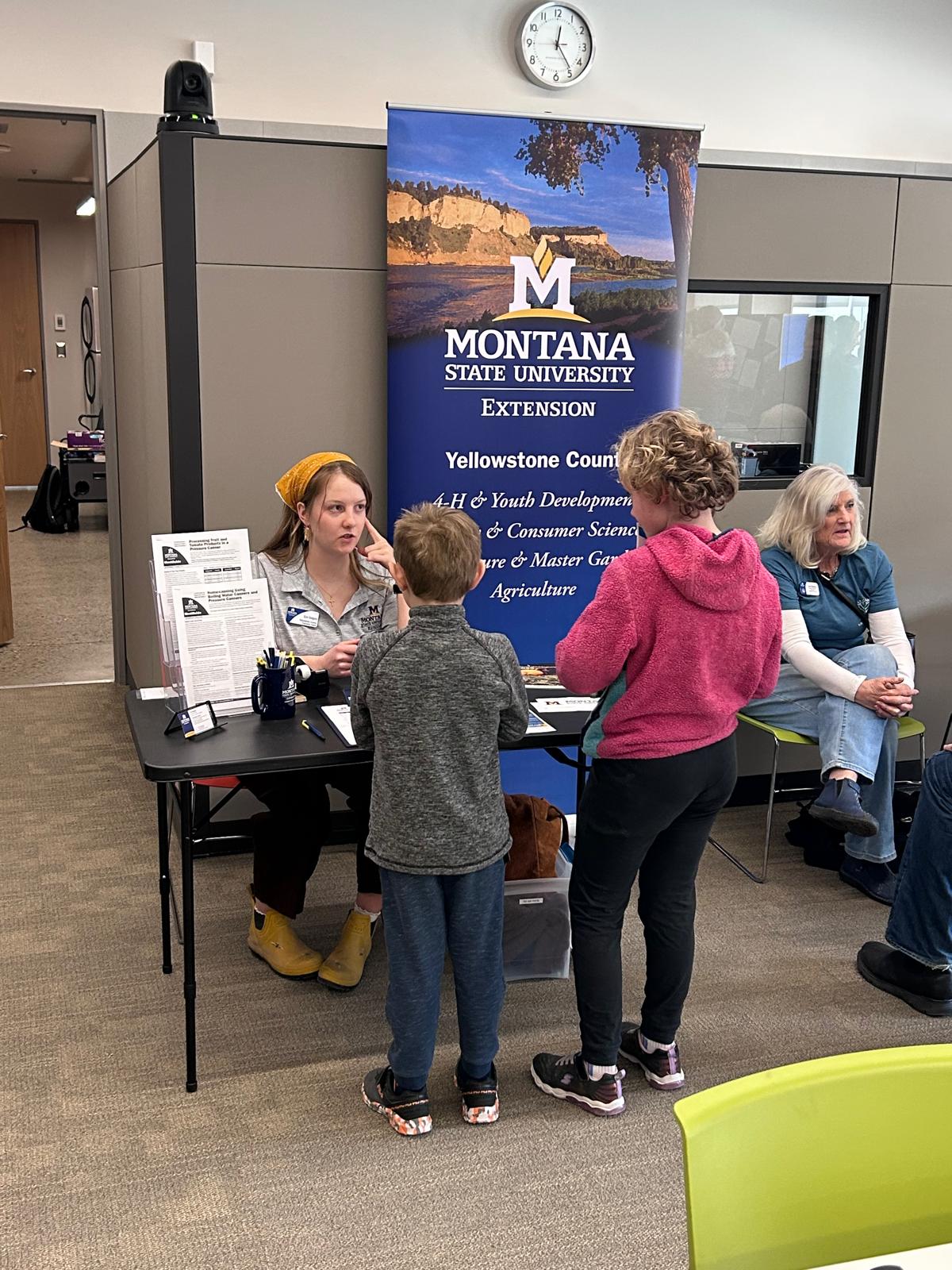
Caption: Yellowstone FCS Agent meeting the community at the Billings Community Seed Library Seed Swap.
Credit: Francisco Gamboa Herrera, MSU Extension Ag Agent
Family & Consumer Science
Instant Pot Incentive Pilot Project
Montana State University’s Nutrition Education Program (NEP) recently partnered with MSU’s Family and Consumer Science Department (FCS) to provide an Instant Pot cooking class.
The three educators in the Yellowstone County Expanded Food and Nutrition Education Program (EFNEP) joined with community partners including the Billings Urban Indian Health and Wellness Center, Friendship House, Community Leadership & Development Inc, Family Tree Center, Family Service, WIC and OPA. The project was funded by the USDA via the Western Regional Agricultural Stress Assistance (WRASAP) grant.
Through the Eating Smart-Being Active 9-week curriculum, nutrition educators taught families with children how to make healthier food choices on a limited budget, how to read nutrition fact labels, shopping and meal planning skills and food safety. The goal was to increase their ability to select and purchase foods that improve the nutritional quality of family meals. A challenge facing the EFNEP program is recruiting adults to participate and finish the free classes. The ability to earn an Instant Pot helped motivate adults to sign up and graduate. Participants were excited to learn how to stretch their food dollars and prepare quick and healthy meals at home with this new incentive.
With the state partnership and pilot testing of the project, the overall goals were to:
- Increase Adult Reach Across the NEP Program: Instant Pots allowed new/additional adult classes to take place in every service area. Adult participation increased with the Instant Pot reward for graduates, even those who attended online classes.
- Increase Partner Collaboration: The use of Instant Pots has increased collaboration with new partners and existing partners.
As a result of this collaboration between the MSU Extension FCS and NEP programs, 40 Instant Pots have been given as an incentive to graduates during the grant year in Yellowstone County. The EFNEP program remains committed to serving families facing food insecurities in Yellowstone County.
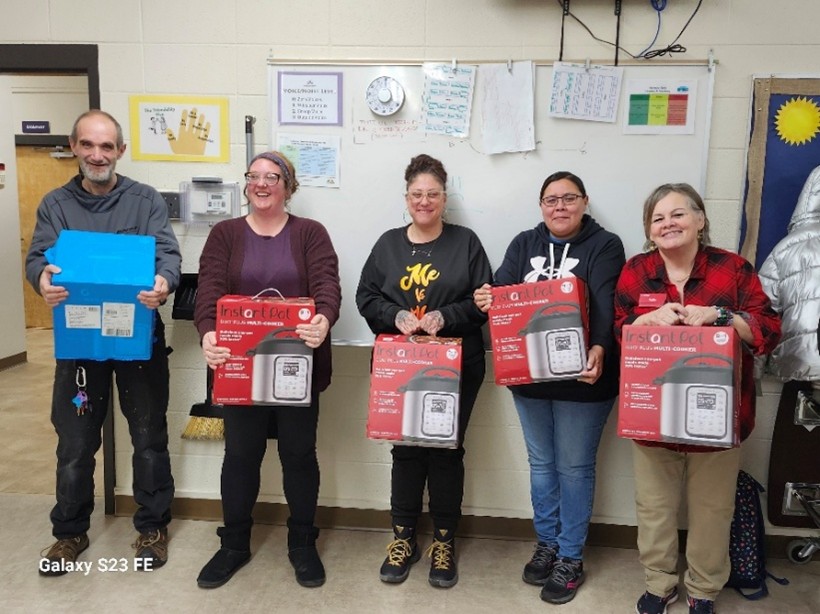
Caption: Attendees at an Instant Pot Cooking food and nutrition program.
Credit: Melody Harris, EFNEP Nutrition Educator
Montana State University Extension is an ADA/EO/AA Veteran’s Preference Employer and provider of educational outreach.