


GG Forgot My Name
Reading Guide
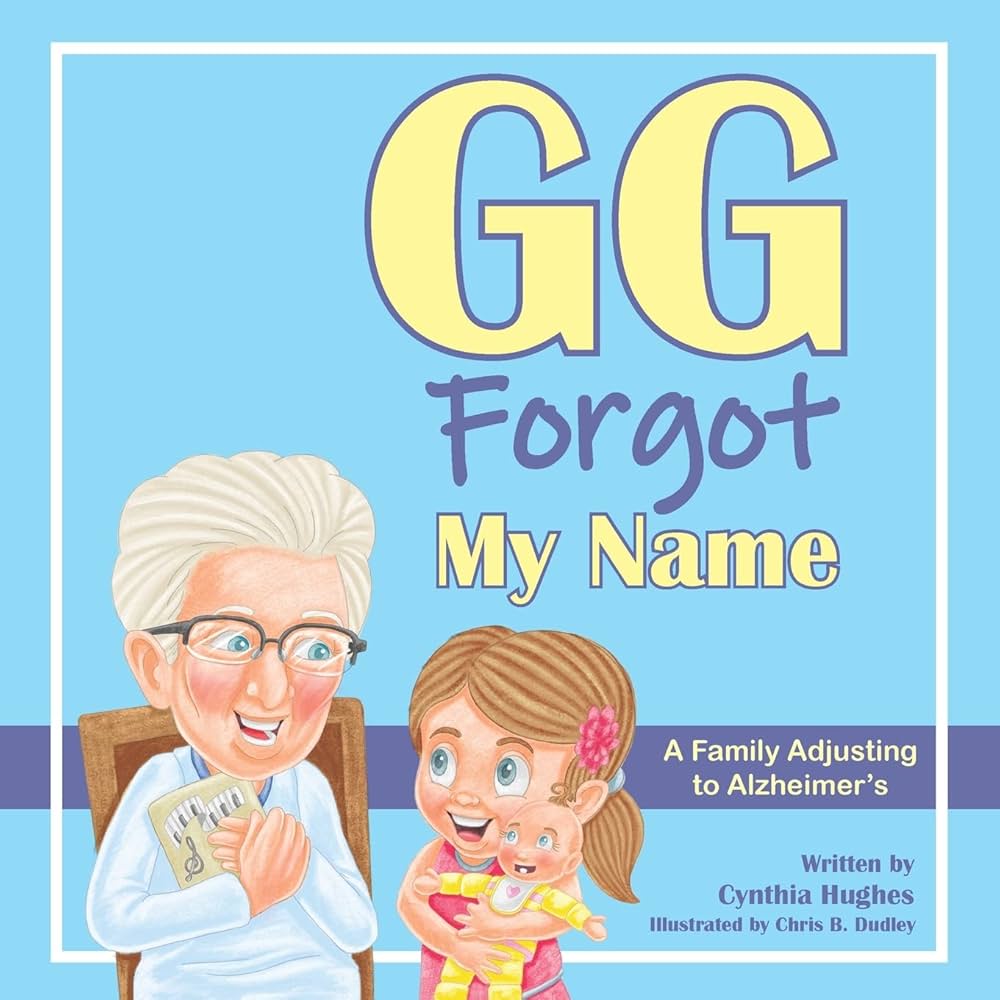
By: Cynthia Hughes
Illustrated by: Chris B. Dudley
About this Program
The MSU Extension Alzheimer's Dementia Awareness for ChildrenStorybook program is designed to teach children about a form of dementia.
The goals of the program are:
1) increase awareness and knowledge about Alzheimer’s (a form of dementia) and
2) provide supportive resources to children and families when they have a loved one
diagnosed with Alzheimer's.
The authors of this reading guide are:
- Ocean Jones, Montana State University Hilleman Scholar
- Marsha A. Goetting, MSU Extension Family Economics Specialist
Brief Summary
GG is Everly and Declan's great grandma. She is incredibly happy. She loves to play the piano and read books. One day, when GG tried to play the piano, she could not remember how to play any songs. When she tried to read a book to her great grandson Declan, she forgot some of the words. This makes GG sad. Everly asks her grandma why GG is forgetful. Grandma explains to Everly that GG has Alzheimer's disease. This means she forgets many things and is not always happy. Everly feels confused that GG remembers things from a long time ago but forgets Everly’s name and calls her “sissy.” Grandma explains that it is easier for people with Alzheimer's to remember things from a long time ago. One day Everly found out that GG died. Grandma gives Everly a babydoll to help her feel better when she misses GG. Everly names her babydoll “Sissy” to honor how much she loves GG.
Questions to Ask
- What makes GG unhappy?
- What are some things Everly and her family do to make GG feel better?
- Where did GG live when she was a little girl?
- How does GG show her love for Everly?
- Why is it okay to miss someone after they die?
- What did Grandpa suggest Everly, Flynn, & Declan do when they miss GG?
Activity Enrichment
- Make a list of things the child can do with their loved one with Alzheimer’s. This can include singing songs or talking about early memories.
- Buy the child a toy or doll. Ask the child to name the doll something that their loved one with Alzheimer's says often. This will help them feel connected to their loved one.
- Share photos of your loved one with the child.Encourage the child to ask your loved one about the photos.
Common Reactions
- Happy: A child could feel happy to hear their loved one with Alzheimer's stories.
- Confused: A child could feel confused about why someone with Alzheimer's forgets names and words.
- Sadness: A child could feel sad when a loved one with Alzheimer’s passes away.
Other Reading Guides and One Free Alzheimer's Storybook Order Form
Other Storybooks and Reading Guides can be found at: https://www.montana.edu/extension/alzheimers/booksandreadingguides.html
An order form is available at this website to request onefreecopy of an Alzheimer’s storybook (while supplies last).This order form is intended for only Montana residents.
Funding for purchase of the storybooks in this program have been made possible by
a grant from the Montana Geriatric Education Center at the University of Montana,
AARP Montana, and by the Endowment fund from National Extension Association of Family
& Consumer Sciences (NEAFCS).