


Grandma, It's Me!
Reading Guide
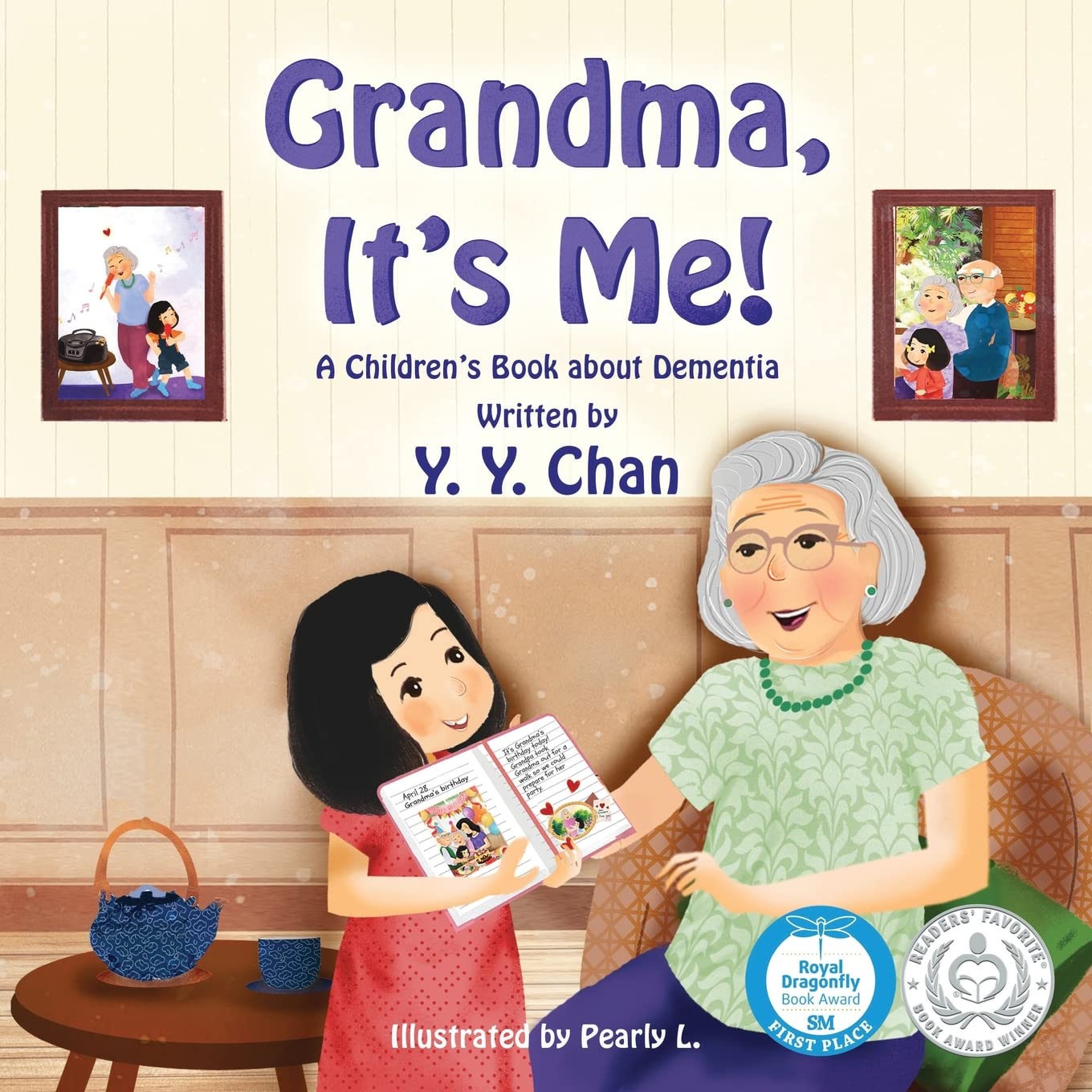
By: Y.Y. Chan
Illustrated by: Pearly L.
About this Program
The MSU Extension Alzheimer's Dementia Awareness for ChildrenStorybook program is designed to teach children about a form of dementia.
The goals of the program are:
1) increase awareness and knowledge about Alzheimer’s (a form of dementia) and
2) provide supportive resources to children and families when they have a loved one
diagnosed with Alzheimer's.
The authors of this reading guide are:
- Ocean Jones, Montana State University Hilleman Scholar
- Marsha A. Goetting, MSU Extension Family Economics Specialist
Brief Summary
Riley and her grandma have many fun memories together, like Riley’s first time riding a bike. But sometimes Grandma has a hard time remembering her. Riley has pictures of them together to help Grandma remember her.After they find out that Grandma has dementia, Grandma and Grandpa move in with Riley and her family. Riley’s mom explains to her that dementia causes Grandma to have difficulty remembering recent memories and that her brain does not work as well as it used to. Riley helps take care of Grandma and enjoys hearing all of Grandma's stories about how she met Grandpa. Although Grandma’s memory comes and goes, sometimes it is difficult for Riley to take care of Grandma. Riley loves her grandma so much!
Questions to Ask
- Grandma wanders off, and Grandpa finds her on a bench. What is special about the bench Grandma is sitting on?
- What are some questions Grandma asks Riley that she finds confusing?
- Riley's Mom tells her that Grandma has dementia. Her mom says Riley needs to be patient with Grandma. What does the word “patient” mean?
- Name two things Riley does to help her grandma remember things better?
- Riley's Mom tells her that Grandma could forget old memories.How does Riley plan to remember Grandma's stories to tell her if Grandma forgets?
Activity Enrichment
- Ask the child to share 1-2 memories of their loved one with Alzheimer's.
- Ask the child to share a memory their loved one has shared with them.
- Find a picture of the child and their loved one with Alzheimer's. Have the child decorate a picture frame and put the picture in it.
- Ask the child what their favorite song is. Play it and sing along.
Common Reactions
- Sad: A child could feel sad when their loved one cannot remember them.
- Worried: A child could feel worried if their loved one wanders off or gets lost.
- Happy: A child could feel happy they are able to help their loved one who has dementia.
- Tired: A child could feel tired of helping or answering repeated questions from a Grandparent.
Other Reading Guides and One Free Alzheimer's Storybook Order Form
Other Storybooks and Reading Guides can be found at: https://www.montana.edu/extension/alzheimers/booksandreadingguides.html
An order form is available at this website to request onefreecopy of an Alzheimer’s storybook (while supplies last).This order form is intended for only Montana residents.
Funding for purchase of the storybooks in this program have been made possible by
a grant from the Montana Geriatric Education Center at the University of Montana,
AARP Montana, and by the Endowment fund from National Extension Association of Family
& Consumer Sciences (NEAFCS).