


Understanding Dementia Easily
Reading Guide
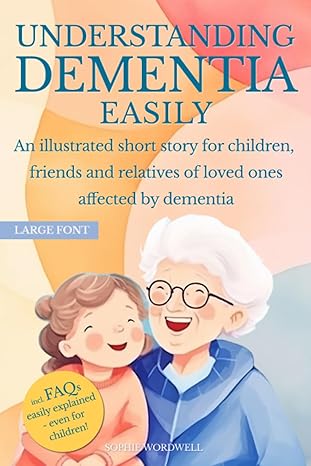
By: Sophie Wordwell
Illustrated by: Alex Demiourge
About this Program
The MSU Extension Alzheimer's Dementia Awareness for ChildrenStorybook program is designed to teach children about a form of dementia.
The goals of the program are:
1) increase awareness and knowledge about Alzheimer’s (a form of dementia) and
2) provide supportive resources to children and families when they have a loved one
diagnosed with Alzheimer's.
The authors of this reading guide are:
- Ocean Jones, Montana State University Hilleman Scholar
- Marsha A. Goetting, MSU Extension Family Economics Specialist
Brief Summary
A young child loves how their grandma makes them feel safe, comforted, and loved. Because Grandma has been forgetting things, she goes to the doctor. The doctor says that dementia can make things harder for Grandma to remember and understand. When Grandma has changing emotions, it makes the child sad. To feel better, the child thinks about how happy they are to have good moments with Grandma. Creating routines and showing Grandma photos helps her memory. Grandma and the child do many things together, like bake, laugh, walk, and draw. Sometimes the best thing for Grandma is to sit in silence. The child wants to make sure that Grandma feels safe, comforted, and loved.
Questions to Ask
- Grandma is having trouble remembering people’s names. What does your loved one have trouble remembering?
- Have the child explain how dementia is like a puzzle.
- When Grandma felt confused or agitated, what did the child do?
- What are the three words that the book calls “holding immense power?
- What has special magic that helps Grandma feel joy and helps her remember happier times?
- When Grandma needs to be by herself, what does the young child do?
Activity Enrichment
- With paper and other crafting materials, create a piece of artwork that is like a board game with the child that is like a ladder or stairs. Have the bottom of the stairs represent what a person would forget in the early stage of dementia, like forgetting keys. Each step of the ladder or stairs represents the decreasing ability to remember. Tailor this to the child's loved one with dementia and include common feelings. Explain each step to the child.
- Ask the child what they like to do in their daily routine. Write it on paper and have them decorate it. Put it somewhere the child will see it often, like the refrigerator. This will help them understand the benefits of having a daily routine to follow.
Common Reactions
- Sad: A child could feel sad when their loved one with dementia finds it difficult to remember things.
- Thankful: A child can feel thankful when they can be in the moment with their loved one with dementia.
- Joy: Achild can feel joy when reading a book, listening to music, looking at photo albums, or engaging in activities that bring joy to both the child and loved one with dementia.
Other Reading Guides and One Free Alzheimer's Storybook Order Form
Other Storybooks and Reading Guides can be found at: https://www.montana.edu/extension/alzheimers/booksandreadingguides.html
An order form is available at this website to request onefreecopy of an Alzheimer’s storybook (while supplies last).This order form is intended for only Montana residents.
Funding for purchase of the storybooks in this program have been made possible by
a grant from the Montana Geriatric Education Center at the University of Montana,
AARP Montana, and by the Endowment fund from National Extension Association of Family
& Consumer Sciences (NEAFCS).