


Did I Upset Grandma?
Reading Guide
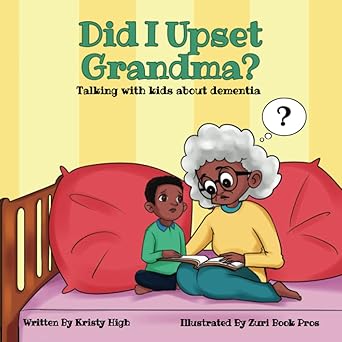
By: Kristy High
Illustrated by: Zuri Book Pros
About this Program
The MSU Extension Alzheimer's Dementia Awareness for ChildrenStorybook program is designed to teach children about a form of dementia.
The goals of the program are:
1) increase awareness and knowledge about Alzheimer’s (a form of dementia) and
2) provide supportive resources to children and families when they have a loved one
diagnosed with Alzheimer's.
The authors of this reading guide are:
- Ocean Jones, Montana State University Hilleman Scholar
- Marsha A. Goetting, MSU Extension Family Economics Specialist
Brief Summary
Alex lives with his mom, sister, and brother. His mom explains to the siblings that Grandma is coming to live with them. Alex is excited! On the first night of Grandma's arrival, Alex laughs and is having fun. Alex and his brother ask if Grandma wants to see a magic trick. She says, “You can show me next weekend, it's time for me to go home.” Grandma angrily tries to open the front door. This confused Alex. He wonders if he upset Grandma. Grandma sometimes gets upset, like when Alex leaves the light on. She forgets what some of her favorite activities are like playing the game bingo. Alex's mom explains to him that Grandma has dementia. Now, when Grandma gets upset, Alex knows why she is upset–and that she still loves him.
Questions to Ask
- How does Alex feel when Grandma tries to leave, and why?
- Why did Grandma cry?
- What was Grandma doing when Alex said good morning?
- Did Alex give his grandma dementia by upsetting her? What causes Grandma’s dementia?
- What did Alex’s Mom tell the kids to do when Grandma forgets their names or birthdays?
Activity Enrichment
- Shut the door to the child's room. Ask the child how they would feel if they were not able to go into their room whenever they wanted. Discuss their feelings. Relate those feelings to how their loved one with dementia could be feeling when they get confused about where they are.
- Write down some common feelings the loved one with dementia has expressed (for example, angry, sad, scared, happy) on note cards. Go through them with the child and talk about what the words mean and what makes them feel those emotions.
- Follow the tips on how to talk with children on the last page of this book.
Common Reactions
- Excited: A child could feel excited when their loved one with dementia is going to live with them.
- Sad: A child could feel sad that their loved one with dementia seems upset at them for something they said or did.
- Scared: A child could feel scared when their loved one with dementia does not recognize them.
Other Reading Guides and One Free Alzheimer's Storybook Order Form
Other Storybooks and Reading Guides can be found at: https://www.montana.edu/extension/alzheimers/booksandreadingguides.html
An order form is available at this website to request onefreecopy of an Alzheimer’s storybook (while supplies last).This order form is intended for only Montana residents.
Funding for purchase of the storybooks in this program have been made possible by
a grant from the Montana Geriatric Education Center at the University of Montana,
AARP Montana, and by the Endowment fund from National Extension Association of Family
& Consumer Sciences (NEAFCS).