
Apply to Become a Student Commons Fellow

fellows logo

Students from every major, background, and experience level are encouraged to apply. Whether you've considered yourself a leader before or not, this fellowship is an opprotunity to learn, grow, and make a meaningful contribution to the MSU community. 

Applications open August 1st. Learn about eligibility, allplication questions, important dates, and how to submit your application. Applications close August 26th. Interviews will be facilitated August 27th - September 2nd. Fellows will be selected & notified by September 3rd. 


The Student Commons Fellows Program is a yearlong, cohort-based learning project-development experience for Montana State University students. Fellows explore the issues, questions, and possibilites that shape student life while developing the skills to listen, communicate, collaborate, and contribute thoughtfully to their communities. 
 

The Fellows Program invites students to develop initiatives connected to real campus needs. 

Students bring valuable knowledge formed through their education, relationships, cultures, communities, and lived experiences. The program recognizes students as active participants in campus life who can identify concerns, ask meaningful questions, gather people, and contribute to thoughtful change.

Rather than focusing only on individual achievement, the fellowship emphasizes collective responsibility. Fellows consider how their decisions, relationships, and ways of participating affect the people and communities around them.

The program builds upon the Student Commons’ commitment to creating a campus environment where students can ask questions, build relationships, encounter different perspectives, and practice meaningful forms of belonging.


What we do—and how we do it—matters. Belonging is everyone’s responsibility. 

The Fellows Program is not structured like a traditional class. Fellows learn from one another, their own experiences, guest educators, campus partners, and the process of developing work in community.

The program combines:

  • Guided readings and discussion
  • Reflective writing
  • Experiential activities
  • Campus observation and listening
  • Mentorship
  • Project planning
  • Responsible experimentation
  • Community feedback

Fellows examine how power, access, and participation influence educational and community spaces. Throughout the program, they consider questions such as:

  • Who feels invited into this kind of learning?
  • Whose knowledge and experience are recognized?
  • What forms of participation and communication are valued?
  • Who is expected to adapt to existing institutional norms?
  • How can students examine, reshape, and humanize the communities they inhabit?

The goal is to help fellows recognize different ways of knowing and participate in community life with curiosity, humility, and care.

1. Orientation and Fall Retreat

Fellows begin by learning about the program, meeting their cohort, exploring the core competencies, and establishing shared expectations.

During the fall retreat, fellows:

  • Build relationships
  • Develop community agreements
  • Participate in immersive learning experiences
  • Reflect on the experiences, values, and questions they bring to the program

2. Workshops and Campus Listening

Fellows meet weekly for three-hour learning sessions. Sessions include facilitated activities, readings, discussions, guest instructors, reflection, shared meals, and opportunities to practice new skills.

Fellows identify a student experience, concern, gap, or possibility they want to understand more deeply. Before proposing a solution, they spend time observing, researching, speaking with students, and consulting campus partners.

3. Mentorship and Project Development

Each fellow receives guidance from Student Commons staff, faculty, mentors, and campus partners.

These relationships help fellows:

  • Understand existing campus work
  • Strengthen and refine their ideas
  • Make responsible decisions
  • Build meaningful partnerships
  • Develop, test, and improve an original initiative

4. Showcase and Reflection

At the end of the academic year, fellows share:

  • Their completed or piloted initiative
  • What they learned
  • The questions that shaped their work
  • The project’s impact and limitations
  • What they believe should happen next

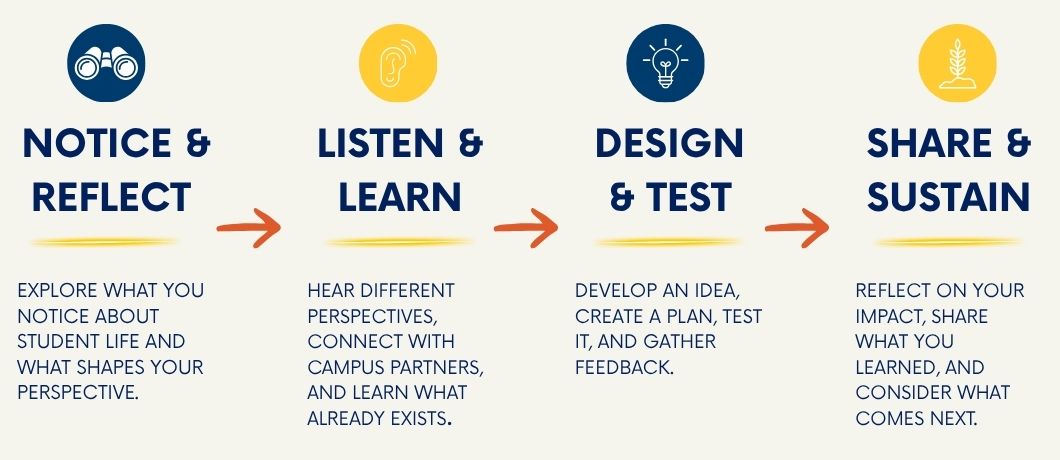
The Fellow Journey Phase One: Notice and Reflect

Fellows explore:

  • What they keep noticing about student life
  • The experiences and values that shape their interests
  • Their strengths, assumptions, limitations, and blind spots
  • Why a particular issue or question matters now

The Fellow Journey Phase Two: Listen and Learn

Fellows:

  • Speak with students and campus partners
  • Examine different perspectives
  • Research existing programs and resources
  • Identify who is affected
  • Learn what work is already happening
  • Refine the question they are trying to understand

The Fellow Journey Phase Three: Design and Test

Fellows:

  • Develop a project concept
  • Identify collaborators and stakeholders
  • Create a basic plan and budget
  • Consider access, ethics, and unintended consequences
  • Pilot the initiative on a manageable scale
  • Gather feedback and make adjustments

The Fellows Journey Phase Four: Share and Sustain

Fellows:

  • Reflect on their project’s impact and limitations
  • Share their learning at a public showcase
  • Identify possible next steps
  • Strengthen relationships with campus partners
  • Consider whether the work should continue, change, or conclude

By participating in the program, fellows will strengthen their ability to:

  • Gather people and build meaningful relationships
  • Listen with care
  • Communicate with integrity
  • Identify shared concerns and validate differing perspectives
  • Understand their own values, assumptions, and responsibilities
  • Navigate tension, disagreement, and feedback effectively
  • Work collaboratively across different experiences and roles
  • Plan and facilitate community-centered work
  • Follow through on an idea
  • Contribute thoughtfully to the vitality of campus life

Core Competencies

The skills Fellows develop is organized around twelve core competencies. 


Noticing and Attention

Recognizing patterns, experiences, needs, tensions, and possibilities that might otherwise be overlooked.

Self-Understanding and Reflection

Understanding how personal experiences, values, identities, strengths, emotions, and assumptions shape participation and decision-making.

Dialogue and Conversation

Listening closely, asking meaningful questions, remaining curious, and engaging constructively across differences.

Communication 

Expressing ideas clearly and intentionally through speaking, writing, storytelling, presentation, and interpersonal interaction.

Media Literacy and Discernment 

Evaluating how information is created, framed, circulated, and interpreted to make thoughtful and informed judgments.

Cultural Awareness and Power

Recognizing how culture, history, identity, power, and social position influence experiences, relationships, institutions, and opportunities.

Collaboration and Relationship Building 

Building trust, sharing responsibility, navigating roles and conflict, and working with others toward a common purpose.

Facilitation and Group Process

Creating conditions that help people participate, communicate, reflect, make decisions, and work together effectively.

Accountability and Professional Practice

Considering intention and impact, receiving and applying feedback, honoring commitments and boundaries, and taking responsibility for one’s conduct.

Resilience and Adaptability 

Responding constructively to uncertainty, setbacks, changing circumstances, and new information while remaining connected to purpose and well-being.


Problem-Solving and Decision-Making 

Identifying challenges, considering multiple perspectives and consequences, evaluating possible responses.

Service, Initiative, and Program Design

Recognizing a community need or possibility and developing an idea into goals, partnerships, manageable steps, timelines, implementation, and assessment.

Each fellow begins with a question, concern, student experience, or possibility they want to understand more deeply.

After listening to students, learning from campus partners, and exploring the issue, fellows develop a small-scale initiative that responds to what they learned.

Fellows work with a team of students, facilitators, and campus partners to plan and test the initiative. The goal is not to solve a complex problem alone. The goal is to practice responsible, informed, and collaborative action.

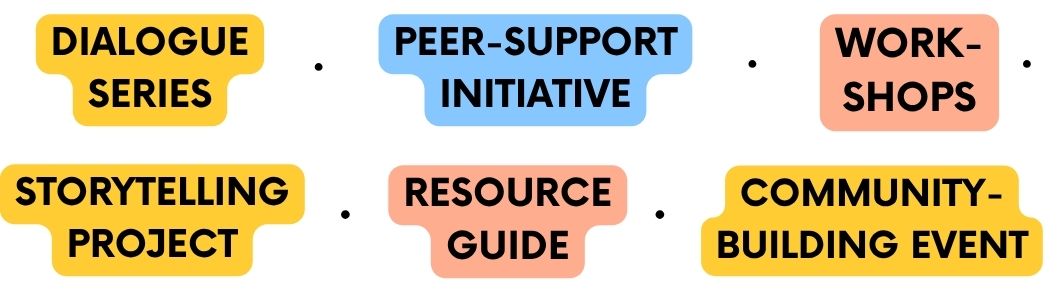
Projects might include:

  • A facilitated conversation or dialogue series
  • A peer-support or mentorship initiative
  • A workshop or learning experience
  • A storytelling project
  • A campus resource or guide
  • A creative installation or public contribution
  • A community-building event
  • A pilot program
  • A collaborative campaign

Fellows receive funding and material support based on the scope and needs of their approved initiative.

Questions Guiding the Project

  • What issue, experience, or possibility are you exploring?
  • What do you still need to learn?
  • Who is affected?
  • Who needs to be heard?
  • What work is already happening?
  • Why does this matter at MSU now?
  • What response is appropriate to the scale of the need?
  • How will access, power, and unintended impact be considered?
  • What did the project teach you?
  • What should happen next?

The Fellows Program depends on trust, consistency, mutual respect, and a willingness to learn alongside others.

Fellows help create a community where participants can take risks, explore emerging ideas, receive feedback, and remain accountable to one another.

Fellows are expected to:

  • Attend orientation, the retreat, cohort sessions, and the showcase
  • Arrive prepared and participate actively
  • Complete readings and reflective assignments
  • Engage respectfully with different experiences and perspectives
  • Listen before proposing solutions
  • Communicate openly about challenges or conflicts
  • Honor privacy and community agreements
  • Receive and offer constructive feedback
  • Follow through on commitments
  • Consult affected students and campus partners
  • Participate in project work between cohort meetings

Success in the Fellows Program is not limited to launching a large or permanent program. It may include:

  • Building trusting relationships
  • Asking a stronger or more responsible question
  • Learning that an original idea needs to change
  • Recognizing when not to create a new program
  • Connecting students to existing work
  • Developing a thoughtful pilot
  • Receiving and applying community feedback
  • Understanding the limitations of a project
  • Contributing something useful to campus
  • Identifying opportunities for the work to continue

The Fellows Program welcomes applicants from all majors, backgrounds, and perspectives.

Students may bring experience in leadership, organizing, service, creative work, student employment, clubs, research, caregiving, cultural communities, or other forms of participation.

Students who have never considered themselves leaders or organizers are encouraged to apply.

The program may be a strong fit for students who:

  • Are curious about student life and campus culture
  • Want to learn through conversation, reflection, and experience
  • Are interested in making a meaningful contribution to MSU
  • Are willing to listen before acting
  • Want to explore how their interests, values, and skills connect to community needs
  • Are open to changing their ideas as they learn
  • Can commit to a yearlong cohort
  • Want to build relationships across different experiences and perspectives
  • Are ready to take thoughtful risks and learn by doing

Applicants must:

  1. Be currently enrolled at MSU Bozeman.
  2. Have completed at least one in-person semester at MSU before the fellowship begins.
  3. Be enrolled in at least four credits.
  4. Be available to participate throughout both the fall and spring semesters.
  5. Be able to attend the fall retreat and regular cohort sessions.

Students graduating in December are not eligible because the program requires enrollment during both the fall 2026 and spring 2027 semesters.

Is the Fellows Program open to all MSU students?

The program is open to undergraduate and graduate students who have completed at least one semester on the Bozeman campus and are enrolled in at least four credits.

Do I need to have a project idea before applying?

No. Fellows develop their focus through observation, reflection, conversation, research, and campus listening.

What does a typical session look like?

Sessions include structured reading, reflection, discussion, applied activities, and a shared meal. Guest instructors may join the cohort to support the learning focus for that week.

How often does the cohort meet?

The program includes:

  • 11 fall sessions from September through December
  • One fall retreat from September 25–27
  • 14 spring sessions from January through April
  • One capstone showcase on April 30

What day and time will sessions take place?

The meeting schedule will be determined with the selected cohort and will remain consistent throughout the semester. A possible schedule could be Thursdays from 3:00–6:00 p.m.

What is the weekly time commitment?

Fellows are expected to attend a three-hour session each week, the fall retreat, and the capstone showcase. Most fellowship work will be completed during the in-person weekly sessions.

Can I miss a session?

Attendance is essential because fellows learn from one another and from the ongoing process. Fellows may have one excused absence each semester and will be expected to complete a make-up assignment demonstrating continued engagement.

Can I apply if I am graduating in December?

No. Fellows must be enrolled during both the fall 2026 and spring 2027 semesters.

Will fellows receive financial support?

Yes. Each fellow receives a $1,800 stipend. Approved capstone initiatives may also receive funding and material support based on their scope and needs.


For additional information about the Student Commons Fellows Program or the application process, contact: 

Sophia Bielsky

Student Commons 

Sophia.Bielsky@montana.edu