


Composting turns everyday organic scraps—food leftovers, coffee grounds, and certified compostable serviceware into a nutrient-rich soil amendment. Instead of sending these materials to a landfill, composting uses natural decomposition to transform “waste” into a valuable resource that supports healthier soils and a healthier campus. Campus composts over 630,000 pounds annually with our partner, Happy Trash Can Composting.
Acceptable Items for Compost
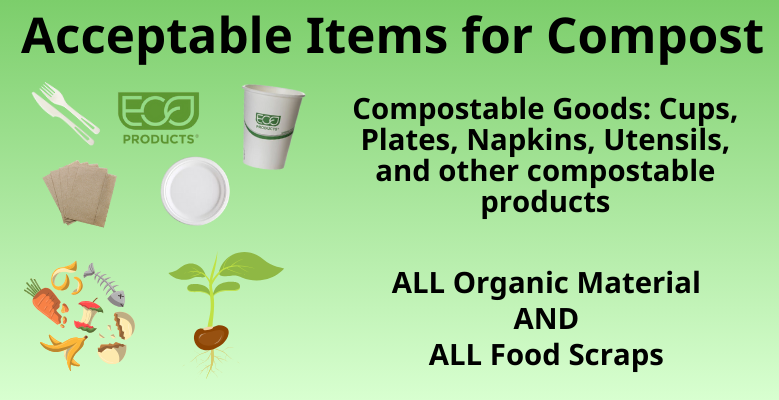
Acceptable Items for Compost on Campus Include
Organic Material |
Compostable Goods |
Food Scraps |
|
|
|
Benefits of Composting
When food and other organic materials go to a landfill, they don’t break down the same way they do in a compost system. Landfills are low-oxygen environments, and decomposing organics can produce methane, a potent greenhouse gas. Composting diverts that material into a system that creates a positive end product: finished compost rather than avoidable pollution.
Composting also helps us rethink what “waste” is. Many items we toss every day still have value, especially organic material. When we compost, we keep that value in circulation.
Environmental Benefits |
Campus Benefits |
Practical Benefits |
|
|
|
Where is Composting on Campus
Composting is only processed on campus through the following locations:
- Miller Dining Hall
- Rendezvous Dining Hall
- Brewed Awakening
- Norm's Cafe
- Union Market (Kitchen Prep)
- Hannon Culinary Arts School
- Bounty of the Bridgers
- Food Extrusion Unit
- Marsh Lab
- Herrick Hall
We want to grow composting accross campus! If your building is interested in adding a compost collection site please reach out to sustainability@montana.edu
Composting off Campus
The City of Bozeman has available options for citizens within the city and county.We as a campus are in alignment with the city on the composting need around Bozeman and meets regularly to take composting availability to the next level of service. Happy Trashcan also offers residental composting services for a monthly fee with bi-weekly collections.