

Provost Search
National search initiated in August 2026
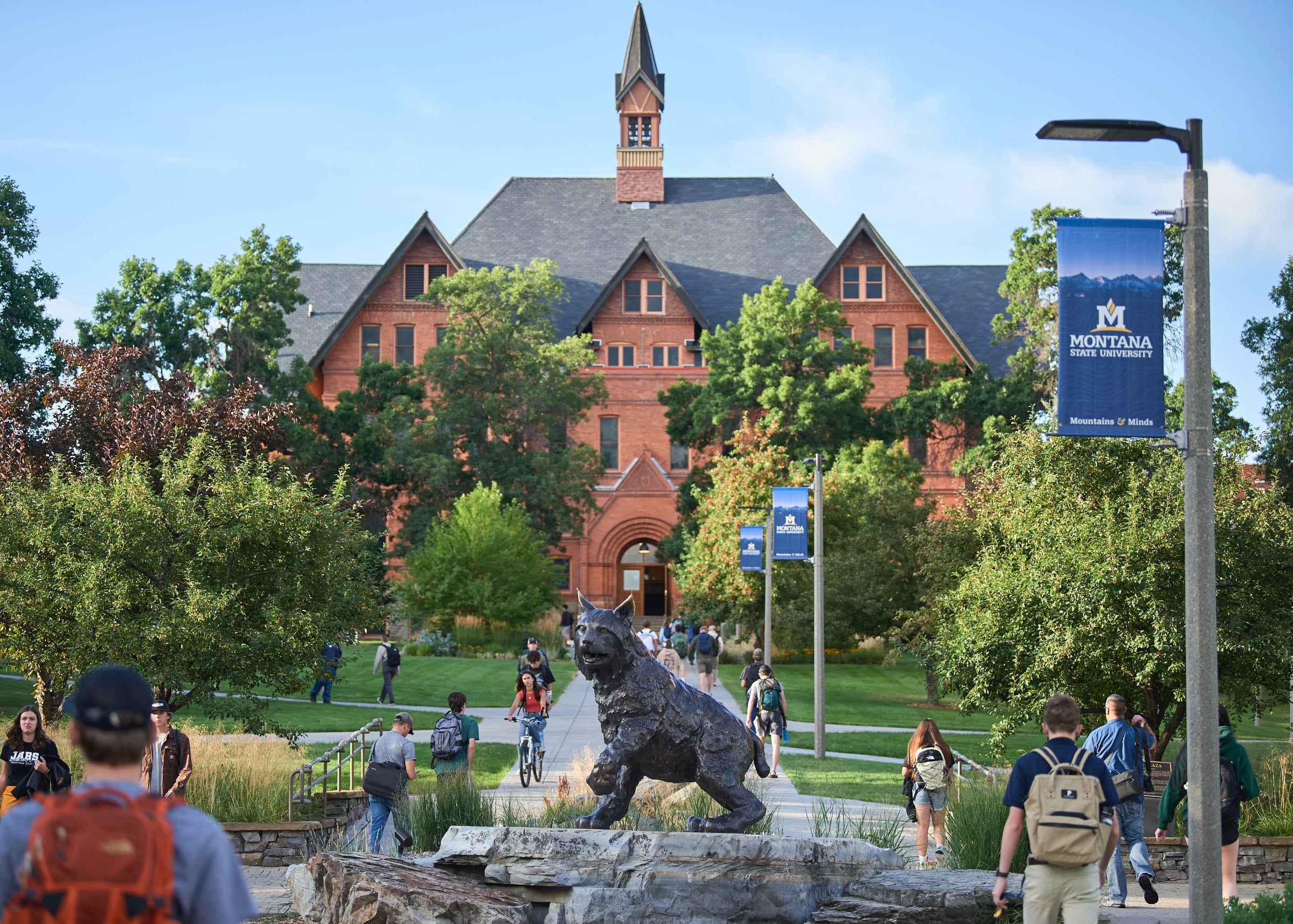
A national search is underway for Montana State University's next Executive Vice President for Academic Affairs and Provost.
The next Provost will join the university at a pivotal moment, partnering with President Brock Tessman and the campus community to advance academic excellence, strengthen student success, expand research and graduate education, and further the university's land-grant mission through teaching, scholarship, service, Extension, and community engagement.
As MSU's chief academic officer, the Provost will provide strategic and operational leadership across the academic enterprise, fostering excellence within, and integration across, teaching. The provost will guide academic departments and interdisciplinary programs, steward faculty, staff, and financial resources, and support the success of students across Montana and beyond. Working collaboratively with colleagues throughout the university and the statewide university system, the Provost will help translate the next university strategic plan into meaningful action while promoting a culture of trust, transparency, accountability, and shared purpose.
Read and download the full position profile
The intent is to have finalists on campus in late February or early March 2027, and those visits will include opportunities for campus constituents to participate.
Submit Nominations and Applications
AGB Search is assisting the search committee for the Executive Vice President for Academic Affairs and Provost. To submit a nomination or request a confidential conversation with a search consultant, write to MSUProvost@agbsearch.com. Review the full search profile online.
Submit application materials electronically to MSUProvost@agbsearch.com. Applications should include:
- A letter of interest explaining how the candidate's experience and qualifications align with the priorities and qualifications in this position profile.
- A curriculum vitae.
- The names, telephone numbers, email addresses, and professional relationships of five references. References will not be contacted without the candidate's prior permission.
For full consideration, submit application materials by December 14, 2026. The search will remain open until an appointment is made.
Other Questions?
For other questions or more information, write to president@montana.edu.
About Montana State University
Montana State University was founded in 1893 as the state’s land-grant university. Today, MSU is the largest university in the state with 17,477 students, 250 undergraduate areas of study and more than 120 graduate programs.
Nine colleges comprise the university, including:
- College of Agriculture
- College of Arts and Architecture
- Jake Jabs College of Business and Entrepreneurship
- College of Education, Health and Human Development
- Norm Asbjornson College of Engineering
- College of Letters and Science
- Mark and Robyn Jones College of Nursing
- Honors College
The university is also home to Gallatin College MSU, which supports Montana's workforce needs through more than 25 certificate, associate-degree and short-term training programs.
Montana State has set multiple student enrollment records over the past 15 years, becoming one of the fastest-growing universities in the nation and, by far, the largest university in the state and the largest university in a four-state region. In fall 2026, a record 17,477 students enrolled in classes at MSU. That headcount is 1.8% higher than last fall, and it includes the largest incoming first-year class in MSU history — 3,970 students, which surpasses the prior record incoming class from 2021. In all, MSU enrolled 15,431 undergraduate students, another record, and 2,046 graduate students.
MSU continues to enroll more Montana residents than any other college or university in the state. Montana resident students total 8,735, which is an increase of 216 over last fall. Of those Montana students, 1,592 are attending college for the first time.
MSU supports students from the moment they arrive on campus through to graduation with academic advising, tutoring, success coaching, financial guidance and career preparation. Advisers are key to helping students chart their path through their degree programs, while programs like SmartyCats tutoring help strengthen study skills. And MSU’s Career Services provides critical help connecting with internships and exploring jobs after college.
Another strong avenue for student support comes through the MSU’s Travis W. Atkins Veteran Support Center, which coordinates with offices across the university such as Student Success, Disability Services and Financial Aid to help student-veterans achieve their academic goals. This fall, MSU enrolled 914 students who are receiving veteran benefits, a 10% increase. The university is counted as the best school in the country for military spouses and veterans.
One demonstrated avenue toward student success has been MSU’s longtime promotion of its Freshman 15 initiative. Undergraduate students do not pay additional tuition for credits beyond their first 12 per semester, so 15 or 18 credits cost the same as 12.
This fall, 87% of incoming freshmen – or 3,288 students – and 70% of all undergraduate students are taking part in the Freshman 15, both record highs.
MSU welcomed 851 American Indian/Alaska Native students this fall, which is an increase compared to last fall. Other measured demographics included 1,096 students who are Hispanic, 771 Asian students, 340 African-American students and 141 Native Hawaiian/Pacific Islander students.
The university enrolled 152 new, incoming students who received the Montana University System Honor Scholarship, accounting for 62% of all the award’s recipients in the state.
Montana State is an R1 doctoral research university. With research expenditures exceeding $308 million, MSU is the largest research enterprise in the state. Our research ranges from advances in precision agriculture and cybersecurity to computer technology recently tested on the moon.
MSU is home to 300 laboratories, 44 research centers, and seven agricultural research stations. Centers and institutes include MilTech, the Western Transportation Institute, the Thermal Biology Institute and the Center for Mental Health Research and Recovery. MSU also takes part in statewide and regional research initiatives, including NSF EPSCoR, the Montana Space Grant Consortium and the Western Sustainable Agriculture Research and Education program.
Additionally, MSU operates its Core Facilities, which are spaces across campus designed to facilitate access to cutting-edge technology across multiple disciplines and research areas. These include facilities specializing in mass spectrometry, nuclear magnetic resonance, cyberinfrastructure, social data collection, microfabrication, chemical analysis, geospatial science, biofilms and more.
At Montana State, research isn’t just something reserved for faculty and graduate students. Our undergraduates are active participants in the creation of knowledge, and we pride ourselves on offering exceptional research opportunities no matter where students are in their studies.
Many students at MSU have leveraged these opportunities to win scholarships like the Rhodes and Goldwater scholarships. MSU has produced 12 Rhodes scholars and is a top 20 producer of Goldwater scholars, boasting 92 scholars since the Goldwater Scholarship’s founding. Additionally, over the past 15 years, MSU has produced two Gates-Cambridge Scholars, two Marshall Scholars, five Schwarzman Scholars, nine Truman Scholars and 16 Udall Scholars, among many other impressive student recognitions.
As the state's land-grant university, Montana State is a proud home to MSU Extension, which serves the needs of local communities in 56 counties and seven reservations through Extension’s 96 agents and 26 subject-matter experts.
MSU Extension improves lives and communities across Montana by providing unbiased, research-based education in agriculture, horticulture, healthy living, estate planning, youth development and more.
Search Committee Members
- Terry Leist, Vice President for Administration & Finance (Chair)
- Doug Downs, Chair of Faculty Senate and Professor English
- Emma Hoegh, Chair of Staff Senate and Nurse Practitioner, Student Health
- Ben Wilson, President, Associated Students of Montana State University
- Hossein Khadivar, Ph.D. Student, Environmental Engineering.
- Emily Edwards, Director, Advising Commons
- Sarah Miller, Senior HR Business Partner
- Michelle Haught, Director of the MSIM Program and Instructor, Jake Jabs College of Business & Entrepreneurship
- Abigail (Abbie) Richards, Professor, Chemical and Biological Engineering, Norm Asbjornson College of Engineering
- Dustin Perry, Professor, Agricultural and Technology Education, College of Agriculture.
- Valerie Copie, Professor, Chemistry & Biochemistry, College of Letters & Science
- Elizabeth (Liz) Shanahan, Professor, Political Science, College of Letters & Science
- Sarah Maki, Associate Dean, Gallatin College MSU
- Margaret (Marg) Hammersla, Assistant Professor, Mark & Robyn Jones College of Nursing
- Melissa Ragain, Professor of Art, College of Arts & Architecture
- Michelle Grocke-Dewey, Department Head and Professor of Human Development and Community Health, College of Education, Health and Human Development
- Nick Childs, Associate Professor of Physics, Honors College
- Jodi Allison-Bunnell, Head of Archives and Special Collections, MSU Library
- Meredith Hecker, Department Head, Native American Studies
- Sally Mudiamu, Dean, Office of International Programs
- Michaela Bader, Associate Vice President of Development for Academic Units, MSU Alumni Foundation
- Chuck Winn, City Manager, City of Bozeman (Community Representative)
- Joe Thiel, Deputy Commissioner for Academic, Research & Student Affairs, Montana Office of the Commissioner of Higher Education
Previous Campus Communications
View previous communications related to the provost search below.
- August 24, 2026 — Call for Committee Nominations
- September 15, 2026 — Executive Vice President for Academic Affairs and Provost Search Update