

Treatment & Recovery

Treatment for Opioid Use Disorder
Treatment for opioid use disorder can help people get better. It helps the body and the mind.
Treatment often includes:
- Medication to help with cravings and withdrawal
- Counseling or therapy to help with thoughts, feelings, and habits
- Support from family and others to help during recovery
Medication for Opioid Use Disorder (MOUD)
Medication for opioid use disorder (MOUD), formaly known as Medication Assisted Treatment (MAT), is a way to treat opioid addiction. It uses medicine, along with support and counseling.
Common medicines include:
- Buprenorphine – helps stop cravings and eases withdrawal
- Methadone – helps prevent withdrawal and helps people feel stable
- Naltrexone – stops opioids from having an effect
These medicines help people recover and stay healthy.
Find a Medication Treatment Center in Montana
Stigma Free Addiction Terminology: A Self-Paced Learning Guide
What is Addiction?
Addiction is a general term. It can include problems with using substances, like alcohol or drugs. It can also include behaviors, like gambling.
This MontGuide gives an overview of substance use in Montana. It also explains how the words we use can create stigma, or unfair judgment, toward people who use substances.
The guide includes a list of terms to help readers understand the topic. It also shows what language is respectful and appropriate to use.
Treatment
Like other long-term health problems, opioid use disorder may need ongoing care. Treatment may need to change over time. People may also need support for a long time.
People who get treatment are more likely to:
- Use fewer opioids
- Avoid overdose
- Feel better and live healthier lives
- Stay connected to work, family, and their community
Recovery
Recovery is a process. It means improving health and well-being over time. Recovery looks different for each person.
Some people use medication and counseling. Others may rely on peer support, cultural connections, or community programs.
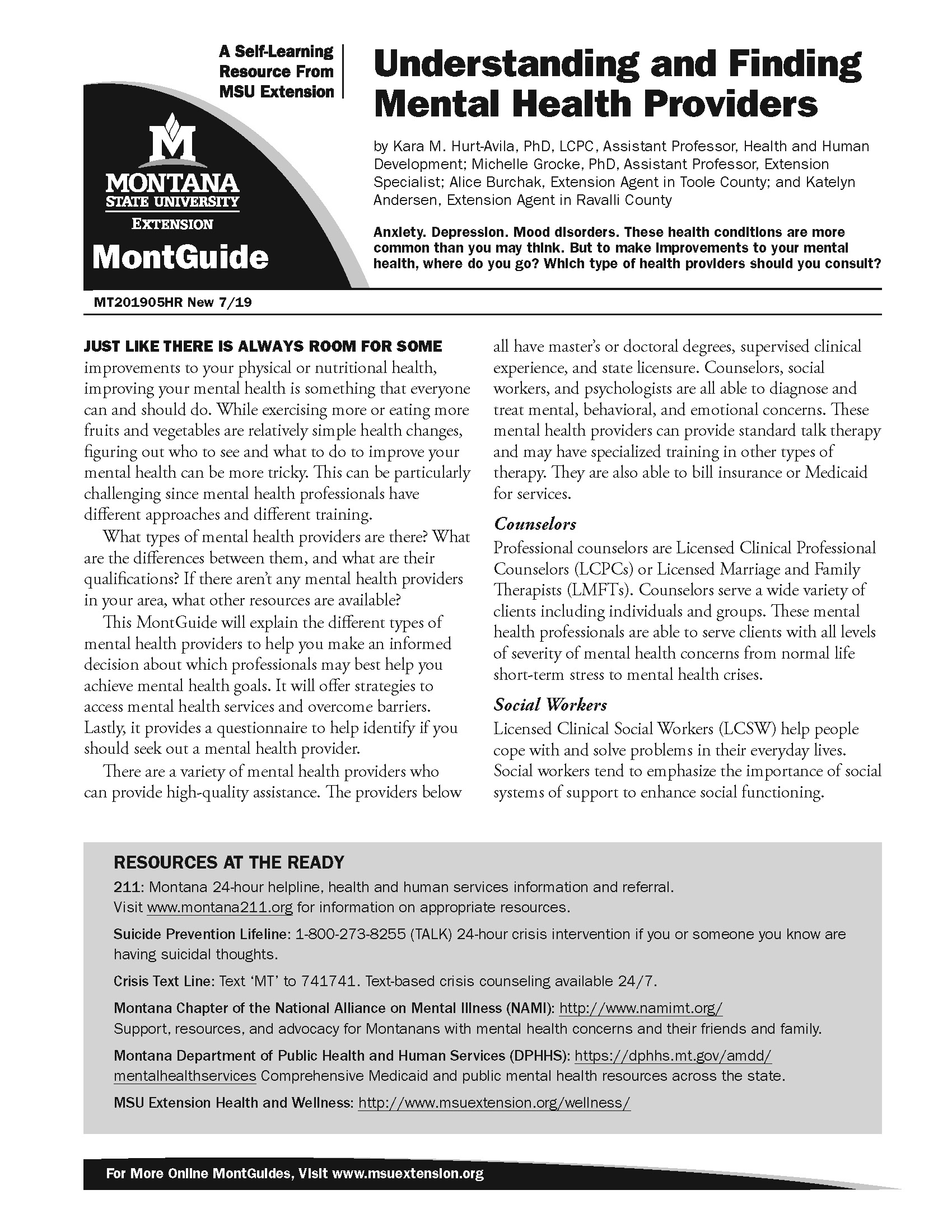
Are you unsure which provider is right for you?
Anxiety. Depression. Mood disorders. These health conditions are more common than you may think. But to make improvements to your mental health, where do you go? Which type of health providers should you consult? This guide provides some information.
Treatment & Recovery Support in Montana
Finding Treatment in Montana
Some options include:
- Primary care doctors
- Mental health or addiction counselors
- Community health centers
- Montana mental health centers
- Federally Qualified Health Centers (FQHCs)
- Montana 211, which can help you find services and support
If there's a waitlist, it can help to make an appointment and get on the list. While you wait, try to get support from peers or your community.
If there are no in person treatment options in your community, try telehealth services (see below).
For additional resources on finding treatment providers, check out the following Montana websites:
https://dphhs.mt.gov/BHDD/SubstanceAbuse/
Telehealth can:
- Help people get care from home
- Help people who live far away from clinics
- Help people talk to doctors in Montana
Many doctors and insurance plans in Montana now offer telehealth. If telehealth services are right for you, always ask each provider. If they don't offer telehealth, they may be able to refer you to a provider that does.
Support in Recovery
Recovery is easier with help from others.
People can get support from:
- Support groups
- Talking to someone on a support phone line
- Family learning and support
- Local recovery programs
Support can help while waiting for treatment. It can also help during recovery.
Respecting Culture in Care
Care should respect a person’s culture and beliefs.
In Montana, this can include:
- Tribal health services
- Care that fits a person’s culture
- Local offices that help people find care
People may get care in different ways. When care respects culture, people may feel more comfortable and more willing to get help.
Many people in Montana have shared their recovery stories. These help us understand askingfor help, staying in care, and going back to treatment if symptoms return are signs of strength, not failure.

If you need immediate support: Call or text 988 for mental health or substance use crisis support.